
Why banning AI misses moral point
The challenge before us is not to outsmart artificial intelligence, but to cultivate genuine human integrity.

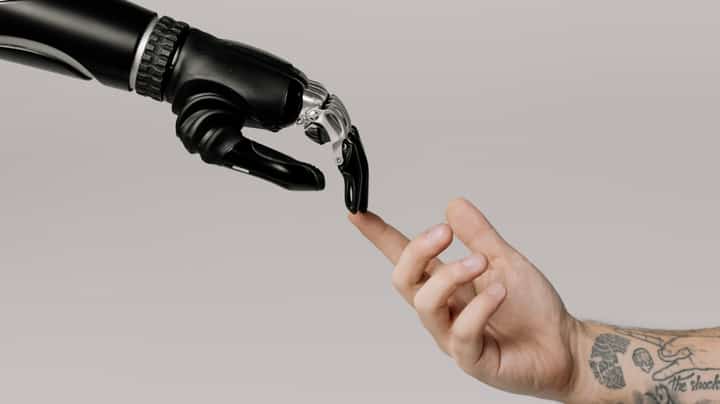
When high school and university teachers across the country began seeing an influx of flawlessly structured, suspiciously eloquent essays, the academic reaction was swift.
Panic set in, followed rapidly by a return to defensive measures: paper-and-pencil bluebooks, strict bans on digital devices, and a resurgence of oral exams. The logic seems straightforward — if a student cannot bring a hidden algorithm to a live viva voce, they will finally be forced to think for themselves.
Yet this reflex misses the real issue. Blaming generative artificial intelligence (AI) for widespread academic dishonesty is like blaming a calculator for a student’s failure to learn long division. The tool is simply a mirror, and what it reflects to us is a far deeper, more uncomfortable reality: a weakening values system that prioritizes the appearance of achievement over the process of learning.
When a student turns to a prompt box to write an essay on civic duty, literature, or ethics, they are not acting out of a sudden love for technology. They are making a calculated trade-off. They have decided that the grade matters, but the effort does not; that the certificate is valuable, but the personal transformation required to earn it is optional.
This is not a technological failure — it is a moral one. It points to a culture where integrity is treated as a situational luxury rather than a foundational habit.
Pivotally, the administrative retreat to oral examinations fails to address this root cause. While a viva or an in-person recitation certainly verifies whether a student knows the material in that exact moment, it operates purely as a surveillance mechanism. It forces compliance through proximity and immediate pressure, but it does nothing to rebuild the internal compass that deters dishonesty when no one is watching.
An oral exam may catch the unstudied student today, but it does not teach them why integrity matters tomorrow, when they face professional deadlines, ethical dilemmas, and unmonitored decisions.
Treating AI as the enemy only deepens the divide between education and reality. Generative models are not going away; they are becoming the baseline infrastructure of the modern workplace. Teaching students to view AI solely as a forbidden shortcut — or forcing teachers into arms-race tactics to catch them using it — subverts the true mission of education.
What we need is not stricter gatekeeping, but a renewal of educational purpose and character formation.
Schools must foster environments where process, struggle, and intellectual honesty are explicitly valued over polished final products. We need to teach students that shortcutting the struggle to think is ultimately shortcutting their own intellectual growth.
Until we confront the underlying shift in values that makes cheating feel acceptable, no number of oral recitations or exam room surveillance will solve the problem. The challenge before us is not to outsmart artificial intelligence, but to cultivate genuine human integrity.
Finally, on a more personal note, I would like to take this moment to extend my warmest and happiest birthday wishes to DAILY TRIBUNE publisher and president, Mr. Willie Fernandez. Thank you for your steadfast leadership, your unwavering kindness, and the relentless drive you inspire in all of us every day. May you have a truly blessed and rewarding year ahead!