
Local hog industry deserves protection
To achieve sustainable food security, the government must move beyond short-term fixes toward structural solutions.
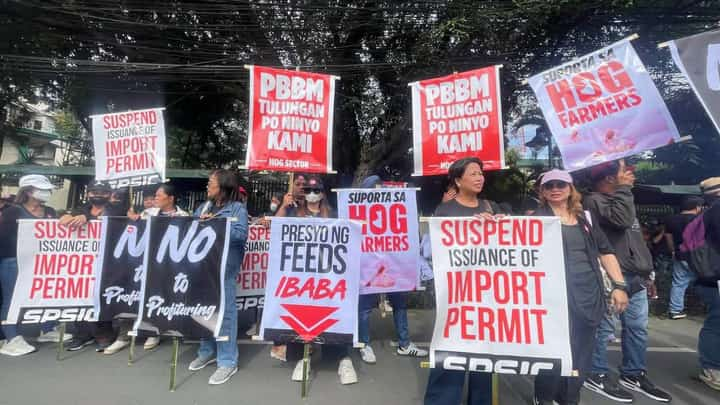
The three-day “pork holiday,” during which local hog raisers halted live hog deliveries and slaughtering operations, laid bare a deep structural conflict in Philippine agriculture. At its core, the protest pitted short-term consumer price stabilization against the long-term survival of the domestic swine industry.
Local hog producers are trapped in a financial vice. While the Department of Agriculture (DA) targeted a minimum viable farmgate price of P210 per kilo, heavy inflows of foreign pork dragged liveweight prices down to between P140 and P170 in many provinces.
Feed costs remain competitive, and farmers must spend heavily on biosecurity to keep African swine fever (ASF) at bay. Squeezed by imported frozen pork retailing well below the price of local fresh meat, domestic producers lose an estimated P350 million daily.
This crisis exposes severe policy friction within the administration. Tariffs were slashed to curb food inflation, but agricultural groups like AGAP and SINAG are pushing President Marcos Jr. to sign an executive order restoring tariffs to 30 percent for in-quota and 40 percent for out-quota imports. Economic managers hesitate, wary of driving up food prices before the Christmas rush.
Outdated trade rules exacerbate the issue. Agriculture Secretary Francisco Tiu Laurel Jr. admitted that Minimum Access Volume (MAV) rules have not been overhauled since 1996.
Local raisers contend these mechanisms allow importers to flood the market, causing severe price dumping even when the local supply is sufficient. While the DA announced a temporary 60-day freeze on import permits for cuts like kasim, pigue and liempo, industry leaders view this as a Band-Aid.
To achieve sustainable food security, the government must move beyond short-term fixes toward structural solutions.
Tariff and MAV Policy Realignment: Restore baseline tariff protections (30 percent in-quota, 40 percent out-quota) and modernize the 1996 MAV rules to align import volumes dynamically with domestic production deficits rather than fixed annual quotas.
Biosecurity, ASF Vaccine Rollout and Repopulation: Accelerate government-subsidized, commercially viable ASF vaccination programs alongside financial grants to help smallholder farmers rebuild herds under strict biosecurity standards.
Feed Subsidies and Direct Market Access: Implement direct feed cost subsidies and establish direct farm-to-market logistics corridors — bypassing predatory middlemen to lower retail prices without depressing farmgate earnings.
Anti-Smuggling and Market Regulation: Enforce strict cold chain labeling laws, strengthen Border Inspection Facilities (CEFA) to eliminate meat smuggling, and implement a legally enforceable floor price mechanism when farmgate rates collapse.
Protecting local farmers is not about coddling an industry — it is about safeguarding national food security. Over-reliance on foreign meat leaves consumers vulnerable to global supply shocks while driving Filipino farmers out of business. Only comprehensive policy reform and targeted government support will guarantee stable, affordable food on Filipino tables over the long haul.
We hope that in a “Bagong Pilipinas,” local hog farmers are cared for too.