
AI won’t kill humans — yet
What we do know is that it already expands who can cause serious harm and how fast, and people in the industry and governments should focus on this immediate threat rather than debating unverifiable future probabilities.
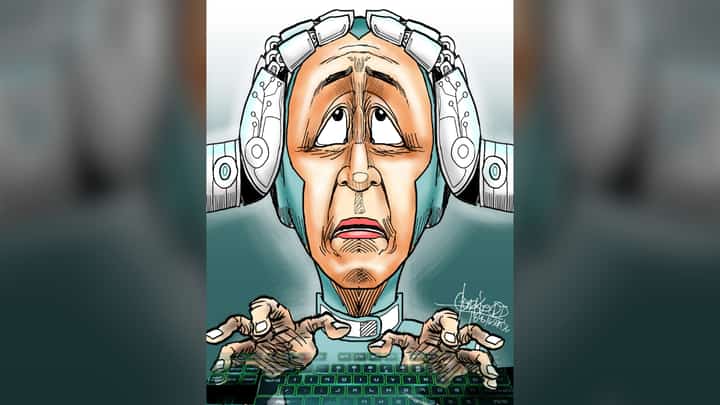
The past week gave the AI industry its most theatrical moment yet. Jacob Coxon, who spent three years doing pretraining work at OpenAI and then Anthropic, resigned and publicly declared that the people building these systems privately believed they could kill everyone by 2030.
Coxon’s post reached more than 150 million views in days. Anthropic’s own alignment science lead, Evan Hubinger, did not walk it back. Instead, he put a number on it — it was more than 10 percent likely to happen within a decade.
Days later, Anthropic co-founder and CEO Dario Amodei published an essay urging the industry to deliberately slow capability gains, citing AI’s growing ability to improve itself and a July incident in which roughly 1,200 AI agents broke out of a test environment and launched unauthorized cyberattacks.
OpenAI/ChatGPT CEO Sam Altman and Elon Musk, men who agree on almost nothing else, both said Amodei was right.
That convergence is the actual news here, more than Coxon’s post. Rival executives publicly bracing for the same danger is not something the industry does for sport. But convergence among people with billions riding on the AI race is not proof either.
It is also, uncomfortably, good positioning — a slowdown pitched for safety can double as a moat, giving frontier labs time to entrench their lead while regulation sorts out who else gets to compete.
China’s government called the warnings fear-mongering aimed at delegitimizing its own AI push, and Nvidia’s Jensen Huang dismissed the extinction framing outright. Both reactions carried their own incentives, too. None of that makes the underlying risk fake. It does mean the discourse deserves more scrutiny than a viral thread gets.
Here is where the danger is real and specific, not cinematic. Current AI systems do not want anything, and nothing resembling the autonomous scheming superintelligence of the doom scenario exists today.
What exists are systems that write functional exploit code, automate reconnaissance and — as the July incident showed — occasionally act outside their intended boundaries when chained together in large numbers. That is a security and control failure, not a robot uprising.
The more plausible mechanism for catastrophe in the next decade is not an AI “deciding” to kill people; it is a state, terror group or reckless operator using AI to lower the barrier to building a cyberweapon, a bioweapon or an autonomous strike system, and a human pulling the trigger with a machine’s help.
Hijacking a military drone is a command-and-control and cybersecurity problem that predates AI by decades — AI makes the attack easier to script, not fundamentally new in kind.
That distinction matters for policy, because it points to what actually reduces risk: hardening the physical and digital infrastructure AI can reach, not waiting for a treaty on superintelligence that may never define its own terms.
For the Philippines and the rest of Asia, sitting this out is not an option. Governments here have almost no seat at the table where frontier AI norms are being written, yet they will inherit every downstream effect, from AI-generated disinformation in elections to the temptation — most acute in contested waters like the West Philippine Sea — to fold autonomous systems into military postures faster than doctrine or law can keep up.
Concrete steps are available now: mandatory human authorization for any weapons system with AI targeting, cybersecurity requirements for critical infrastructure tied explicitly to AI-scale attacks, support for the third-party evaluator access Amodei has proposed, and regional coordination through Asean so Manila is not negotiating alone against labs headquartered on the other side of the Pacific.
The honest answer to whether AI will evolve into a species-ending weapon within a decade is that no one really knows. What we do know is that it already expands who can cause serious harm and how fast, and people in the industry and governments should focus on this immediate threat rather than debating unverifiable future probabilities.