
Sir, psst!
Perhaps Senator, the next time his attention needs to be called, ‘Mr. Presiding Officer’ would do. It costs nothing.
In Filipino parlance, “psst” is a familiar way of calling someone’s attention. It is often used when you do not know the person’s name, when calling out to someone at a distance, or when you want that person to look your way.
There is something else about “psst” that Filipinos instinctively understand.
Depending on the circumstances and the tone, it can carry an implicit sense of familiarity — or even superiority. It can sound like one is calling someone who is expected to respond immediately, as though that person is a subordinate, an attendant, someone whose attention can simply be summoned.
That may be perfectly acceptable in ordinary conversation. In a marketplace, a hallway, or among friends, nobody gives it much thought.
But an impeachment court is not an ordinary setting.
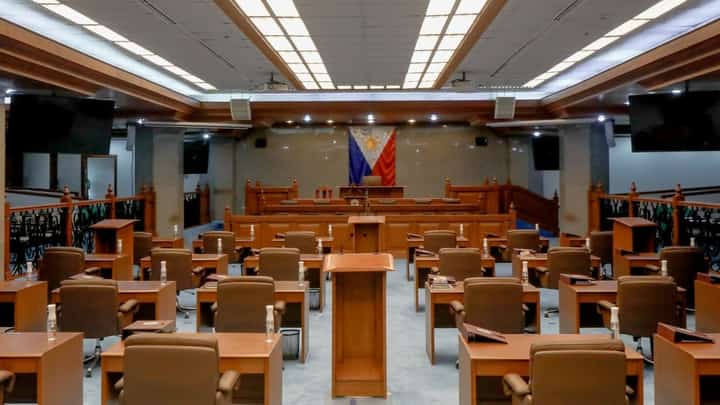
Recently, during the impeachment proceedings, a senator-judge, after making an interjection, sought the attention of the Presiding Officer by calling out, “Sir, psst.”
It was perhaps innocently meant. It may have been an informal attempt to get the Presiding Officer’s attention after the latter appeared momentarily distracted.
Still, perhaps the senator-judge deserves a gentle nudge.
There are places where informality is all right. But there are places where the manner by which something is said matters as much as what is said. A constitutional impeachment trial is the latter.
The Senate, when sitting as an impeachment court, is exercising a special constitutional function. Its members are not merely conducting another legislative session. They are sitting as senator-judges in a proceeding whose rules specifically require motions, objections, and requests to be addressed to the Presiding Officer.
That does not mean senators must suddenly become stiff, humorless, or ceremonial. But surely there is value in remembering that form is part of the substance of institutions.
The Presiding Officer’s response was equally interesting. The remark was simply brushed aside nonchalantly, and that says something about how we now regard parliamentary decorum.
Perhaps the response was appropriate because the matter was trivial. There was no need to make a big thing of a casual expression.
Yet there is another way of looking at it. When those presiding over an institution routinely allow small departures from formal conduct, they gradually redefine what is considered acceptable.
One “psst” is nothing. One casual interruption is nothing. One unnecessary side comment is nothing. But after one informal exchange after another, eventually the character of the institution itself changes.
Have the times changed? Certainly!
Today’s Senate is more conversational. Social media has brought politicians closer to the public. Televised proceedings are frequently interrupted by moments that would once have been confined to the corridors. The language of politics has become more personal, more immediate, sometimes more casual.
But perhaps there is something worth preserving from the old Senate.
I remember a time when watching Senate proceedings was not merely following political arguments. It was an education in how public officials conducted themselves — how they addressed one another, how they disagreed, how they waited for recognition, how they responded to the Chair, and how they demonstrated respect for the institution even when they strongly disagreed with one another.
The public learned not only from the arguments but from the manner in which those arguments were made.
That matters especially to young Filipinos watching today.
A senator is not simply another public personality with a microphone. A Presiding Officer is not simply another politician to be summoned with a “psst.” And an impeachment court is not simply another venue for political conversation.
Perhaps Senator, the next time his attention needs to be called, “Mr. Presiding Officer” would do. It costs nothing.
And it reminds everyone — including the senator speaking — that for a few hours, they are participating in something bigger than themselves.
Institutions are preserved not only by the laws that govern them, but by the habits and courtesies of the people entrusted to uphold them.
Perhaps that is one lesson from the old Senate that is worth bringing back.