
DA, PAGASA inks climate data moa for farmers
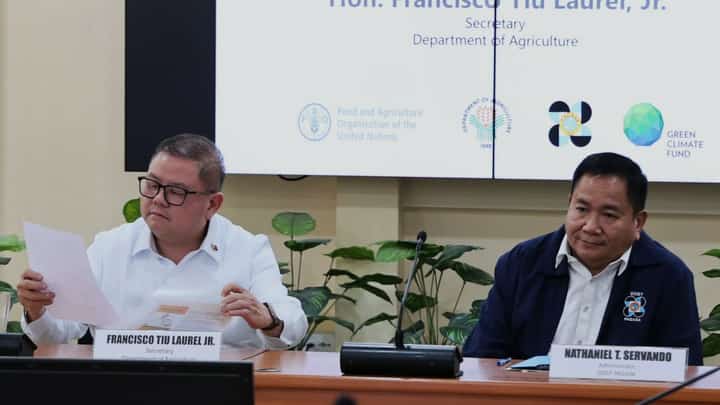
Farmers and fisherfolk are set to gain faster access to localized weather and climate advisories under a new data-sharing partnership between the Department of Agriculture (DA) and the Philippine Atmospheric, Geophysical and Astronomical Services Administration (PAGASA).
The agencies signed a memorandum of agreement to strengthen the use of weather and climate information in agricultural planning and decision-making under the seven-year Adapting Philippine Agriculture to Climate Change (APA) Project.
Joint initiative
The project is a joint initiative of the DA, PAGASA and the Food and Agriculture Organization of the United Nations, with financing support from the Green Climate Fund.
Under the agreement, the agencies will regularly share and jointly use weather and climate data. They will also work together in generating and distributing agrometeorological advisories through the DA’s National Climate Information Service Center for Agriculture and Fisheries Sector, regional and provincial CIS centers, and PAGASA.
Provide farmers, fisherfolk with info
The goal is to provide farmers and fisherfolk with practical information they can use to prepare for and manage climate-related risks, including those affecting production and farm planning.
Assistant Secretary for Operations and APA National Project director U-Nichols A. Manalo said timely access to reliable information is critical to building climate resilience in vulnerable agricultural communities.
“Climate resilience begins with ensuring that the right information reaches the users at the right time. This agreement fortifies the foundation for a more responsive CIS system, coupled with science-based and sound agricultural advisories that will help farmers and fisherfolk prepare for, anticipate, and manage climate risks,” Manalo said.
Develop localized, context-specific advisories
The APA Project will use the strengthened information system to develop localized and context-specific advisories, particularly for vulnerable communities, including women, youth and Indigenous Peoples.
Beyond immediate weather advisories, the partnership is expected to help establish longer-term systems and institutional arrangements for sharing agricultural weather and climate data.
The agencies said the initiative will support more climate-informed decision-making while helping protect the livelihoods of communities exposed to climate risks.