
Law dean: Sara’s self-incrimination claim may not excuse testimony
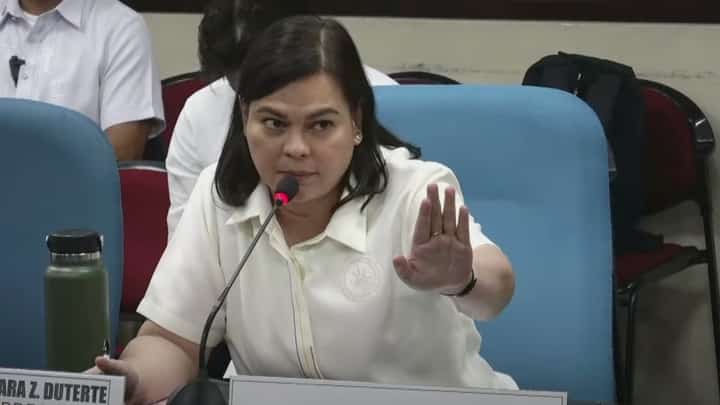
University of the Philippines Associate Law dean and constitutional law professor Paolo Tamase said Vice President Sara Duterte may invoke her constitutional right against self-incrimination during the impeachment proceedings, but the right may not automatically exempt her from appearing before the Senate impeachment court.
The right against self-incrimination under Article III, Section 17 of the 1987 Constitution generally protects an individual from being compelled by the state to provide statements that could expose them to criminal liability,said Tamase.
But Tamase said the protection is not unlimited and may have to be invoked on a question-by-question basis, particularly when the person being questioned is not the accused in a criminal case.
“The right against self-incrimination is not that broad,” Tamase said in a radio interview. He explained that a witness appearing in a proceeding where they are not the respondent may invoke the right when a specific question could incriminate them.
Tamase said this could be different in a criminal case, where the right is broader because the accused faces possible imprisonment and other criminal penalties.
The issue has emerged as the impeachment prosecution considers whether to call Duterte to testify, particularly on matters involving confidential funds.
He said that if the prosecution intends to call Duterte during the latter part of its presentation, the Senate may have to determine how her constitutional rights apply in the context of an impeachment proceeding.
Tamase noted that impeachment is not a criminal case and that its primary purpose is to determine whether an official should continue holding public office.
“It's not a criminal case. In fact, what we are discussing here is whether an individual should still remain in office,” Tamase said.
Because impeachment does not directly result in imprisonment or the loss of liberty, he said there could be an argument that the right against self-incrimination should be applied more narrowly in such proceedings.
But Tamase said Duterte could invoke the right when confronted with an incriminating question. He said, however, that simply refusing to appear before the Senate could be a different matter.
He also stressed that the exercise of the right against self-incrimination should not be treated as evidence of guilt.
Courts and government agencies are generally barred from drawing an inference that a person is guilty simply because the person refused to answer an incriminating question, he said.
That principle could present a particular challenge in an impeachment trial because senators, unlike judges, are not necessarily trained in the same way to evaluate evidence and constitutional protections, Tamase said.
He said senators would have to be careful not to conclude that a witness's refusal to answer questions indicates guilt.
“This is one of the important aspects of that right. The court cannot draw a conclusion that because you did not answer, you are probably guilty,” he said.
Tamase said the Senate's treatment of the issue could also help establish how the right against self-incrimination would apply in future impeachment proceedings.
On the separate debate over the number of votes required to convict in an impeachment trial, Tamase said the conventional interpretation is that two-thirds of the entire 24-member Senate should be required.
Under that interpretation, 16 votes would be needed to convict an impeached official.
He said this reading is consistent with the constitutional design of impeachment, which sets a higher threshold for conviction in the Senate than in the House of Representatives, where impeachment is initiated.
Tamase said, “The conventional view is that it should be based on all 24 members."
But he acknowledged an emerging interpretation that the two-thirds threshold could instead be based on senators who are qualified to vote or are present during the decision.
That interpretation has gained support from some academics, he said, particularly because applying the 24-member threshold could make conviction impossible if a significant number of senators are absent or otherwise unable to participate.
Tamase said the Senate has the authority to interpret the constitutional provisions governing its own impeachment proceedings, although any such interpretation could ultimately be reviewed by the Supreme Court if challenged.
“All branches of government have the power to interpret the Constitution,” he said. “The Supreme Court is the final arbiter.”
He said the Senate therefore does not necessarily have to seek the Supreme Court's intervention before resolving the voting threshold issue.
Tamase also welcomed the possibility of oral arguments or a more formal debate on the issue, saying it could clarify the Senate's position and reinforce the principle that the impeachment process is primarily the responsibility of the Senate.
The debate over the threshold comes as senators prepare for the eventual decision on Duterte's impeachment case, although Tamase said it would be premature to settle the issue while the proceedings are still at an earlier stage.