
Magalong lays out reforms to outlast his term

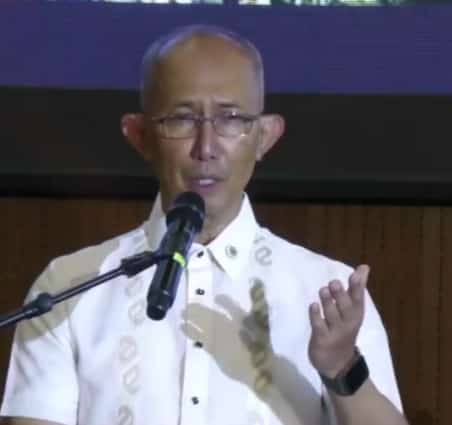
BAGUIO CITY — Mayor Benjamin Magalong outlined a series of long-term institutional reforms aimed at sustaining good governance in Baguio City beyond his administration during his State of the City Address (SOCA) marking the city’s 117th Charter anniversary.
Magalong reported that city revenues reached P3 billion in 2025, up 14.04 percent from the previous year.
As of July 2026, collections stood at P2.25 billion against the city’s P3.65-billion budget for the year.
Baguio’s economy, meanwhile, expanded by 5.8 percent in 2024 to P178.85 billion.
Magalong said the city has introduced measures aimed at strengthening local revenues while addressing environmental challenges.
Ordinance 69, Series of 2026 established garbage fees, while Ordinance 15 institutionalized the “Pansa-Nopen Tayo” Circular Economy Framework across all 128 barangays.
The framework targets a 20 percent reduction in waste generation, supported by pilot Materials Recovery Systems in six barangays and a modern waste processing facility now under construction.
The city also launched an educational resource book for basic education in partnership with the United Nations Development Programme and European Union.
Water security
Magalong also highlighted Baguio’s long-term water security challenges.
A £2-million feasibility study funded by the United Kingdom projected that the city could face a water supply gap of 117 million liters per day by 2055.
The city is evaluating eight potential water sources while implementing the four-year BRIDGE Project with the Philippine Disaster Resilience Foundation and Canada to strengthen watershed management.
On housing, five sites have been identified for possible development: Irisan Pansa-Nopen Village, Asin Housing Village, the GSIS property near the Convention Center, PNR property in Marcoville and the DICT compound in Quezon Hill.
Development of Luna Terraces is also continuing.
Baguio has also been designated a Resilience Hub under the United Nations Office for Disaster Risk Reduction’s Making Cities Resilient 2030 initiative.
Digital, governance reforms
Magalong said digital transformation and government transparency would remain central to the city’s long-term agenda.
Baguio continues to use its MINERVA predictive analytics system for air, water and mobility data, while expanding digital public services through Baguio In My Pocket Plus.
Municipal infrastructure projects are monitored through the PRISM transparency platform, while the city is updating its Open Data Portal using the Global Open Data Index as a framework.
The city government has also maintained community engagement through regular Kapihan sa Barangay sessions.
Magalong said Baguio has progressed toward higher stages of the Performance Governance System after receiving the Silver Trailblazer Award for the Initiation and Compliance stages.
City Hall passed its ISO 9001:2015 recertification audit in March and is pursuing ISO 37001 anti-bribery management certification through a roadmap supported by a £1-million grant from the British government.
The city has also institutionalized its Emerging Leaders Program under Resolution 695, Series of 2026.
Magalong said recruitment and promotion decisions continue to be delegated to the Personnel Selection Board and based on merit.
He called on residents and other stakeholders to remain involved in sustaining the city’s governance reforms.