
Santa Catalina gets Super Health Center

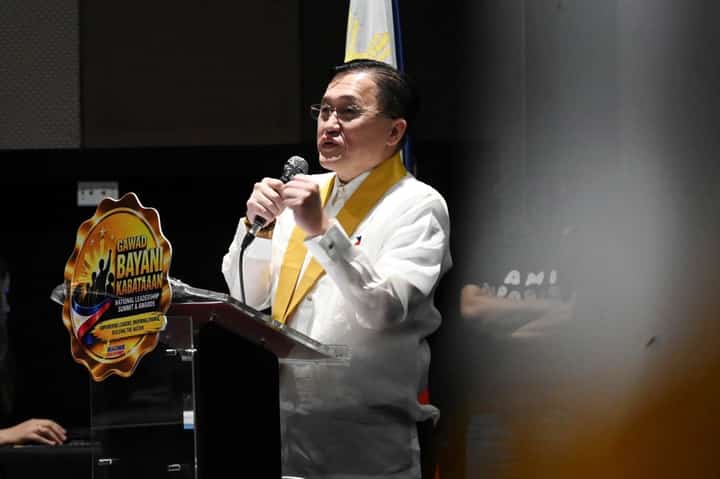
HEALTHCARE CLOSER TO HOME | A new Super Health Center is turned over in Santa Catalina, Negros Oriental, bringing primary care, consultations and other basic health services closer to residents. Sen. Christopher “Bong” Go welcomed the facility’s completion, stressing the importance of detecting and treating illnesses before they become more serious.
Sen. Christopher “Bong” Go welcomed the turnover of a Super Health Center in Santa Catalina, Negros Oriental, saying the facility will bring primary healthcare services closer to residents.
The facility was formally turned over in coordination with the municipal government led by Mayor Peve Obaniana-Ligan as part of efforts to strengthen healthcare services at the community level.
“Mas mabuti kung maagapan natin agad ang sakit bago pa ito lumala. Kaya patuloy nating inilalapit sa mga komunidad ang serbisyong medikal para hindi na kailangang bumiyahe nang malayo ang ating mga kababayan para sa kanilang pangunahing pangangailangan sa kalusugan,” Go said.
Super Health Centers are designed to provide primary care, consultations, early disease detection and other basic health services.
Depending on their staffing and capabilities, the facilities may also offer laboratory and diagnostic services, maternal and child care, immunization, pharmacy services and other outpatient programs.
Go said providing accessible primary care could help detect and treat illnesses before patients require hospitalization.
“Hindi naman lahat ng karamdaman kailangang hintaying lumala bago magpunta sa ospital. Kung may maayos na primary care facility na malapit sa bahay, mas maaga nating matutukoy at magagamot ang sakit,” he said.
Funding has been allocated for more than 700 Super Health Centers nationwide through efforts involving lawmakers, the Department of Health and local government units.
Go stressed that completing the facilities should be accompanied by adequate staffing, equipment, medicines and operating support.
“Ang mahalaga, hindi lang tayo nagtatayo ng gusali. Siguraduhin din nating may tao, kagamitan, gamot, at serbisyong maaasahan ng ating mga kababayan,” he said.
Go is also the principal author and sponsor of Republic Act 11463, or the Malasakit Centers Act of 2019, which institutionalized one-stop shops for government medical assistance programs.
There are currently 167 Malasakit Centers nationwide, which the DOH said have assisted more than 17 million Filipinos.
He also principally sponsored and is one of the authors of RA 11959, or the Regional Specialty Centers Act, which mandates specialty centers in qualified DOH regional hospitals.
Go thanked the Santa Catalina local government and health officials for supporting the Super Health Center project and reiterated his call to expand access to healthcare in underserved communities.