




ICTSI Mexico expansion targets 2-M TEU capacity

Text size
Buddies, associates? One happy family?
A traditional dish called zongzi is served during China’s Dragon Boat Festival, which falls in June. It is a rice…
Divina credited the firm’s achievements to its members, thanking them for their ‘hard work, dedication, teamwork, and…
‘Sec. Vince Dizon, please explain how this finding of your own team should not be flagged as a ghost project in Taguig.’
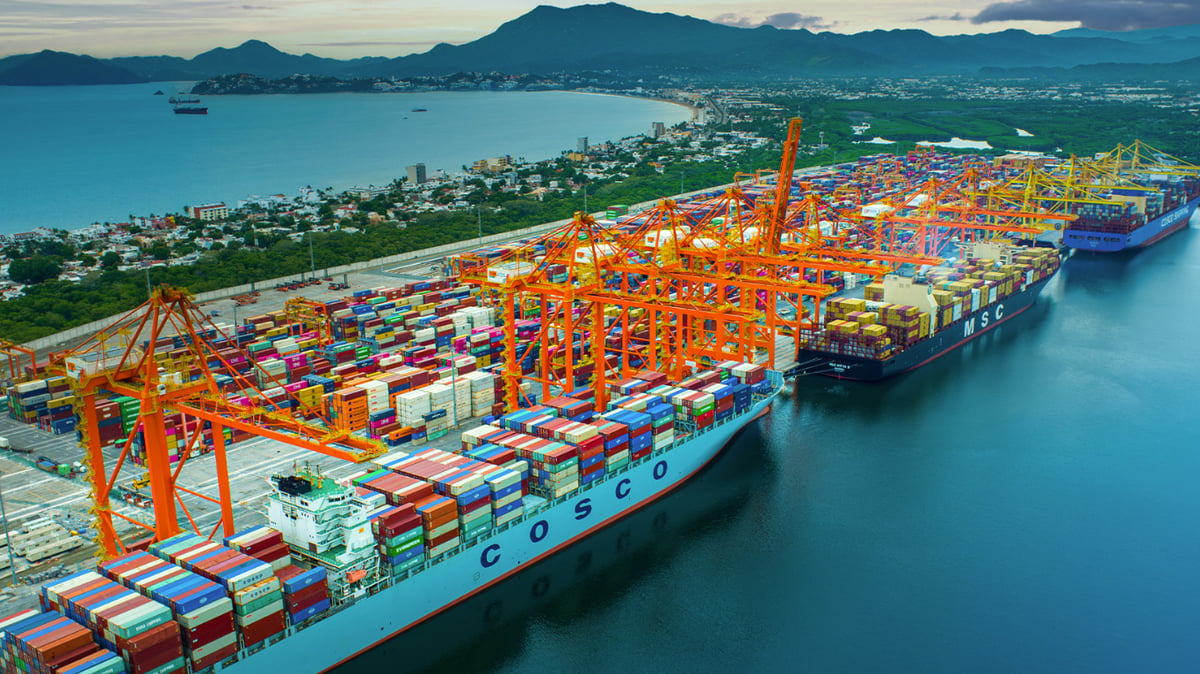
International Container Terminal Services Inc. (ICTSI) is raising the annual capacity of its Mexican terminal to 2 million twenty-foot equivalent units (TEUs) as it expands infrastructure to accommodate some of the world’s largest container ships.
ICTSI said Monday its Mexican unit, Contecon Manzanillo S.A. de C.V. (CMSA), secured approval to handle vessels with drafts of up to 15.5 meters, making it the only terminal operator at the Port of Manzanillo with such capability.
The authorization allows CMSA to serve vessels as long as 400 meters, including ultra-large container vessels capable of carrying up to 24,000 TEUs.
The added capability comes as ICTSI advances Phase 3B of CMSA’s expansion program, which is expected to increase the terminal’s annual handling capacity to 2 million TEUs from approximately 1.8 million TEUs currently.
Investments made to strengthen the terminal
“This authorization reflects the investments we have made to strengthen the terminal,” CMSA CEO José Antonio Contreras said.
“It also marks an important step toward our goal of achieving a 17-meter operational draft at our new berths, which will allow us to accommodate larger vessels and handle higher cargo volumes,” he added.
Phase 3B includes an additional 227 meters of quay and the acquisition of two quay cranes and nine rubber-tired gantries.
CMSA currently operates 12 quay cranes, 43 rubber-tired gantries and other container and cargo-handling equipment.
Expansion builds on Phase 3A
The expansion builds on Phase 3A, which was completed in 2025 and increased CMSA’s annual capacity to more than 1.77 million TEUs. Capacity has since risen to approximately 1.8 million TEUs per year.
