
A call vs autonomous weapons
The more urgent question is what happens once this technology escapes state control entirely. The chilling answer: It already has, in miniature and low-grade forms, and the trajectory only worsens from here.

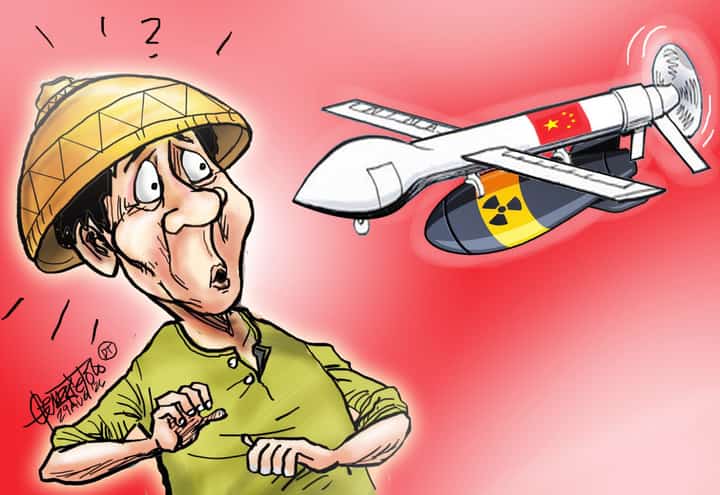
At the Palais des Nations in Geneva on Tuesday, 25 August 2026, UN Secretary-General António Guterres and International Committee of the Red Cross President Mirjana Spoljaric warned in a joint statement that the world stands “dangerously close to crossing a moral red line.”
They were not describing a distant, theoretical threat. They were describing a lethal weapons category that is already deployable, already affordable, and already leaking beyond the control of the states that discuss it in Geneva conference rooms.
The core danger of fully autonomous weapons is deceptively simple: They remove a human being from the final decision to kill. Anti-missile systems on warships have made split-second engagement decisions for decades, but those are narrow, defensive, and aimed at incoming projectiles, not people.
What Guterres and Spoljaric are warning against is different — machines empowered to identify, select, and kill human targets without a person authorizing the specific act.
Once that line is crossed, accountability becomes a fiction. If an algorithm misclassifies a wounded soldier as a combatant, or a surrendering fighter as a threat, whom do you prosecute?
The programmer who wrote code years earlier for a different battlefield? The commander who deployed a system whose internal reasoning even its manufacturer cannot fully explain?
International humanitarian law was built around the assumption that a human being makes the targeting decision and can be held responsible for it. Autonomous weapons hollow out that assumption without replacing it with anything equivalent.
There is also the danger of a battlefield behavior distinct from the moral one. Machines do not fear death, hesitate, or exercise the reluctant restraint that keeps some wars from becoming worse than they already are.
An autonomous system optimized purely for engagement efficiency has no incentive to accept a surrender, verify a status, or absorb risk to protect a civilian. Speed and mass become the currency of warfare — swarms of cheap, unaccountable killer drones overwhelming both defenses and any human capacity to intervene in time.
But the more urgent question — the one policymakers discuss less comfortably — is what happens once this technology escapes state control entirely. And the honest, chilling answer is: It already has, in miniature and low-grade forms, and the trajectory only worsens from here.
The barrier to entry for crude autonomous weapons is collapsing. The core ingredients — commercial drones, open-source computer-vision models, cheap onboard processors — are civilian technologies sold at retail.
A hobbyist quadcopter, a laptop, and freely available targeting software are, with some technical effort, enough to build a rudimentary autonomous strike platform.
The conflicts in Ukraine, Sudan, Myanmar, the Gulf and the Sahel have shown militants and irregular forces retrofitting commercial drones with explosives and, increasingly, autonomous terminal guidance to defeat jamming.
Analysts have counted dozens of nonstate armed groups possessing some level of drone capability, and that number is rising as the underlying components get cheaper and more capable each year.
This is the proliferation nightmare that distinguishes autonomous weapons from previous “weapons of mass effect.” Nuclear, chemical, and biological weapons require rare materials, specialized facilities, and expertise that remain genuinely difficult for nonstate actors to acquire.
Autonomous weapons require none of that. There is no fissile material to track, no precursor chemical to restrict, no dangerous pathogen to secure in a lab. The “ingredients” are dual-use consumer electronics and software code — and once that code exists, it spreads instantly and cannot be recalled.
A terror cell, a criminal cartel, an insurgent faction, even a sufficiently motivated lone actor does not need a state sponsor’s arsenal — it only needs a shopping list from any electronics retailer and access to the internet.
This is precisely why the Guterres-Spoljaric statement frames the coming November talks in Geneva — when countries will meet to decide whether to launch full formal negotiations for a legally binding treaty on autonomous weapons — as urgent rather than aspirational.
The UN and the ICRC are pushing world leaders to use this meeting to set hard legal limits before AI-driven weapons spin out of control.
Every year that states spend time negotiating definitions and thresholds, the underlying technology keeps getting cheaper, smaller, and more capable, while the population of actors who can build a working system keeps growing. A treaty that might have meaningfully restricted this technology in 2018 would now need far more teeth to matter now.
For countries like the Philippines, watching this unfold from outside the major theaters of drone warfare, the temptation is to treat this as someone else’s problem — a Ukraine problem, a Gaza problem, a Sudan problem. It is not.
Any state with contested internal insurgencies, porous maritime borders, or unresolved territorial disputes is a plausible future venue for this technology, whether wielded by a foreign state’s forces or by a domestic nonstate actor who no longer needs to steal a weapon when they can build one.
The Geneva talks in November deserve more than diplomatic attention from smaller and middle powers — they deserve the same urgency Manila gives to any threat that could eventually reach its own shores.