
At the civic heart of Quezon, a heritage endures
The province of Quezon’s historic capitol compound brings together enduring landmarks of government and civic life, revealing how heritage structures can be preserved, restored and adapted to continue serving the public.
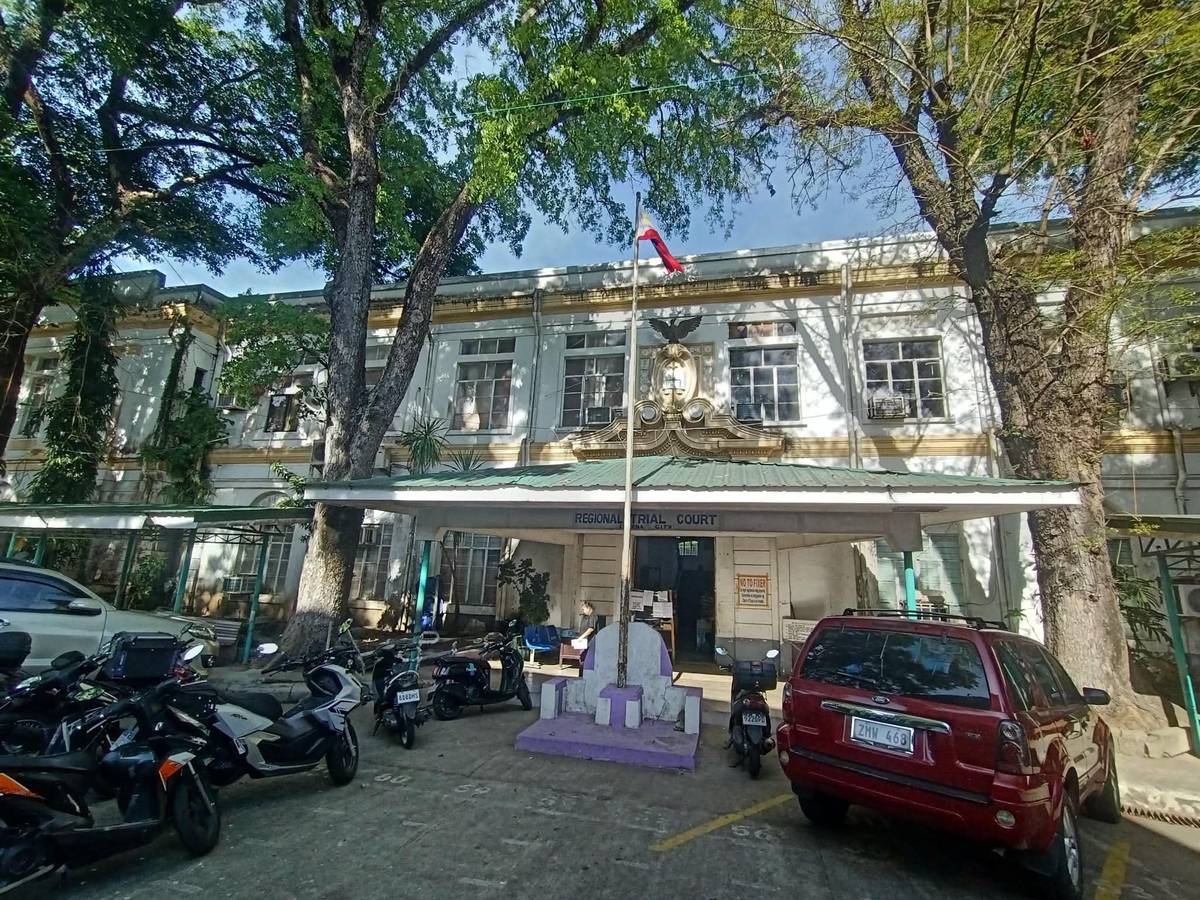
former Tayabas Courthouse, built in 1923, continues to serve as Quezon Province’s Hall of Justice.
One of the best-preserved American colonial-era provincial government complexes in the Philippines stands in Quezon, the province formerly known as Tayabas.
Conceived as an integrated government center, the compound brought together essential public buildings — including the provincial capitol, jail, hospital and courthouse — to make government services more accessible, efficient and practical.
Many of these structures remain standing. Some continue to serve their original purposes, while others have been adaptively reused, allowing the historic complex to remain part of the province’s civic life.
Capitol
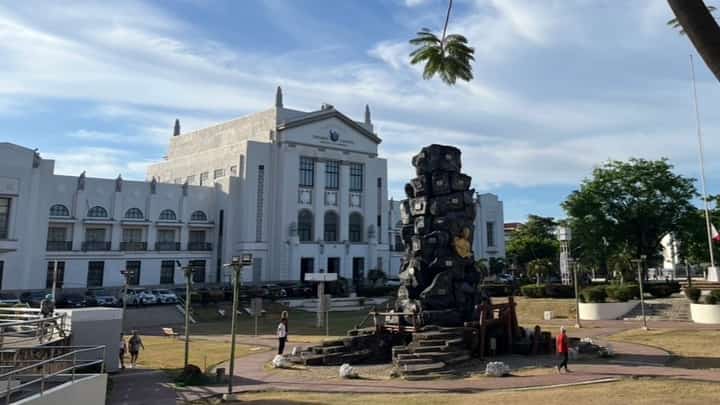
The compound’s most prominent structure is the Quezon Provincial Capitol, first completed in 1908 during the administration of Governor Domingo Lopez.
William E. Parsons, then consulting architect of the Bureau of Public Works, designed the original two-story Neoclassical building. It occupied the central portion of the provincial complex and faced an open space with sunken gardens. The Manila Saw Mill served as its contractor.

Quezon Provincial Jail, built in 1909, retains its quadrangular form and distinctive corner sentry towers.
The capitol was reconstructed and enlarged between 1930, during the term of Governor Leon G. Guinto, and 1935, under Governor Maximo Rodriguez. Juan Arellano, one of the foremost figures in Philippine architectural history, designed the expanded structure.
Like other Arellano-designed buildings — including the Bulacan Provincial Capitol and the Iloilo Municipal Hall, later the old Iloilo City Hall — the Quezon Provincial Capitol exemplifies Classical Deco, or Stripped Classicism, as architectural historian Gerard Lico describes the style in his book Arkitekturang Filipino.
“From a distance, the overall symmetrical composition would seem to indicate a neoclassic pedigree, an architectural image set by William Parsons for capitol complexes in the Philippines, but, upon closer inspection, the simplified columns, pediment, and friezes reveal art deco aesthetics,” Lico writes.
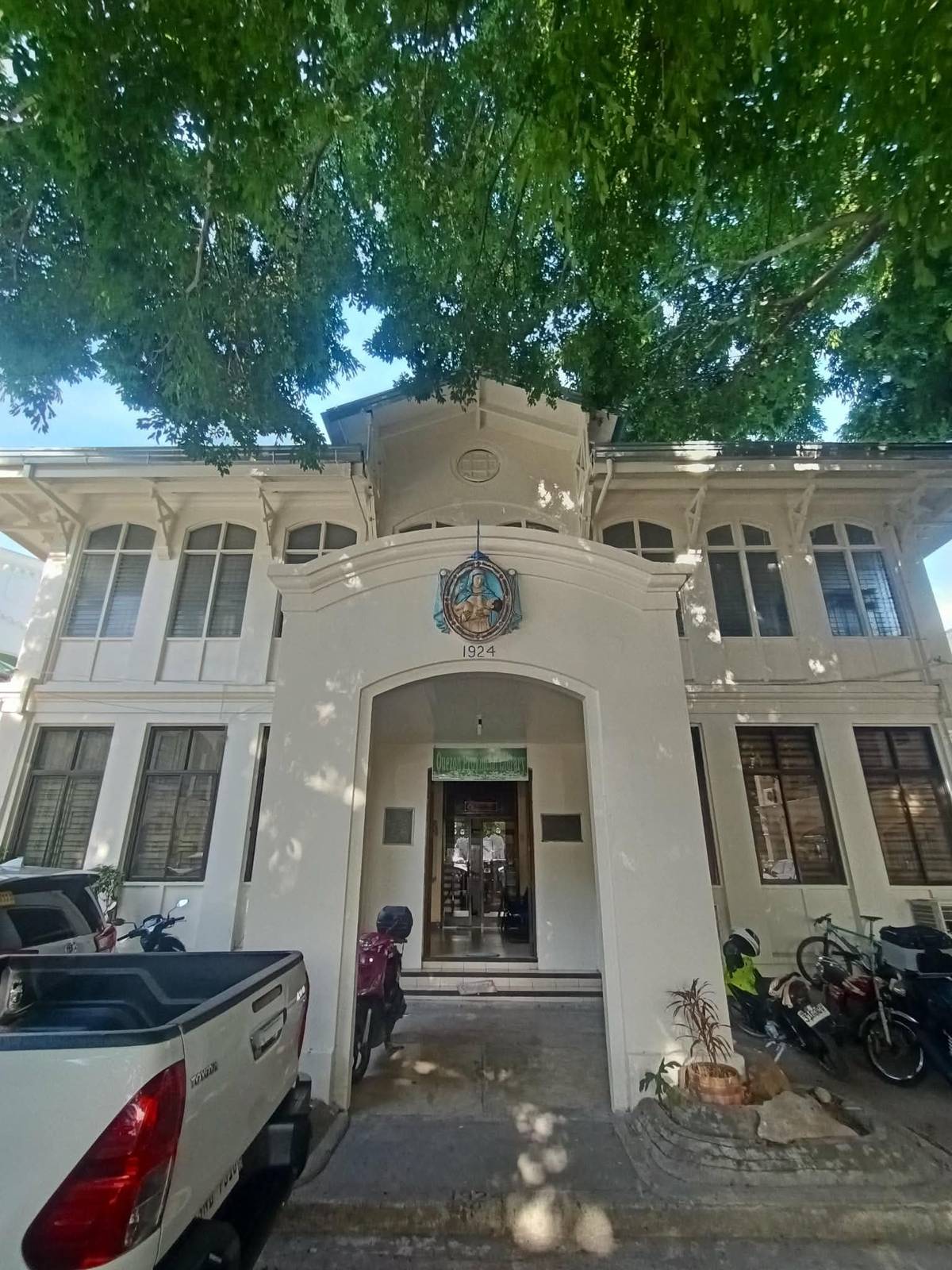
completed in 1924, the former provincial hospital now houses the Quezon Provincial Library and museum.
Restoration
Damaged during World War II, the capitol was subsequently restored through the Philippine Rehabilitation Act of 1946.
Further restoration was undertaken during the administrations of Governors David Suarez (2016–2019) and Danilo Suarez (2019–2022). The work followed the National Historical Commission of the Philippines’ 2010 declaration of the building as a National Historical Landmark.
In its declaration, the NHCP describes the capitol “as an extant example of a fusion of contemporary and historical styles, and featuring the 24 finials by Italian sculptor Francesco Riccardo Monti.”
The finials — an unusual feature of the Arellano-Monti collaborations — represent the province’s largely agricultural industries.
Arellano and Monti also collaborated on the Metropolitan Theater and the Meralco Building in Manila, as well as the old Iloilo City Hall.
Although the Quezon Convention Complex now stands behind it, the provincial capitol remains the compound’s visual focal point, its frontage and principal sightline largely unobstructed.
Provincial jail and courthouse
Directly behind the convention center is the now-abandoned Quezon Provincial Jail, constructed in 1909 during the administration of Governor Domingo Lopez, with Ramon Soriano as contractor.
Parsons designed the jail, along with similar facilities in Tuguegarao, Cagayan; Tarlac City, Tarlac; Fort Bonifacio, Taguig; and Iloilo City, Iloilo.
Typical of jails built during the period, the structure has a quadrangular plan organized around a central courtyard, with garitas, or sentry boxes, at its four corners.
Nearby stands the Tayabas Courthouse, now the Hall of Justice, built in 1923 during the term of Governor Maximo Rodriguez.
The two-story building was renovated from 1971 to 1972, during the administration of Governor Anacleto Alcala, but much of its original American colonial-era fabric remains intact.
Hospital
Beside the capitol stands the former two-story provincial hospital, now the Quezon Provincial Library.
Built in 1924 during the administration of Governor Filemon Perez, with Jose G. Barretto as contractor, it was converted into the Quezon Provincial Preventorium in 1951, when Gregorio Santayana was governor.
The building originally had capiz-shell windows. Its façade bore a relief of an eagle, a motif also used on the original capitol and the courthouse.
Its portico features a relief of a woman — possibly the Virgin Mary — nurturing a child, with the year of the building’s completion inscribed below. A health-themed fountain, also dating from 1924, stands in front.
The first floor now houses the provincial library, while the second serves as a museum. Its collection includes artifacts and memorabilia associated with prominent Quezonians, among them former Congressman Manuel Enverga, former Senator Lorenzo Tañada and former President Manuel L. Quezon.
A nearly identical building once stood in Santa Cruz, Laguna. Although it survives, it has been extensively altered.
Proposed heritage declaration
Across the capitol compound, along Quezon Avenue, stands another provincially owned heritage structure: the two-story Governor’s Mansion.
Now vacant and awaiting restoration, this American colonial-era bahay na bato once served as the governor’s official residence. Despite years of disuse, it remains relatively intact.
The provincial government plans to seek collective designation as a National Cultural Treasure for the mansion, capitol, jail, courthouse, and former hospital, together with Perez Park, where the grotto-like bandstand — completed around 1927 — and the Quezon Monument stand.
The proposed declaration, an uncommon initiative for a provincial government, is being pursued by the Quezon Province Heritage, History, Culture and the Arts Council. The council is chaired by governor Helen Tan, with vice governor Anacleto Alcala III and John Valdeavilla serving as vice chairs, and is preparing the petition for submission to the National Commission for Culture and the Arts.