
Exploring downtown Iloilo City at night
After dark, Iloilo’s historic streets reveal a quieter charm. A nighttime walk through downtown offers a fresh appreciation of its architectural heritage — and a moment to reflect on what the city stands to lose amid redevelopment.
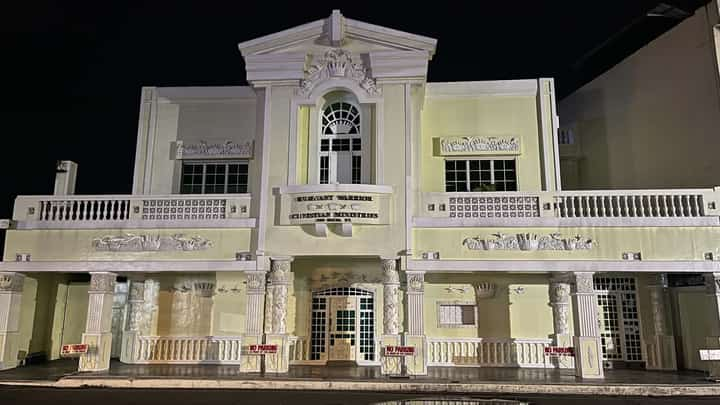
By day, downtown Iloilo City is a bustling urban landscape. Late at night, as its people retire and its streets grow quiet, it reveals another character, inviting night owls to appreciate its heritage from a different, perhaps deeper, perspective.
Walking its spacious streets in the small hours feels like wandering through an open-air museum. Old buildings, plazas and public spaces become the exhibits, their details easier to notice without the distractions of daytime traffic and commerce.
The exuberance of the day and early evening gives way to quiet reverie. The city takes on a meditative quality, its character emerging in the stillness.
There is something unpretentious about this hour. Only a few food establishments remain open, mostly branches of chains rather than homegrown businesses. Birds line the overhead cables, while garbage collectors go about their rounds. Now and then, the flashing lights of a police patrol punctuate the subdued streetscape.
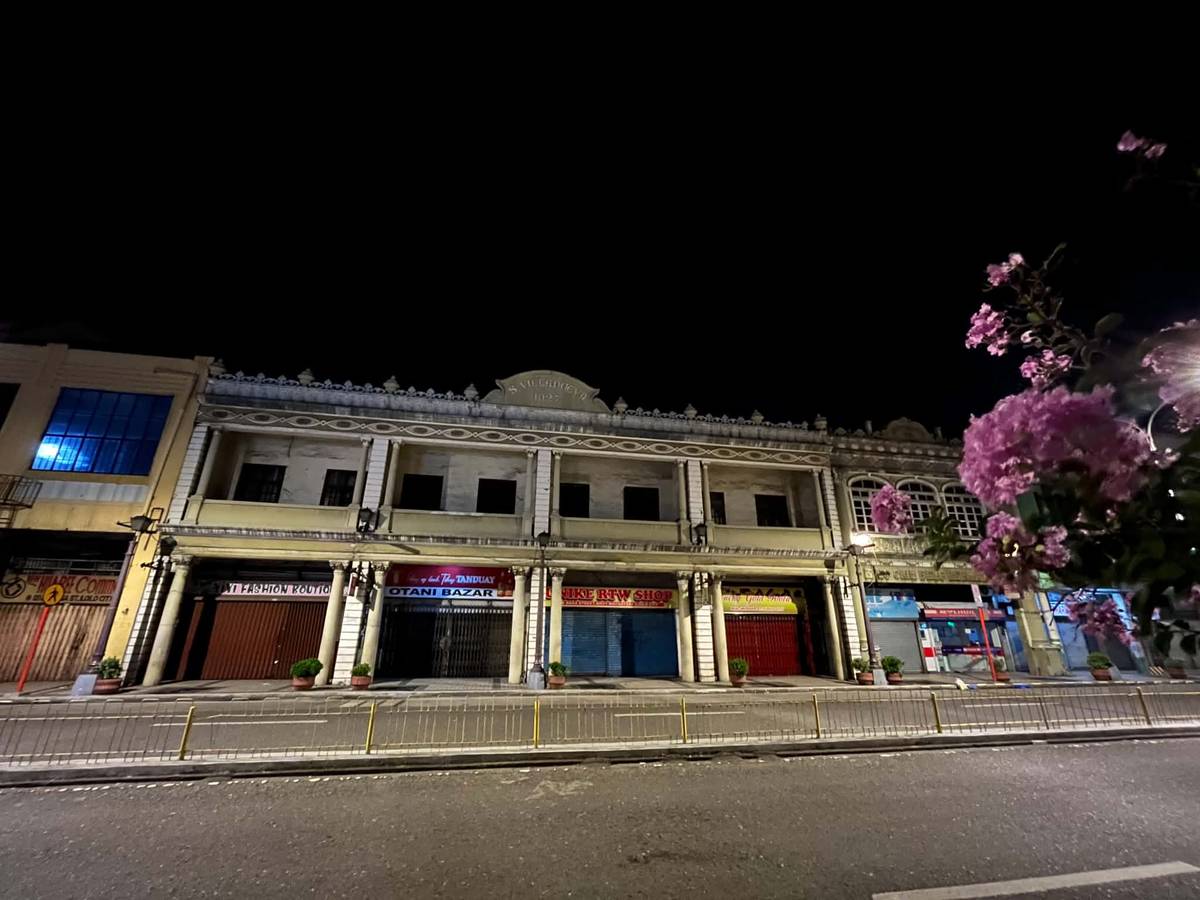
FLOWERING branches frame the S. Villanueva Building, its upper façade bearing the year 1927.
The dim lighting and unhurried atmosphere encourage a closer look at the city’s heritage and the layers of history embedded in its surroundings. They offer time to reflect on the place long celebrated as the original “Queen City of the South” and once accorded the title “La Muy Leal y Noble Ciudad”—the most loyal and noble city.
A nighttime walk brings small details into focus: ornamentation on a historic façade, the few people sleeping on sidewalks, a late-night “paluto” near Plaza Libertad, the twinkling lights of a nearby bar.
The built landscape is distinctive. Buildings from the American colonial period through the postwar years stand alongside old warehouses and the Aduana along Muelle Loney. On many façades, prominently displayed dates mark the years of their construction.
It is easy to understand why the country’s historical commission declared a portion of downtown a heritage zone. Walking farther, one could make a case for extending that recognition to the wider district.
Iloilo’s living heritage also encompasses its natural surroundings: the river and its landscaped banks, the flora and fauna, the Iloilo Strait, and the coastal communities. Here, a late-night stroll might even bring an encounter with a crab wandering across one’s path.
Equally heartening is the continued use of many historic buildings, including those adapted into museums, such as the Aduana, Elizalde Building, Iloilo Prison and Casa de España. Their new functions keep them part of the city’s daily life.
Beyond these landmarks are houses, mansions, commercial buildings, and schools, many dating to the American colonial period. Both within and beyond the designated heritage district, structures from the mid-20th century and the Marcos years add further layers to the city’s architectural history.
At the Central Market, with its recreated American colonial appearance, dawn brings a subdued bustle. Suppliers and vendors arrive with their goods, early shoppers buy ingredients for the day’s meals, and warm pandesal awaits at Los Filipinos Bakery across the way on Iznart Street.
Yet the market experience has changed. Central and Super no longer feel quite like the places they once were. Something of their old soul seems to have slipped away. The same can be said of the corner of Arroyo and J.M. Basa streets.
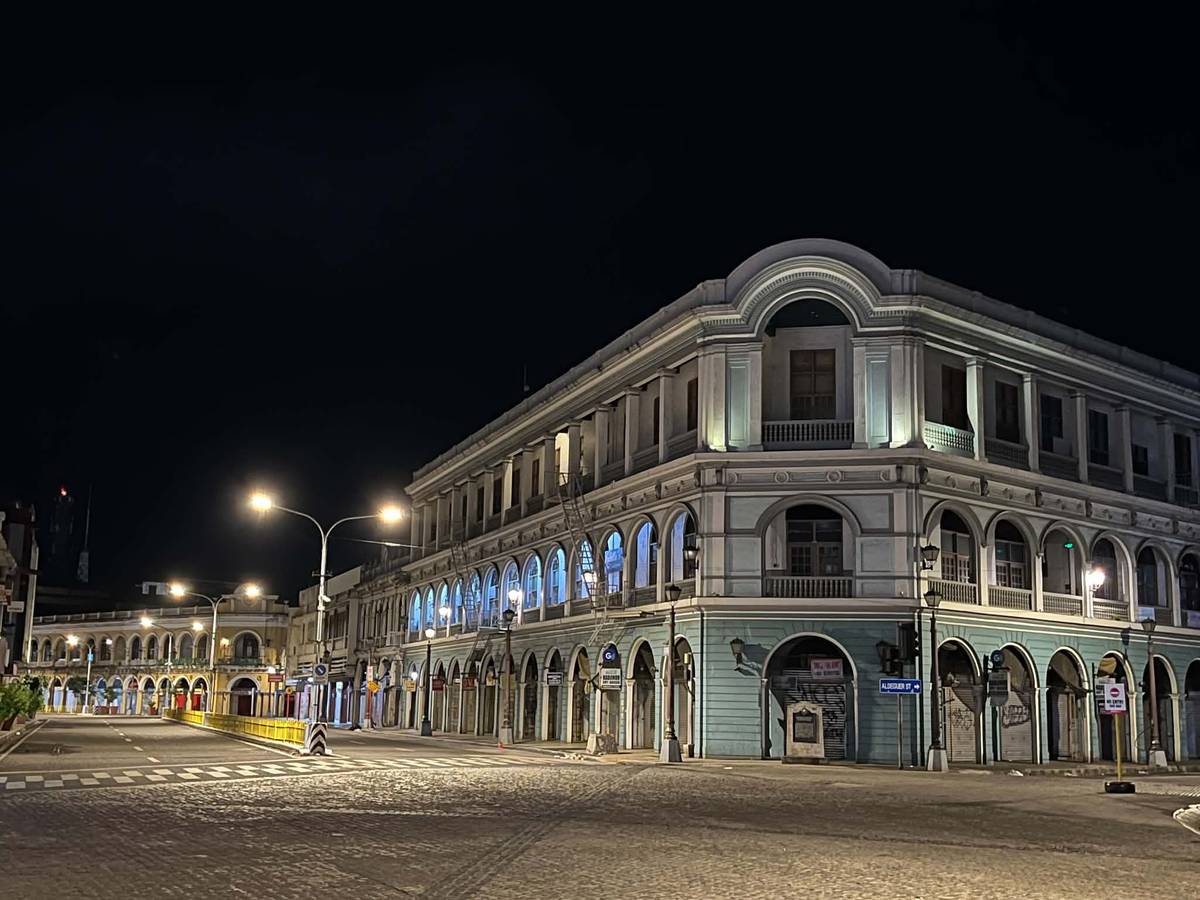
STATELY façades lend J.M. Basa Street the atmosphere of an open-air museum after dark.
These changes raise questions about the direction of heritage conservation in Iloilo. The city has made promising strides, but sustaining that work requires care, particularly when powerful interests shape redevelopment. Preserving a place means attending as much to its everyday rhythms and community life as to its façades.
The potential is there. The challenge lies in nurturing it without diminishing the character that makes Iloilo worth preserving.
Perhaps the city after dark offers a useful lesson: pause, look closely, and contemplate what should endure.