
Turn the page, lead the way

Leadership is often associated with charisma or natural talent, but experts say it is largely a skill that can be learned. While some people may have an innate inclination to lead, experience, education and continuous self-improvement play a far bigger role in shaping effective leaders.
One of the simplest ways to develop those skills is through reading. Leadership books expose readers to new ideas, practical strategies and real-world experiences from accomplished thinkers, executives and researchers. Whether you’re managing a team, launching a business or simply looking to become more influential in your workplace, the right book can offer valuable lessons.
Fully Booked has curated eight titles that explore different dimensions of leadership — from communication and resilience to innovation and teamwork.
One of the foundations of leadership is listening, a skill explored in Kiku: The Japanese Art of Good Listening by Haru Yamada. Inspired by the Japanese concept of kiku, which emphasizes deep and empathetic listening, the book encourages readers to move beyond simply hearing words and instead cultivate genuine understanding. Drawing from her own experience of living with hearing loss, Yamada shows how attentive listening strengthens trust and relationships.

'Kiku: The Japanese Art of Good Listening' by Haru Yamada.
Leadership also requires courage, according to bestselling author Brené Brown. In Dare to Lead, Brown argues that vulnerability is not a weakness but one of a leader’s greatest strengths. Through years of research, she demonstrates how honesty, trust and empathy create healthier workplaces and inspire teams to perform at their best.
For leaders facing stalled projects or organizational challenges, Dan Heath’s Reset: How to Change What’s Not Working offers practical tools for overcoming obstacles. Rather than working harder, Heath encourages readers to identify the biggest barriers, rethink existing systems and redirect resources where they can have the greatest impact.
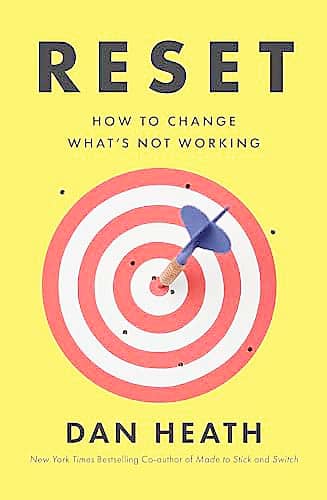
‘Reset: How to Change What’s Not Working’ by Dan Heath.
Communication remains another defining leadership trait. Kim Scott’s Radical Candor presents a management philosophy built on two principles: caring personally while challenging directly. The book offers practical advice on giving honest feedback without sacrificing respect, helping leaders build stronger relationships and more productive teams.
Sometimes, however, the best solutions come not from having more choices but from embracing limitations. In Inside the Box: How Constraints Make Us Better, David Epstein argues that carefully chosen constraints can unlock creativity and better decision-making. Through research and engaging stories, he explains how limits can become powerful drivers of innovation.
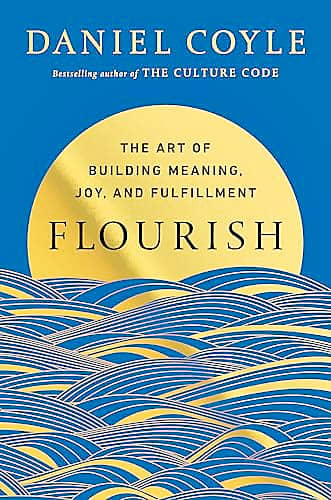
'Flourish: The Art of Building Meaning, Joy, and Fulfillment' by Daniel Coyle.