
Mans Carpio cites need for judicial review
Malacañang told Carpio he had nothing to fear if his conscience was clear.
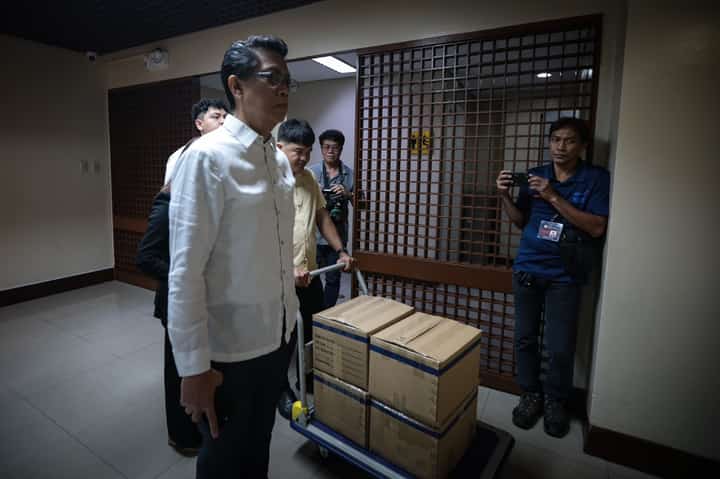
Officials from the BIR and the various bank accounts of Vice President Sara Duterte and her husband Atty. Manases "Mans" Carpio appeared at the Senate on Thursday, 30 July, to submit documents in compliance with the subpoena of the impeachment court. The documents are meant to serve as evidence for Article II of the impeachment, Duterte's unexplained wealth.
Aram Lascano
Second Gentleman lawyer Manases “Mans” Carpio said that while he and Vice President Sara Duterte will respect the authority of the Senate impeachment court and comply with lawful processes, they believe important legal questions remain regarding the authorization for the release of their income tax records, suggesting they will pursue a complaint with a judicial court.
President Ferdinand Marcos Jr. had approved the impeachment court’s request to open the income tax records of Carpio and Duterte.
Carpio said he and the Vice President will continue to respect the authority of the Senate court, even as his legal team raised questions about the authorization behind the release of the couple’s income tax records.
He said the authorization should be evaluated under the constitutional and statutory framework governing taxpayer information and the exercise of executive authority. He said his legal team found no indication that the Bureau of Internal Revenue had issued any tax assessment or deficiency finding against either him or Duterte, and questioned whether procedural requirements under the applicable framework were met before the authorization was issued.
Court urged to intervene
“The submission of documents to the Senate impeachment court is a procedural step. The legal significance, admissibility, and evidentiary value of those documents are matters for a judicial court to determine in accordance with the Constitution, applicable laws, and the rules of the Senate impeachment court,” Carpio said.
He urged the public to distinguish between legal allegations, procedural developments, and factual findings, saying that constitutional proceedings exist to resolve disputes through evidence before the proper tribunal — not through public commentary. He said his legal team would continue to raise all available legal arguments through the appropriate forums.
Malacañang, meanwhile, told Carpio he had nothing to fear if his conscience was clear.
Presidential Communications Undersecretary Claire Castro said in a video message Friday that Carpio was free to file any action he wished if he had issues with the tax documents release, but President Marcos was simply following the process and the law “for the truth.”
“Let us remember this: If you have nothing to hide and there are no irregularities to be found in the records being examined, then there is nothing to fear. In fact, you should be proud that your earnings were acquired honestly,” Castro said.