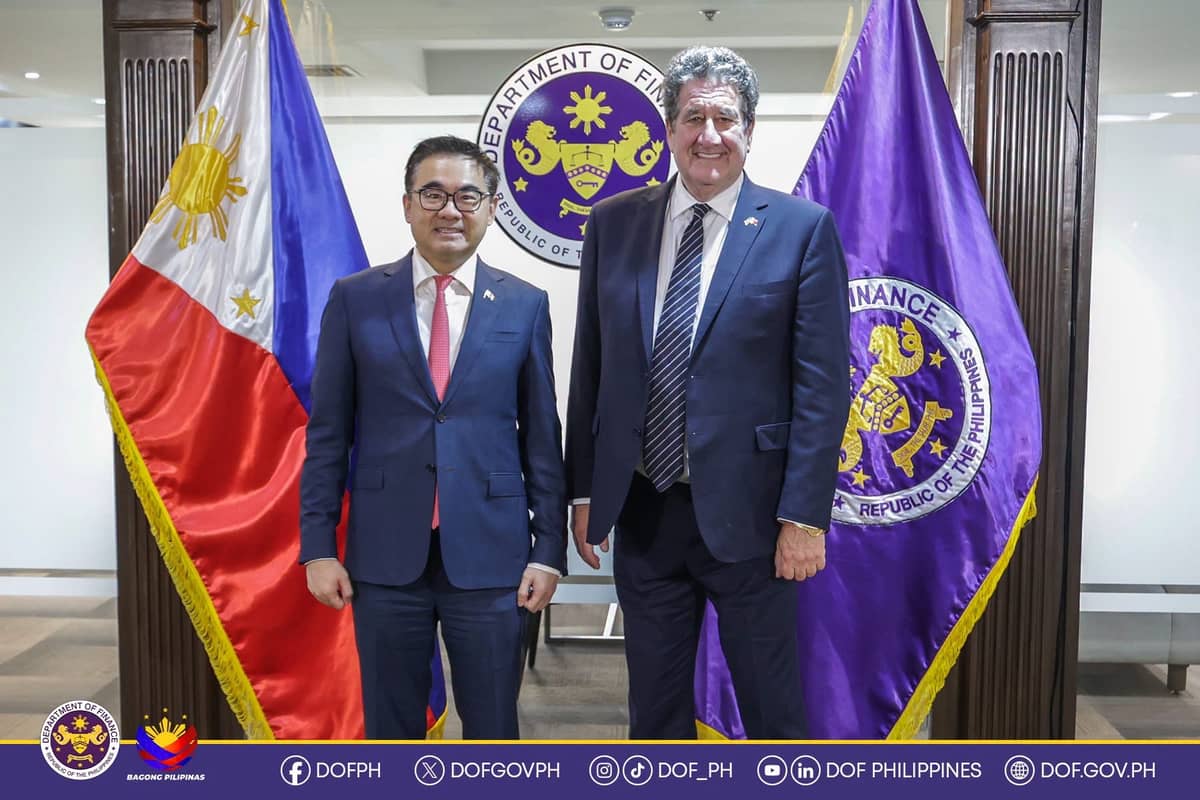
He wants things done
A man who wants things done and good results, Secretary Go said he hopes that all agreements regarding the Pax Silica Initiative would be signed at the soonest possible time.
“I want to get things done, and I want results. I believe it will move fast. What is important is jobs for Filipinos, and we’ll have an ecosystem for technology to build on. If we want to be a player in the AI industry in the future, we need to start somewhere. This is really a good start. Once you have the ecosystem, one thing leads to another,” he said.
Asked for his hopes that the next administration would continue the massive project, he said, if it can be shown to be a good project, then “any administration would want it to continue because it can create, I suppose, hundreds of thousands of jobs.”
“We’re talking of hundreds of thousands of jobs. Are we already happy to see that the dreams of our kababayans are to be OFWs? We have to give them jobs here. That’s the whole agenda: to give them jobs here. Otherwise, everybody runs to go abroad. We are trying to give people jobs here, and that is our primary motivation,” he stressed, which is why he is hopeful that the government could sign the much-awaited framework this year.
“We are hopeful, and we will try to make it happen this year,” Secretary Go added.
He said other neighboring countries in the ASEAN region, such as Thailand, Vietnam, Malaysia and Indonesia, are now doing the same agile efforts to work with the United States under the Pax Silica initiatives.
“It’s a race. Everybody wants this because it’s taxes, it’s revenues for their government and jobs for their citizens. It’s ecosystem improvement. So, we are hopeful to do this as fast as we can,” he said.
Updated SIPP
Meanwhile, Secretary Go said that as the updated 2026-2028 Strategic Investment Priority Plan (SIPP) will be launched in various parts of the country, he underscored the importance of collaboration behind the development of the plan.
The restructured 2026-2028 SIPP introduces a more structured approach to investment promotion, including the new Modern Basic Needs category, which consolidates priority activities across manufacturing, agriculture, services, infrastructure, logistics, healthcare and energy.
It also expands and refines coverage across key sectors to better reflect emerging industry requirements and evolving market needs.
The new plan likewise strengthens support for strategic and future-oriented industries through the inclusion and expansion of activities in areas such as manufacturing, critical minerals and green metals, renewable and emerging energy technologies, sustainability-driven industries, artificial intelligence and data science, cybersecurity, quantum technologies and other innovation-focused sectors.
“The 2026-2028 SIPP reflects the BOI’s leadership and close coordination with the Fiscal Incentives Review Board and our investment promotion agencies (IPAs). It provides a unified direction for government and industry, ensuring that investment promotion efforts are aligned with the country’s broader economic agenda,” Secretary Go said.
On Friday, the Department of Trade and Industry (DTI), through the Board of Investments, which Secretary Go has been working hand in hand with as the Marcos administration’s “investment czar,” officially launched the nationwide 2026-2028 Strategic Investment Priority Plan (SIPP) Roadshow.
The milestone marks the next phase of the government’s efforts to position the Philippines for the industries of the future, following the approval of the new SIPP in June this year.
The event brought together government officials, industry leaders, investors, business organizations, and development partners to discuss the priority sectors, emerging industries, and investment opportunities identified under the country’s investment roadmap.
Trade Secretary and BoI chairperson Cristina Roque stressed the importance of ensuring that the new SIPP delivers concrete results for investors, industries and communities.
“The approval of the 2026-2028 Strategic Investment Priority Plan (SIPP) was only the beginning. Through this roadshow, we are bringing the country’s investment priorities directly to businesses and investors, giving them a clearer understanding of where the opportunities are and how the Marcos administration can support their growth.
Our goal is clear — to turn these priorities into investments that create quality jobs, strengthen industries and generate more economic opportunities for Filipinos across the country,” Secretary Roque said.
As the country’s lead IPA and steward of the 2026-2028 SIPP, the BoI is leading the initiative to convert the plan’s goals into actual investments that foster industry development and economic resilience.
Trade Undersecretary and BoI Managing Head Ceferino Rodolfo, for his part, emphasized the BoI’s continued work to operationalize the 2026-2028 SIPP.
“The BoI’s role goes beyond promoting investments. We help shape policy, build strategic industries, and create the conditions needed for long-term competitiveness. As we move from approval to implementation, we are fast-tracking the finalization of the General Policies and Specific Guidelines and remain on track to publish these within the third quarter of the year,” Undersecretary Rodolfo said.
The Luzon kickoff at the Makati Diamond Residences marks the first stop of a nationwide roadshow series that will continue in the Visayas and Mindanao in the coming weeks.
Through this initiative, the BoI aims to accelerate investments that contribute to a more competitive and investment-ready Philippines.
Chief economic aide
Currently serving as the Secretary of the Department of Finance and leading the Marcos administration’s economic team, Secretary Go has been guiding the nation’s fiscal direction and economic priorities.
Before assuming this role, he served as the Special Assistant to the President for Investment and Economic Affairs, where he was responsible for integrating and coordinating the administration’s key investment and economic policies. He advanced strategic efforts to attract more investments, enhance the ease of doing business, and create jobs and opportunities for the Filipino people.
He also chaired the Economic Development Committee, overseeing strategic developments across key government agencies.
Secretary Go brings with him over 35 years of leadership in the private sector, having served as chairman, vice chairman, president, CEO and/or director of six publicly listed companies and multiple corporations across diverse industries, including media, retail, real estate, food, banking, finance, airline, petrochemicals and power.
A visionary, results-oriented leader who transitioned to public service to help drive national progress, Secretary Go is known for getting things done and plays a key role in shaping the Philippines’ economic future.