
Up to 500,000 families await enrollment in 4Ps — DSWD

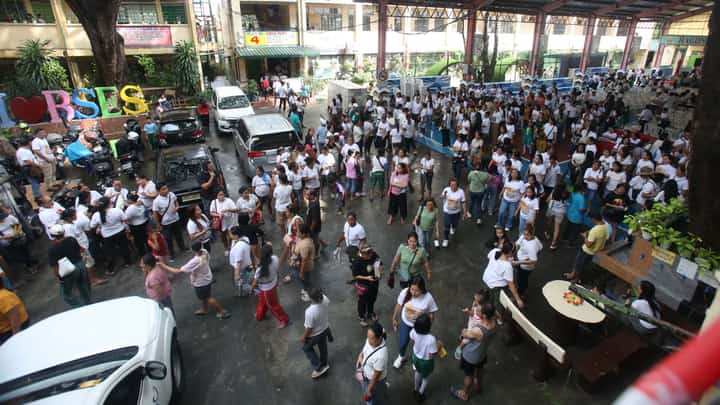
Members of the Pantawid Pamilyang Pilipino Program (4Ps) joined the Brigada Eskwela activities at Bagong Silangan Elementary School in Quezon City on Monday, 1 June.
Photograph by Analy Labor for DAILY TRIBUNE
The Department of Social Welfare and Development (DSWD) said on Saturday that 400,000 to 500,000 validated beneficiaries remain on the waiting list for the Pantawid Pamilyang Pilipino Program (4Ps).
"We have around 400,000 to 500,000 on the waiting list. Those are the validated 4Ps beneficiaries," DSWD Assistant Secretary Irene Dumlao said in a DZBB interview.
"Our annual target is around 4.4 million households. Right now, we have more than 2.8 million. We are enrolling additional beneficiaries based on the validated waiting list," she added.
The national government recently extended the maximum seven-year participation period for 4Ps beneficiaries through Executive Order No. 120, signed by President Ferdinand R. Marcos Jr. last month.
Dumlao said the President emphasized the need to strengthen case management to ensure that beneficiaries reach Level 3 before exiting the program.
"Under the law, a program beneficiary may only remain in the program for seven years. But the President extended that because it was seen that a household beneficiary may have already spent seven years in the program but is still at Level 1 or Level 2," she said.
The DSWD official added that by the end of the year, the agency will determine which beneficiaries are ready to exit the program following the Social Welfare and Development Indicators (SWDI) assessment to be conducted by social workers during the second semester of 2026.
"We monitor the progress of our 4Ps beneficiaries using a tool we call the Social Welfare and Development Indicators (SWDI). We measure their social adequacy and economic sufficiency.
"We measure whether the level of well-being of our 4Ps beneficiaries is improving," Dumlao said.
Launched in 2008 and institutionalized through Republic Act No. 11310, or the 4Ps Act of 2019, the program provides conditional cash grants to poor households to help improve their health, nutrition and education.