
Discovering the PATRIMONY of Tiaong, Quezon
Beyond its familiar attractions, Tiaong, Quezon, holds a wealth of little-known heritage—from its historic church and monumental boundary arch to ancestral houses and enduring agricultural traditions that reveal the town’s rich and layered past.

Known as the gateway to the province of Quezon from Manila, the town of Tiaong is perhaps best associated with the eco-cultural destination Villa Escudero, the celebrated Pottery Garden of artist Ugu Bigyan, and Tikob Lake, a crater lake within the Laguna Volcanic Field.
Beyond these familiar attractions, however, the town possesses a rich collection of historic structures and cultural landmarks that remain largely unknown and underappreciated.
Formerly called Nayum, Tiaong was founded by the Franciscans in 1600. It is also the birthplace of statesman, nationalist, and former Supreme Court Associate Justice Claro M. Recto. His association with the town was commemorated in 1984 with the installation of a historical marker by the former National Historical Institute.
Like many settlements established during the Spanish colonial period, Tiaong was laid out according to a grid plan. Within this historic townscape are numerous built heritage assets, among them the parish church dedicated to San Juan Bautista, the American-era hydroelectric dam within Villa Escudero, and the nearly century-old boundary arch between Laguna and Quezon.
A monumental gateway
The Laguna–Quezon boundary arch is currently being proposed for declaration as a National Cultural Treasure by the Provincial Government of Quezon through the Quezon Provincial Heritage, History, Culture and the Arts Council, with the support of the municipal government led by mayor Vincent Arjay Mea.
Completed in 1929, the concrete structure was designed by the Division of Architecture of the Bureau of Public Works under the supervision of Juan Arellano, who was serving as acting consulting architect at the time.
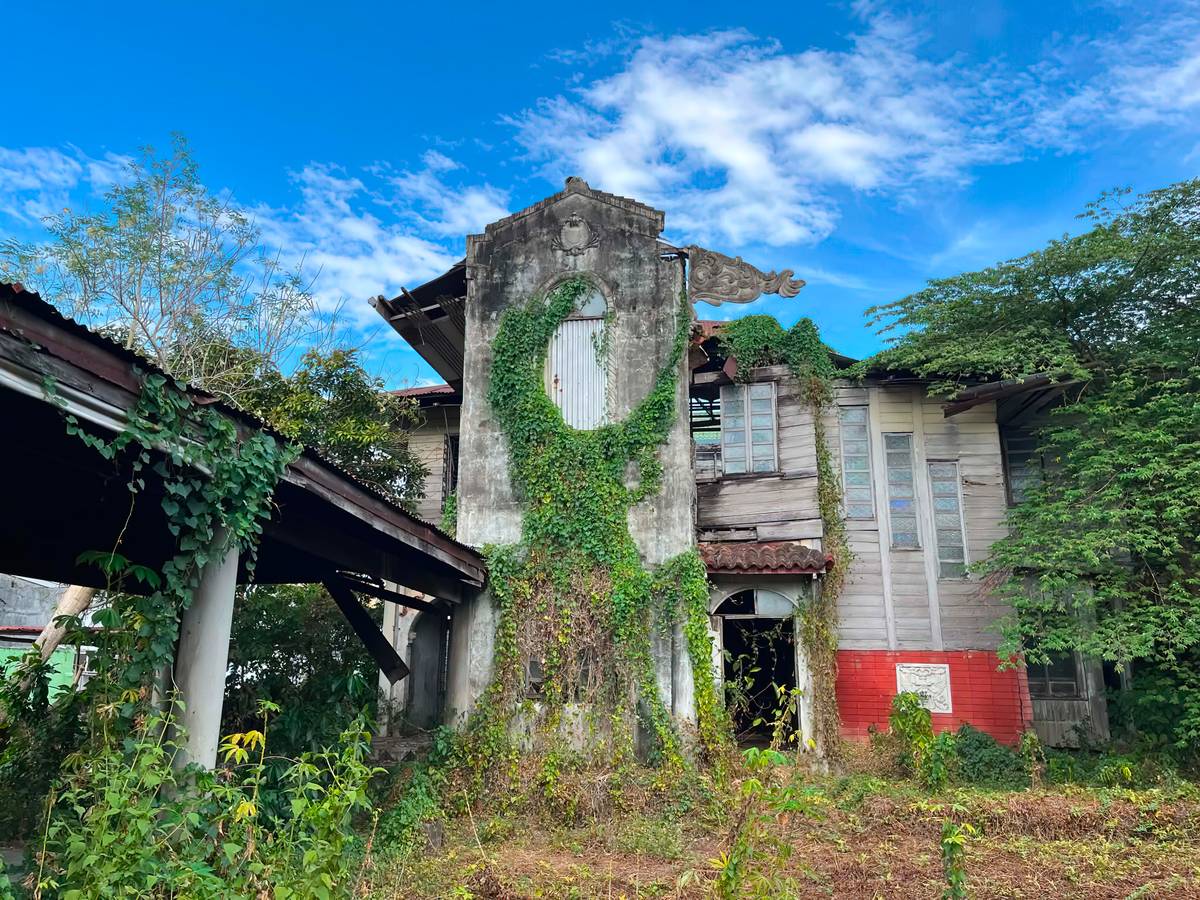
HOUSE in ruins.
The arch stands behind a small concrete bridge spanning a creek that marks the actual boundary between the two provinces. Crowning the structure are ornamental crests bearing images of eagles and festooned cartouches. Its surfaces are further embellished with sunken reliefs of angels.
The arch originally bore the names of the provinces of Laguna and Tayabas. These were later changed to San Pablo City and Quezon, respectively. San Pablo is the first territory of Laguna encountered by travelers arriving from the south.
One of the arch’s most intriguing but little-known features is a view deck, which may be reached through iron ladders at both ends of the structure. Access to the deck, however, is prohibited for safety reasons.
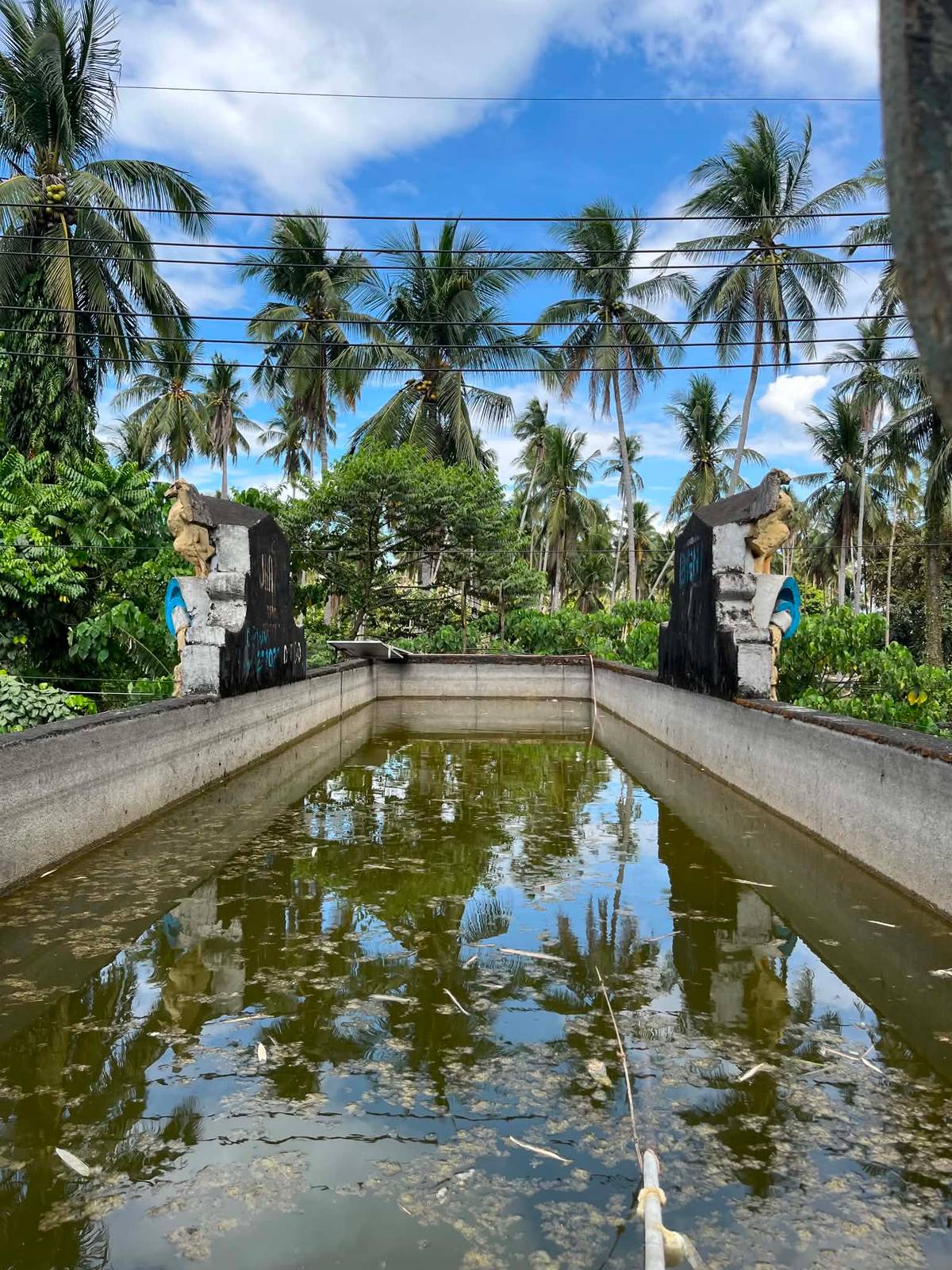
VIEW deck on top of the arch.
The parish church
Tiaong’s first church was constructed from light materials in 1601 by Father Juan de Santa Cruz in the settlement then known as Nayum, which was formerly part of Sariaya. The church was originally dedicated to Santiago Apostol.
In 1606, the town’s administration was transferred to the Augustinians. They relocated the settlement to its present site while retaining the name Nayum. During this period, Tiaong was incorporated into the territory of neighboring San Pablo.
The town was returned to the Franciscans in 1794. It remains unclear, however, when the settlement’s name was changed from Nayum to Tiaong and when San Juan Bautista replaced Santiago Apostol as its titular patron.
By 1865, Tiaong already had a stone church and convent. In 1870, Father Samuel Mena, OFM, raised the church’s façade and transept. Father Luis Garcia de los Angeles later covered the church with galvanized-iron roofing in 1888 and repaired the woodwork of both the church and the convent.
Beside the convent once stood the town cemetery, which was constructed from stone and brick. Sections of its perimeter wall survive to this day. The cemetery may have been built by the Augustinians, who also erected stone-and-brick school buildings that are no longer extant.
Brick kilns used to produce materials for these structures — as well as for a brick bridge on the road leading to San Pablo — were reportedly still standing at the turn of the 20th century.
The bridge was most likely built across a tributary of the Malaking Ilog River within the población. It was erected in 1843 under the direction of Father Joaquin Coria, OFM.
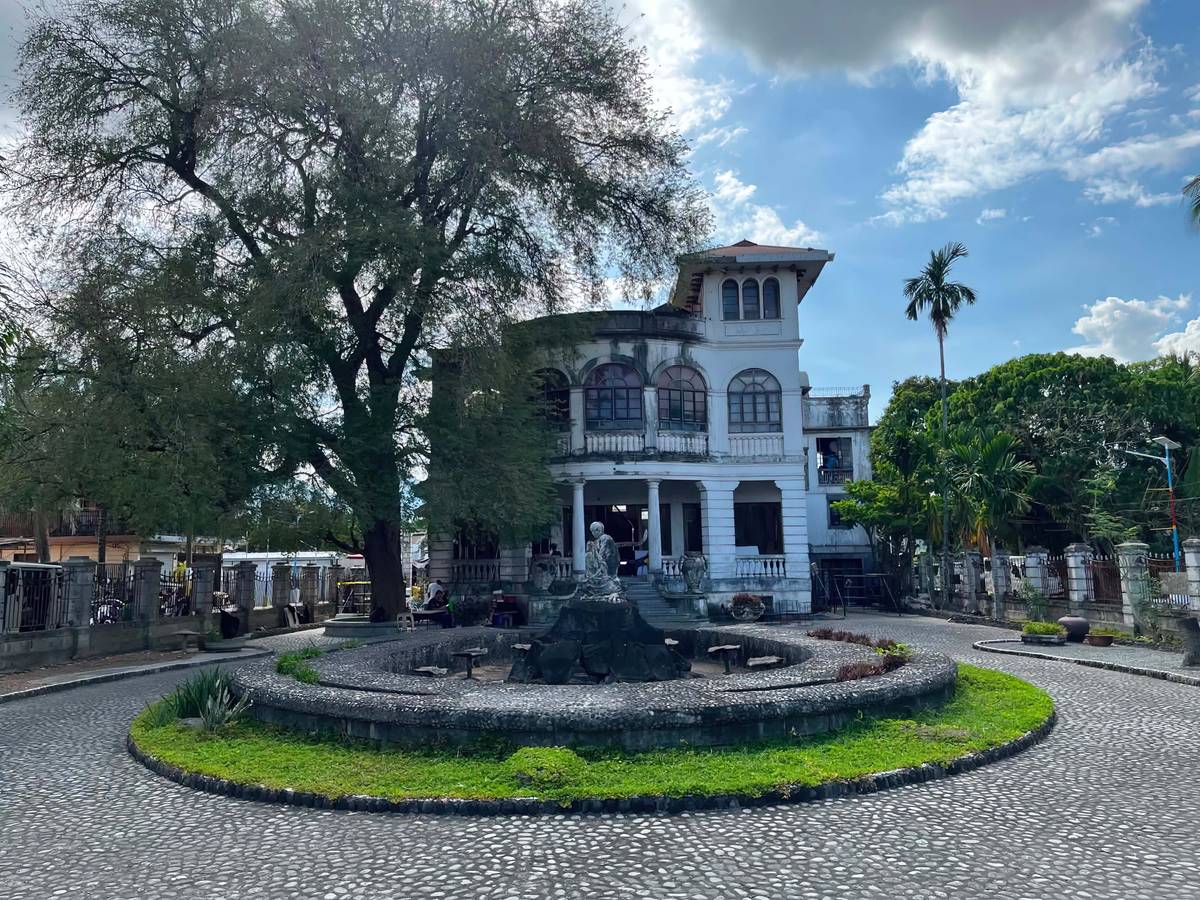
DOÑA Concha Herrera House.
Ancestral houses
Compared with neighboring San Pablo, Tiaong also possesses a noteworthy collection of ancestral houses dating from the American colonial period, the postwar years, and as recently as the 1970s.
The most prominent is the Doña Concha Herrera House, which occupies a property bounded by Claro M. Recto, Herrera, and Pasumbal streets.
Designed by architect Tomas Mapua, the imposing residence is fronted by a garden centered on a horseshoe-shaped pond. In the middle of the pond stands a sculpture inspired by José Rizal’s novel Noli Me Tangere, depicting the character Elias battling a crocodile.
During the Second World War, the house was occupied by Japanese forces. It was bombed by American forces during the liberation and later set ablaze by members of the Makapili.
After the war, the house was restored under the supervision of architect Claro Umali Gonzales of Candelaria. It gradually fell into disuse beginning in the 1960s, when Herrera transferred to Mandaluyong.
In the 2010s, the family decided to restore and rehabilitate the residence once more. The project took more than two years, beginning in February 2012 and concluding in early 2015.
Other historic residences
Another impressive residence is Casa Milagros, located at the corner of Claro M. Recto and Alabastro streets.
Built during the American colonial period, the stately two-story wooden house features brickwork on the ground level, capiz-shell windows, ventanillas and a roof crowned by three lightning arresters.
It is comparable in scale and architectural presence to the Herrera House and to the ruins of a California Mission-style residence at the corner of Claro M. Recto and Escudero streets.
Elsewhere in the población, many old houses remain standing and in use, although they are in varying states of conservation. Together, these residences preserve traces of the town’s architectural evolution and the changing lives of its inhabitants across generations.
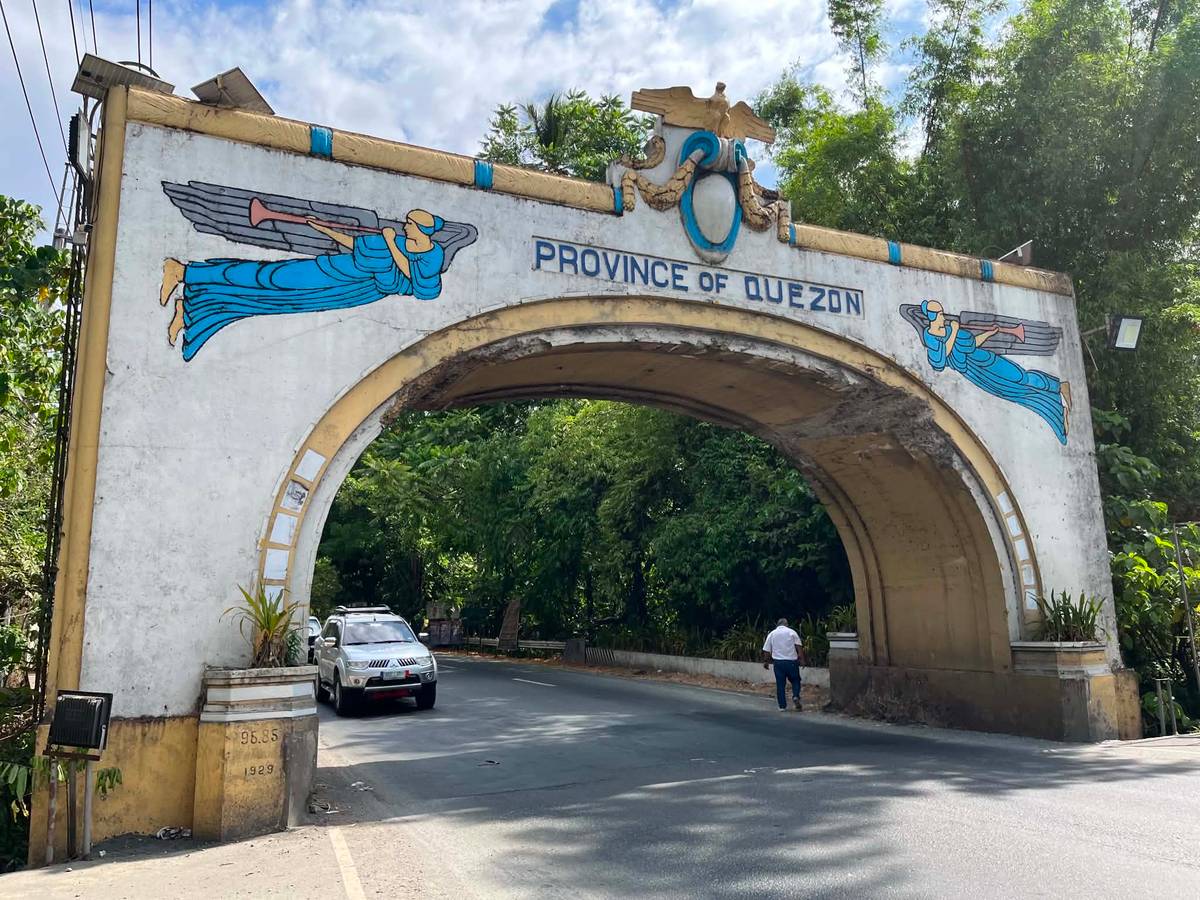
THE QUEZON-LAGUNA arch, designed under the supervision of Juan Arellano.
The products of Tiaong
During the 19th century, Tiaong was known for producing high-quality timber used in construction. The town was also rich in palms, including buri or buli, as well as resins and vines.
Its agricultural products included rice and corn, which remain important local crops. Tiaong also once had plantations devoted to cacao, coffee and sugarcane.
The town likewise produced coconut oil. Its rice was traded in the markets of San Pablo and in various towns throughout what was then Tayabas Province, now Quezon.
Tiaong’s surviving structures, landscapes, and traditional industries reveal a history far richer than its reputation as a mere gateway to Quezon. Its churches, bridges, residences, civic monuments and agricultural heritage form an important part of the province’s cultural patrimony—one that deserves to be documented, protected, and more widely appreciated.