
Missing documents, heavy redactions cloud DOJ’s Epstein files release
Some were removed from the Department of Justice website — including a table of framed photos that contained images of Donald Trump.


U.S. media and international outlets report that at least 16 files disappeared from the DOJ’s online library less than a day after their release.
The files were released on Friday, 19 December, under the Epstein Files Transparency Act, a bipartisan law signed by President Trump that requires the DOJ to make public all unclassified documents related to Epstein’s investigations by a 19 December deadline.
However, the Justice Department’s partial release fell short of that deadline and was heavily criticized on Capitol Hill for being incomplete and overly redacted.
Among the missing items was a photograph showing a desk drawer filled with images, including two pictures of Trump, one depicting him surrounded by women in bathing suits, and another partially obscured image with Trump, his wife Melania, Ghislaine Maxwell and Epstein. Nude paintings and other materials from Epstein’s New York home were also temporarily pulled.
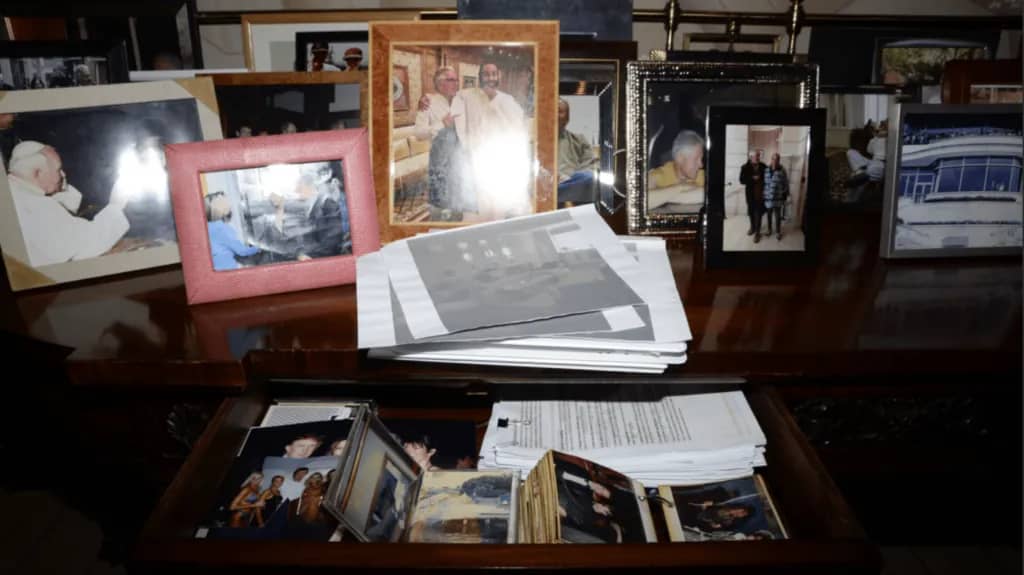
One of the images removed by the Department of Justice
US Department of Justice
The DOJ later restored the Trump photo, saying it was removed “out of an abundance of caution” to review whether it might reveal identities of victims or other sensitive information.
Officials clarified that no victims appeared in the photo and that the removal was not politically motivated — a claim that has been disputed by Democrats and some victims’ advocates.
Deputy Attorney General Todd Blanche told NBC’s Meet the Press that files were pulled after victim rights groups raised concerns about potential exposure of individuals, and that the review process for redaction remains ongoing. He insisted that the DOJ is “complying with the law” while balancing public transparency and privacy protections.
Critics argue the partial release fails to meet the Transparency Act’s requirements. House Minority Leader Hakeem Jeffries and other lawmakers have called for written explanations from the DOJ, and some, including Representatives Ro Khanna and Thomas Massie, are exploring legal and congressional enforcement actions, including contempt citations or lawsuits to compel full disclosure.
The released documents — roughly several thousand of the hundreds of thousands expected — include photos, flight logs, interview transcripts and court records, although many pages are blacked out to obscure names and identifying details of victims. Over 550 pages were reportedly fully redacted, leaving advocates and survivors frustrated that the release falls short of the law’s intent.
Epstein, the late financier and convicted sex offender, died by suicide in 2019 while awaiting trial on federal sex‑trafficking charges. The newly disclosed files provide rare insights into the extent of his connections with powerful figures, but so far do not include definitive evidence of criminal conduct by any public figure beyond Epstein and his convicted accomplice Maxwell.