
SAYS OMBUDSMAN: Not the most, but DA, NFA corruption-tainted
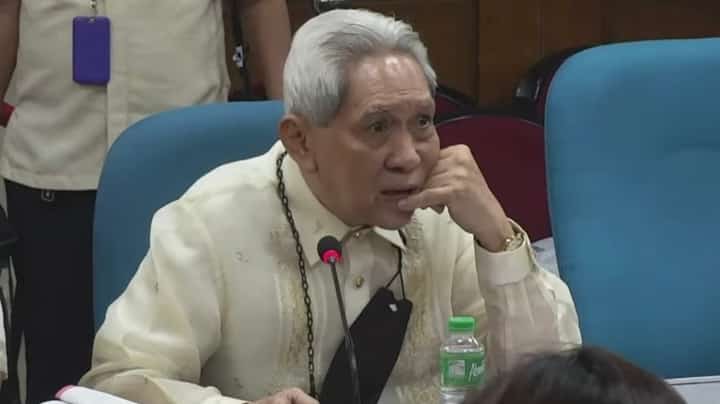
Ombudsman Samuel Martires on Thursday categorically denied branding the Department of Agriculture (DA) and the National Food Authority (NFA) as the “most corrupt” agencies in the entire bureaucracy.
Martires clarified, however, this did not suggest that DA and NFA officials were not guilty of wrongdoing.
“I’m not saying that there are no corrupt officials and employees in the Department of Agriculture, but I’m not saying also that it is the most corrupt,” Martires, a former Supreme Court associate justice, told DAILY TRIBUNE in a phone interview.
Martires issued the clarification after a radio interview, wherein he was asked to explicitly name a major corrupt agency, made the rounds on social media and stirred up controversy.
In his defense, Martires asserted that he did not “unequivocally” single out the two agencies as the breeders of corruption in the entire government, although he labeled them as such.
“Before I said that, I qualified my answer. What I said was [it’s the agency] within Quezon Memorial Circle. I did not say it’s the most corrupt; I did not use the term,” he said.
The DA Office of the Secretary is headquartered at the Quezon Memorial Circle, while its attached agency, the NFA, is situated on Visayas Avenue.
According to Martires, whose office is tasked with prosecuting corrupt officials in the government, he has no competence to point to the DA and the NFA as principal offenders.
He pointed out that corruption is prevalent and spans the entire bureaucracy, including those agencies beyond the Quezon Memorial Circle.
Nevertheless, he acknowledged the ongoing efforts of the DA, under the stewardship of Secretary Francisco Tiu Laurel Jr., to expunge the corruption within the department, whose broad mandate encompasses various aspects of agriculture, including crop production, livestock, fisheries and aquaculture, irrigation and rural development, among others.
Martires also concurred with Laurel on restoring the NFA’s power to import, a provision lobbied for by the House of Representatives but left out when Congress passed the amended Rice Tariffication Law in December last year.
“You know, those who say they don’t want to reinstate the power to import [of the NFA], they are probably in cahoots with the traders. The NFA should be given back all its powers, including the power to supply public markets,” Martires said.
No direct selling
He also branded the amended Rice Tariffication Law as “anti-poor.”
In a previous interview, Laurel stressed that restoring some of the crucial powers of the NFA, including the House’s recommendation, will help the government to lower the cost of rice, currently pegged at P50 to P60 per kilo.
NFA rice, which was then sold at P27 per kilo, was pulled out of the markets following the enactment of RTL in February 2019 during the Duterte administration.
The law prohibits the NFA from directly selling its stocks to the market and restricts its function to stockpiling palay for calamities.
The RTL also abolished the NFA’s powers to regulate the rice sector, license market players, inspect warehouses, track stock movements, and stabilize prices while liberalizing the importation of rice.