
Riley's big break: First Phl eaglet hatched unassisted

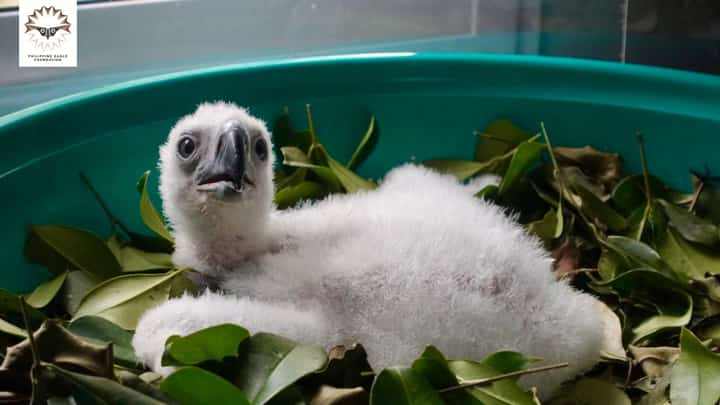
For the first time in history, the Philippine Eagle Foundation (PEF) has documented an unassisted hatching of a Philippine eagle, marking a groundbreaking milestone nearly four decades in the making.
The eaglet, named Riley or "Chick No. 31," hatched naturally on 16 January, without any human intervention, at the foundation’s breeding facility in Davao City. Riley is the offspring of Philippine eagles Sinag and Dakila.
“Riley’s hatching is the first-ever documented unassisted natural hatching, a true testament to the resilience and strength of our #pefat38 conservation efforts,” the foundation announced on Facebook.
On Wednesday, the eaglet was moved to a bigger nest to accommodate her growth. Riley has been officially adopted by Eagle Cement Corporation through PEF’s sponsorship program, which ensures funding for the care of the critically endangered raptors. According to the foundation’s website, all 32 eagles at the center have been adopted.
PEF celebrated Riley’s arrival as a symbol of hope, emphasizing the importance of unity in conserving the species. The timing of the hatching made the event even more special, coinciding with PEF’s 38th anniversary.
Found only on the islands of Luzon, Samar, Leyte, and Mindanao, the Philippine eagle faces serious threats from habitat loss and hunting. With one of the longest breeding cycles among birds of prey, its slow reproduction rate has made conservation efforts crucial to boosting its population. Riley’s unassisted hatching marks a significant step forward in these efforts.