
Injured eagle makes rapid recovery
Veterinarians described the eagle as lethargic, weak with down feathers matted by mud and debris and a severe maggot infestation involving the base of the tail, resulting in extensive necrotic tissue around the tail base.
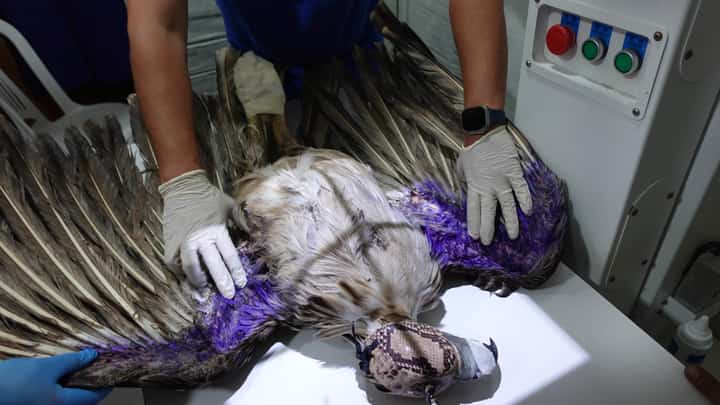
SAVING Sawaga Veterinarians provide medical treatment to the critically endangered Philippine eagle Sawaga Dalwangan at Doc Bayani’s Animal Wellness Clinic in Davao City. The raptor was found on 3 July and initially stabilized at the Provincial Zoo in Malaybalay before being transferred to the clinic for comprehensive diagnostic tests and specialized care.
PHOTOGRAPH COURTESY OF Philippine Eagle Foundation
An endangered Philippine eagle rescued near the Sawaga River in Barangay Dalwangan, is showing clinical improvement after treatment for a severe maggot infestation and injuries consistent with gunshot wounds, the Philippine Eagle Foundation (PEF) said in updated medical and rescue reports.
The bird, Sawaga‑Dalwangan, was found on 3 July and initially stabilized at the Provincial Zoo in Malaybalay before being transferred to Doc Bayani’s Animal Wellness Clinic in Davao City for comprehensive diagnostics and care.
Veterinarians described the eagle as “lethargic, weak” with down feathers matted by mud and debris and a “severe maggot infestation involving the base of the tail, resulting in extensive necrotic tissue around the tail base,” according to the PEF medical report.
Radiographs taken at the clinic revealed two metallic radiopaque foreign bodies consistent with gun pellets, one lodged in the soft tissues of the right wing and another in the left pelvic limb. The veterinary team said those findings are consistent with a prior gunshot injury and will be monitored throughout rehabilitation.
Rescue, initial care
The rescue report recounted how local residents discovered the eagle being mobbed by macaques near the river and intervened to recover the bird. Responders noted that the eagle’s wounds, heavy soiling and dehydration suggested it had been grounded and unable to move for an extended period before being found.
The rescue update recorded that “the bird was weak, dehydrated and heavily soiled.”
Emergency treatment included wound cleansing, repeated debridement and maggot removal, subcutaneous fluid therapy, analgesics and nutritional support delivered initially by tube feeding. The bird received antibiotics and pain relief as part of a broader stabilization plan.
Appetite returns
In a 8 July update, PEF veterinarians reported a significant milestone regarding the bird’s status: no live maggots were observed in the previously affected areas after repeated wound care and maggot removal, and the eagle had begun to eat voluntarily.
The medical team said the bird’s clinical condition has improved under close observation, though it remains under ongoing medical management.
Diagnostic tests for avian influenza, Newcastle Disease and Aspergillosis are pending at the Bureau of Animal Industry.
PEF described the overall prognosis as guarded, noting that long‑term recovery will depend on the results of infectious‑disease screening and continued clinical progress.
Once cleared and medically stable, Sawaga‑Dalwangan is slated for transfer to the Philippine Eagle Center for continued rehabilitation and monitoring.
Dennis Salvador, executive director at the Philippine Eagle Foundation, said the discovery of pellets in the bird’s body underscores the persistent threats the species faces.
“We will pursue every available avenue to determine how this bird was harmed, strengthen enforcement against illegal shooting, and work with communities to reduce conflict so that our national bird can thrive,” Salvador said.
Mr. Salvador added that the incident highlights the multiple threats facing the Philippine eagle, an endangered raptor endemic to the archipelago.
“The presence of pellets in the bird’s body has renewed calls for stronger enforcement and community‑based measures to prevent illegal shooting and reduce human‑wildlife conflict,” he added.