
10,000 hectares eyed for Phl eagle release
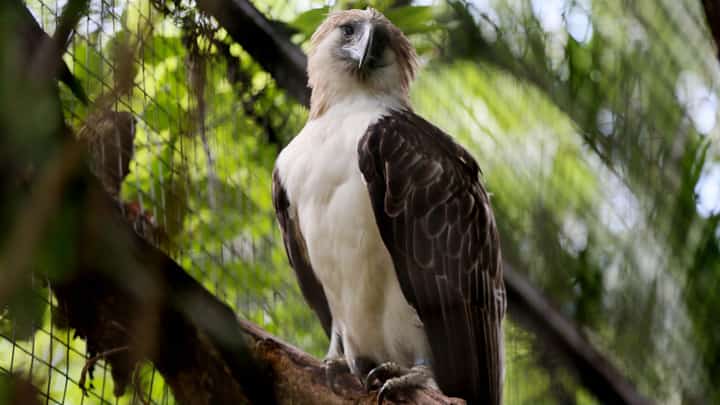
MORE than 10,000 hectares of forestland in the central Leyte highlands and Southern Leyte have been mapped by the Philippine Eagle Foundation as potential release sites for Philippine Eagles, supporting ongoing conservation and reintroduction efforts for the species.
DAILY TRIBUNE images
The Philippine Eagle Foundation (PEF) has identified more than 10,000 hectares in the central Leyte highlands and Southern Leyte as potential release sites for Philippine Eagles, as part of efforts to support the species’ reintroduction in the wild.
The sites were identified through Geographic Information Systems (GIS), which mapped areas in Leyte deemed suitable for future eagle releases, according to a new study titled “Identifying Suitable Release Sites for Philippine Eagles in Leyte for Aiding Reintroduction Using GIS-based Multi-Criteria Decision-Making,” published in the Philippine Journal of Science.
The study identified about 10,320 hectares across the Anonang-Lobi Mountain Range and Mt. Nacolod Key Biodiversity Areas as suitable release zones. Of this, around 9,554 hectares were classified as highly suitable due to their distance from human settlements and favorable habitat and safety conditions.
The Anonang-Lobi Mountain Range, also known as the Leyte Cordillera, spans about 580 square kilometers across western Leyte, covering parts of Burauen, Ormoc City, Baybay City, Kananga and Mahaplag. It is considered a critical habitat for the Philippine Eagle, as well as other endemic species such as the Visayan broadbill, Philippine tarsier and warty pig.
Mt. Nacolod, a 14,000-hectare protected area and Key Biodiversity Area, stretches across several towns in Southern Leyte and parts of Leyte province.
PEF operations director Dr. Jayson Ibañez, co-author of the study, said the findings provide science-based guidance for future releases.
“Successful reintroduction starts with good science,” Ibañez said. “By identifying suitable hack sites, we can improve the chances that released birds will adapt to their new environment and eventually establish territories in Leyte’s forests.”
Leyte was once part of the Philippine Eagle’s natural range, but its population has sharply declined due to habitat loss, hunting pressure, and other human-related threats, with further damage caused by super typhoon “Yolanda” in 2013.
PEF said the decline likely resulted from a combination of long-term deforestation, human activity, and major natural disasters.
In 2024, PEF and its partners released the first two Philippine Eagles in Leyte, followed by three more in 2025 as part of a reintroduction program. A total of 16 eagles are planned for release, with the goal of establishing six breeding pairs in the Anonang-Lobi Mountain Range.