
Back to the roots
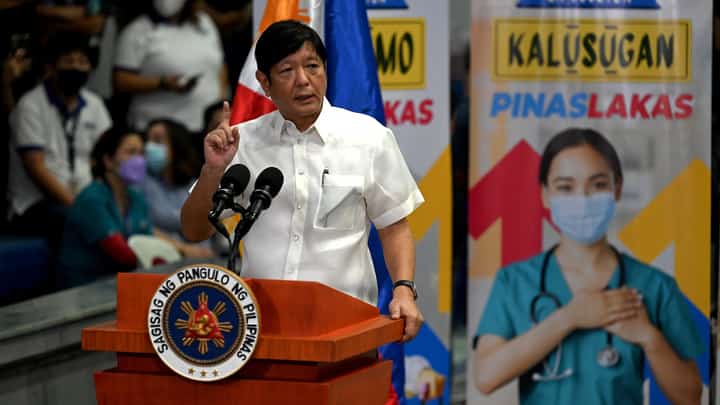
President Ferdinand Marcos Jr. has highlighted the role of local government units in battling the ongoing coronavirus disease pandemic.
No doubt, the coronavirus pandemic worsened poverty incidence and hunger in the country as millions of Filipinos lost their jobs and livelihoods, saw their incomes collapse, and had difficulty buying basic goods and services.
Since its onslaught two years ago, the pandemic has highlighted how vulnerable sectors still suffer from varying forms and patterns of discrimination – the urban poor, Bangsamoro, women, LGBTQ+, persons with disabilities, youth, even rights defenders.
The plight of vulnerable sectors was made more evident after the national government – led by then President Rodrigo Duterte – imposed strict lockdowns that almost crippled the country's economy and left millions of Filipinos in deep anxiety.

Former President Rodrigo Duterte's key priorities included the procurement of vaccines from other countries producing jabs against the deadly respiratory disease.
The Philippine response to Covid-19 would eventually be seen as one of the longest and strictest lockdowns in the world, as entire provinces and cities were put into lockdown, mobility was restricted, and the wearing of masks and social distancing were strictly enforced. Violations were met with punitive action.
The government also relied heavily on the police and the military to ensure that order was maintained and that all health protocols were followed.
Metro Manila and other provinces were put under "enhanced community quarantine," and under the directive, school and university classes were suspended, mass gatherings were prohibited, government offices were run with a skeletal workforce, businesses were closed except for those providing essential goods and services, mass transportation was restricted, and people were ordered to observe social distancing measures and to stay at home.
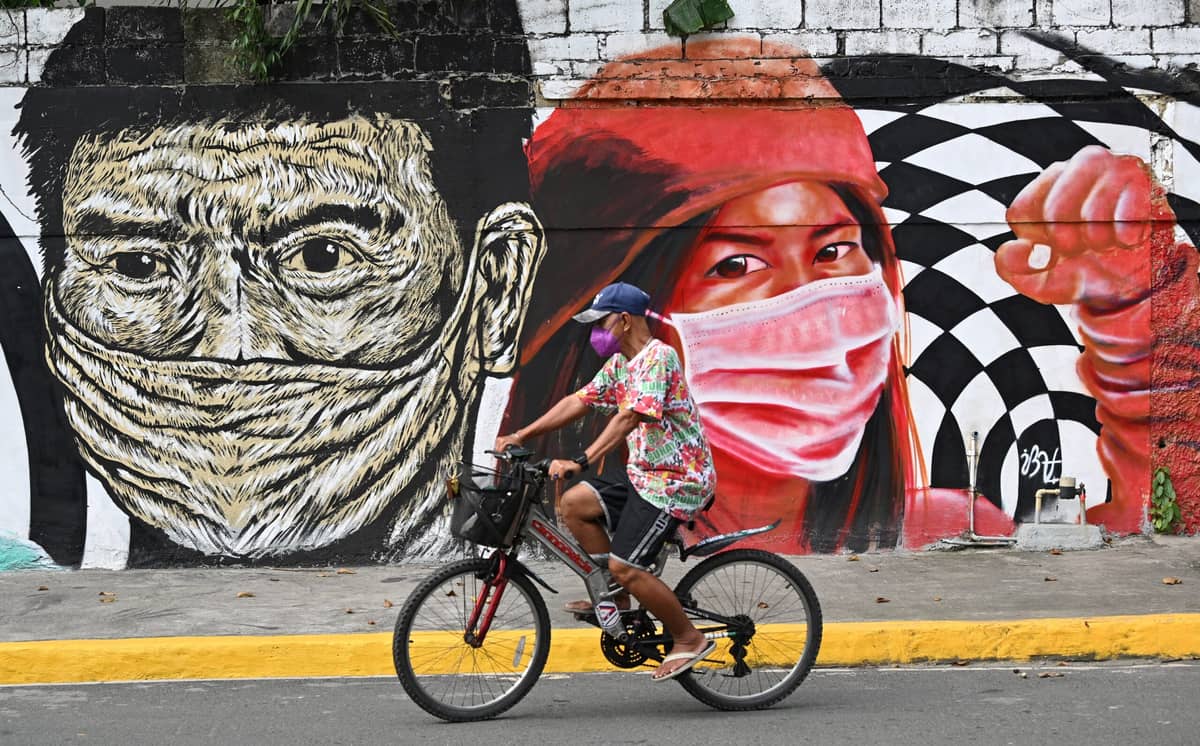
<strong>AGENCE FRANCE-PRESSE</strong><br />SCENES that become common when lockdowns were imposed were asked citizens and almost empthy streets.
Quarantine rules also specified that only one person was authorized to go out and buy essential goods for the rest of their family. Without any public transportation, people were forced to walk to and from their destinations to get food and medicine.
Elsewhere in the greater Metro Manila area, the joint forces of the police and the military cracked down on erring individuals.
This situation went on for almost two years, with the national government trying to balance keeping the economy alive while helping the people survive the crisis.
The Duterte administration's main measures for Covid-19 response were through the Bayanihan to Heal as One Act or RA 11469, also called Bayanihan 1; and the Bayanihan to Recover as One Act or RA 11494, or Bayanihan 2.
These laws covered a wide range of fiscal and monetary measures to enhance the capacity of the country's health care system and reduce the adverse socioeconomic impact of the pandemic, on top of programs already existing to respond to Covid-19.
The national government – together with local government units in the country – was in a race against time to ensure that the people would have sufficient means to go on living amid the constant fear of the coronavirus and its subvariants.
Fast forward to 2022.
With the new administration of President Ferdinand Marcos Jr. at the helm, the national government continues to battle the pandemic. But the restrictions have been significantly mellowed with the arrival of vaccines and booster shots that the Department of Health and LGUs have efficiently distributed to the public through a massive vaccination campaign.
During his campaign, President Marcos stressed the importance of coordination between the national government and LGUs in terms of promoting progress in the countryside as well as ensuring that appropriate laws were implemented.
He stressed that LGUs play a significant role in the country's progress since they are identified with the "grassroots," and that problems at this level must also be determined and addressed by the national government in partnership with LGUs.
"The communication regarding services for the grassroots level — from the local government officials or governors and mayors — must be well-coordinated and efficient for them to become effective," Marcos said.
He added that his government will ensure that basic services are delivered to the people, especially in far-flung areas, as it understands the plight of LGUs.
"No one can tell you that they're better and with more expertise about your municipalities than yourself; and that is something the national government will have to learn to respect. And with Inday Sara [Duterte] and I being experienced in local government, we fully intend to address that balance," said Marcos in one of his campaign speeches.
"To make that balance more effective, the national government shouldn't just give out directions for the LGUs to follow. Instead, there should be a proper consultation between the two," he added.
In his first State of the Nation Address, Marcos highlighted the end of lockdowns as part of his administration's evolving response to the Covid-19 pandemic, stressing that there must be a balance between the country's economy and the health and welfare of Filipinos.
"In our health situation, the threat of Covid-19 is still there, especially with the discovery of variants of the coronavirus, But we cannot afford another lockdown,"he said.
"We will not do any more lockdowns. We must balance the health and welfare of our citizens on one hand and the economy on the other," he added.
The President also stressed that he wants to intensify the vaccination rollout of booster shots in the country to ensure the safety of students amid the resumption of face-to-face classes.
He added that the Covid-19 Alert Level System would remain in effect for now, while he studies the reclassification of restrictions, which he said would be made more compatible or suited to the current milder strains of the coronavirus.
According to Marcos, if booster doses can be given to more people, the Covid-19 Alert Level System can be recalibrated.


Best solutions for the people
The President also urged LGUs to be open to innovations and work with the private sector to attain the government's bid for infrastructure development and digital transformation.
"In seeking and employing the best solutions for our people, let us be open to all the latest innovations, new ideas, and fresh perspectives," the President said. "Let us include private partnerships to maximize the service that we give to the people. Let us use that to implement critical projects in each locality, especially those related to infrastructure and digitalization."
The President assured local leaders of the national government's support amid their preparations for the implementation of the full transfer of responsibilities to the LGUs.
He said the provision of the Local Government Support Fund-Growth Equity Fund would ensure that "no LGUs would be left behind" in the full devolution of functions, as the LGSF-GEF Program will benefit about 430 LGUs consisting of three provinces, seven cities, 150 municipalities, and 270 barangay from 2022 to 2023.
The program aims to provide additional funding to LGUs identified as poor, disadvantaged, and lagging, to support the implementation of their priority projects and services.
"As we prepare for full devolution this year, let me assure you that this national government will, to the best of our ability, help you meet the demands of this devolution, including the realization of your respective transition plans," Marcos said.
Marcos also reminded the LGUs of their role as "just and morally upright" leaders who aim to give their constituents a comfortable life.
"Together, may we take good care of the trust placed in us by adhering to our pledge to be just and morally upright leaders as we strive to realize our goals for our beloved nation," he said.
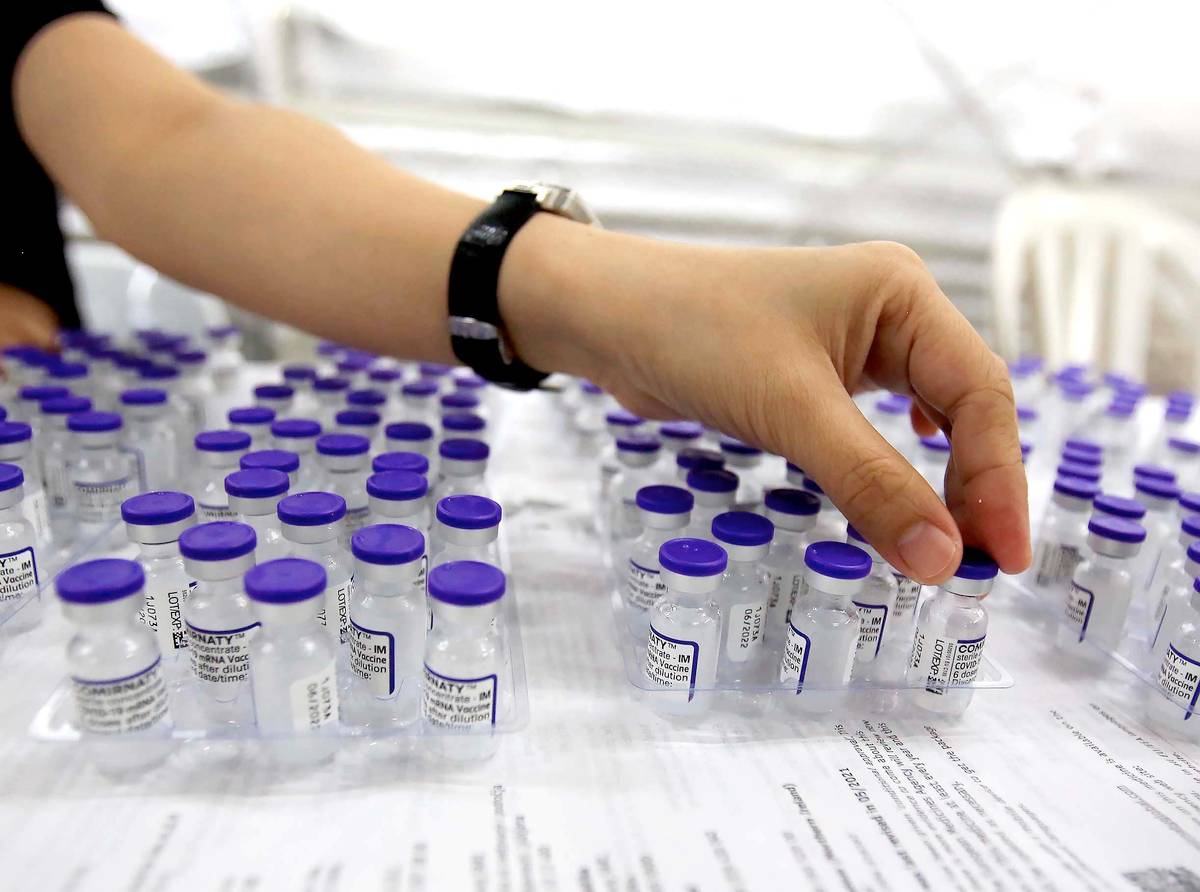
(January 27, 2022)………Health workers prepare Pfizer-BoiNTech covid19 shots for vaccines at a Marikina Mega vaccine center. Vaccine hesitancy among Filipinos had dropped to five percent, a poll released by OCTA research group…….Photo/ Analy Labor
Pandemic response continues
Following the President's 100 days in office, he has sought the support of LGUs for his administration's booster shot drive against Covid-19, so that face-to-face classes could resume and the country may reopen its economy.
Marcos cited the importance of booster shots in building a wall of immunity and moving on from the pandemic, as he also issued the directive that mask-wearing indoors and outdoors is already optional.
"I hope that you will be part of the effort that we have to bring us back to normal. This is really part of the effort to bring us back to normal," said Marcos to LGUs.
"Let's do this booster rollout and we can make sure [that] there is no more lockdown as we really don't want to have lockdowns anymore," he added.
The President also asked local officials to help agencies in replicating the massive Covid-19 vaccine rollout conducted last year and praised them for the "very, very good job." He wants the LGUs to conduct a large-scale immunization drive for booster shots targeting school children so they can safely go back to school in either August or September.
And if the massive vaccination drive becomes successful, the government could allow children to return to full face-to-face classes and open the rest of the economy, which Marcos said could send a signal to the rest of the world that the Philippines is opening up for business.
At the same time, Marcos said the government may consider relaxing the alert level and make masking optional, but stressed that these could only be done "if it is very clear that it is really safe."
"We have already made economic headway and we should not allow them to be brought to naught. This is why I am urging everyone to take part in preventing another surge that could block our way to economic recovery," Marcos said.
The Philippines currently allows Covid-19 vaccination for ages five and up. It recently released guidelines for additional doses for 12- to 17-year-olds.