
Democracy to kakistocracy?
Democracy is too precious to surrender, and our children’s future too important to mortgage to the greed and ambitions of a few.
A friend sent me a Viber message today using the unfamiliar word kakistocracy to unflatteringly describe the state of our democracy in the wake of the trillion-peso flood control scandal.
Curious as a cat, I looked up the word to understand its relevance to our national situation.
Derived from the Greek words kakistos, meaning worst, and kratia, meaning rule, kakistocracy literally means government by the worst, the least competent, least qualified, most unscrupulous, or most corrupt.
The word dates back to an English sermon by Paul Gosnold in 1644 during the English Civil War. Centuries later, it remains relevant wherever political power is divorced from competence, integrity and public responsibility.
Kakistocracy is more than a government that makes mistakes. All governments make mistakes. It describes a system where incompetence is rewarded, corruption tolerated, political loyalty outweighs merit and accountability is neglected.
The revelations surrounding our trillion-peso flood control scandal raise serious questions.
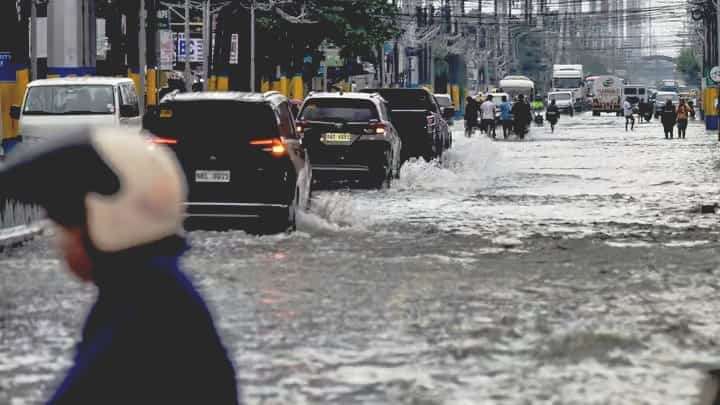
Public funds intended to protect communities from flooding were allegedly diverted to enrich politicians, contractors and government officials. The tragedy goes beyond the money lost. It is about families exposed to floods, businesses losing investments, workers losing livelihoods and taxpayers paying for projects that never materialized.
Kakistocracy takes root when political connections matter more than qualifications, loyalty more than expertise and political survival more than public service.
But a democracy does not automatically become a kakistocracy because some officials are corrupt or incompetent. The danger arises when patronage and personal interests increasingly and completely displace merit, integrity and accountability.
The Philippines may be showing symptoms of kakistocratic tendencies, but I refuse to believe that this is our destiny. We have capable and patriotic citizens, outstanding professionals and entrepreneurs, dedicated public servants, a free press, an active civil society and democratic institutions that continue to provide checks and balances. These are strengths we must preserve and build upon.
The flood control scandal exposed three destructive tendencies that could reinforce one another if left unresolved and may evolve into kakistocracy, or rule by the worst, followed by kleptocracy, or rule by those who plunder public resources, and cronyism, or governance through political favors and personal connections.
Incompetence creates opportunities for corruption, corruption finances political patronage and patronage protects wrongdoing from accountability. This vicious cycle must be broken.
For the business community, this is not merely a political concern. Corruption and weak institutions undermine investor confidence, discourage investments, increase the cost of doing business and weaken national competitiveness. Sustainable economic growth requires transparent governance, predictable policies and respect for the rule of law.
The answer is not to lose faith in democracy or dismiss the entire government. It is to strengthen the institutions that make democracy work. We need a professional bureaucracy, transparent procurement, independent oversight, effective checks and balances and a speedy justice system that treats everyone equally.
The challenge is to turn this scandal into an opportunity for meaningful reform.
The administration has an opportunity to demonstrate that accountability is not selective, that investigations will lead to prosecution where the evidence warrants and that political connections will not shield anyone from the law. Lasting reforms in public spending, procurement and project implementation must follow.
Government, business and civil society must work together in this undertaking. We must demand competence over popularity, integrity over political convenience and public service over personal enrichment. We must also stop excusing wrongdoing simply because the perpetrators belong to our political camp.
Changing political personalities will accomplish little if the system that rewards patronage and protects felonies remains unchanged.
Democracy is a continuing responsibility, not merely an electoral exercise.
I believe and hope that Filipinos can demand better, choose better, refuse to tolerate wrongdoing and ensure our country is not destined for kakistocracy.
We have the people, institutions and democratic foundations to correct our course.
But hope must be matched by responsible leadership, political courage, institutional reforms and active citizenship.
The greatest danger is not simply that the worst may govern the rest. It is that the rest may become indifferent, lose hope and accept the unacceptable as normal.
We still have time to get things right. Democracy is too precious to surrender, and our children’s future too important to mortgage to the greed and ambitions of a few.
Let us hold our leaders accountable while giving good governance every opportunity to succeed. Let us renew our faith in our democratic institutions and work together for a stronger, more honest and more prosperous Philippines.
Let us never allow our country to degenerate from DEMOCRACY TO KAKISTOCRACY.