
Five centuries of poverty, promises and plunder

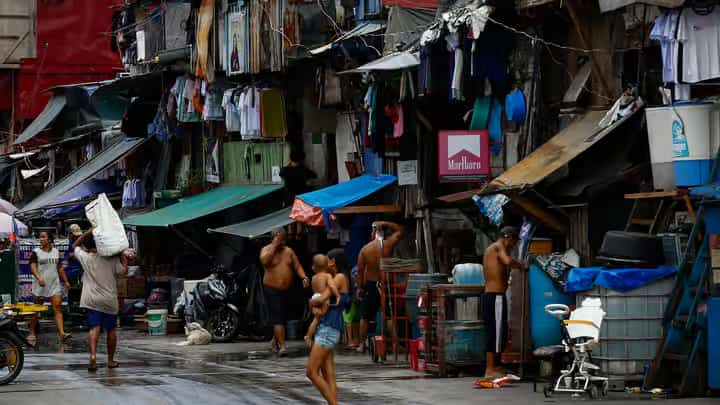
The Philippines is a country of remarkable endurance. We have survived centuries of colonial rule and occupation, decades of political promises, and countless administrations assuring us that better days are coming. Yet poverty has outlasted it all.
Governments change, slogans change, and politicians come and go, but millions of Filipinos remain poor. If promises could be eaten, no Filipino would ever go hungry.
Our poverty has deep historical roots in colonial exploitation, unequal landownership, political patronage, and institutions that have long served the powerful rather than the public.
Under Spanish rule, tribute, forced labor, monopolies and official abuses burdened ordinary Filipinos, while landownership became concentrated among a small elite. American rule introduced education, infrastructure, and modern institutions, but land inequality and elite political dominance persisted. The British occupation of Manila from 1762 to 1764 and the Japanese occupation from 1942 to 1945 added further suffering and economic disruption.
Independence in 1946 ended formal colonial rule but failed to dismantle these inherited inequalities.
Successive administrations promised reform, yet concentrated wealth, limited opportunities and political patronage continued to exclude millions from economic advancement.
Governments introduced housing, agricultural, livelihood and social assistance programs, but corruption and poor governance repeatedly weakened their impact.
Today, the same historical pattern persists in a different form. The Philippines is no longer ruled by foreign powers, but the abuse of public authority still deprives citizens of the opportunities and services they deserve.
Billions of pesos are appropriated for roads, schools, hospitals, flood control and agricultural development. Yet the real test is whether public spending delivers its promised benefits. When contracts are overpriced, ghost projects and substandard work are accepted, and funds are diverted for private gain, ordinary Filipinos pay the price.
Consider failed and poorly implemented flood control projects. Families lose homes, farmers lose crops, and workers lose income when communities are inundated. Funds intended to protect lives and livelihoods must not become opportunities for private enrichment. Where corruption undermines these projects, taxpayers effectively pay twice: first for infrastructure that fails to deliver, and again for the damage that follows.
Corruption is not merely the theft of public money. It is the theft of opportunity and the betrayal of public trust. Every peso stolen means an unbuilt classroom, an unequipped health center, an unproductive farm, and a community left vulnerable to disaster. Corruption also disadvantages honest businesses, discourages investment, and obstructs job creation.
The damage deepens when political connections appear to place individuals beyond the reach of the law. Investigations that drag on and selective enforcement can reinforce the perception that accountability depends on wealth and influence. Allegations must be investigated fairly, and guilt established through due process. But neither political connections nor public office should provide immunity from scrutiny.
Here the past meets the present. Colonial rule concentrated power and privilege in the hands of a few. Modern corruption gives similar advantages through political patronage, control of public resources, and weak accountability. The methods have changed, but the result remains familiar: opportunity is concentrated while the costs are borne by ordinary Filipinos.
Corruption did not create all Philippine poverty. Unequal landownership, inadequate education, low productivity, scarce decent jobs, regional disparities, and natural disasters have also contributed. But corruption aggravates these problems by protecting vested interests, diverting resources from essential services and weakening the institutions needed to correct inequality. It remains one of the greatest obstacles to ending poverty.
Breaking this cycle requires accountability. Corrupt officials must face investigation and prosecution regardless of political affiliation, with due process and equal application of the law.
Stolen funds must be recovered, public spending made transparent and procurement independently monitored. Citizens must be able to scrutinize government contracts and demand explanations when promised projects fail to materialize.
Punishment alone, however, is insufficient. Education, health care, productive employment, agricultural development and fair economic opportunities must become enduring priorities.
Public office must be treated as a public trust, not a family inheritance or an instrument of personal enrichment.
The Philippines possesses fertile land, abundant natural resources and a resilient, hardworking population. Our tragedy is not simply a lack of wealth, but our failure to translate these advantages into broadly shared prosperity. History explains how inequality took root; it does not excuse our failure to dismantle it.
National success should not be measured by the wealth of a privileged few or the grandeur of public infrastructure, but by whether ordinary Filipinos can live with dignity, educate their children, find decent work, and face the future with hope.
Over five centuries, the forms of power have changed, yet the promise of a better life has remained beyond the reach of ordinary Filipinos.
Breaking this cycle demands more than another change of administration. It requires transforming how power is exercised, public wealth is protected and leaders are held accountable.
Until public service becomes genuine service and national wealth translates into shared opportunity, the promise of progress will remain unfulfilled. That is the unfinished challenge of FIVE CENTURIES OF POVERTY, PROMISES AND PLUNDER.