
Fiscalization sets Tinio apart
The veteran lawmaker makes his mark by ensuring government officials are held to the highest standard of accountability expected of anyone in public office.
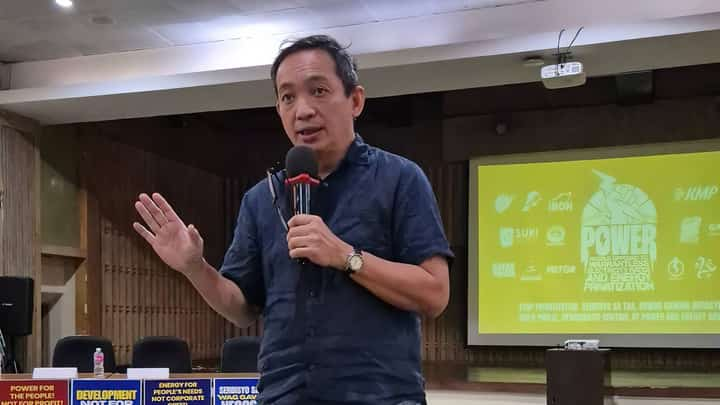
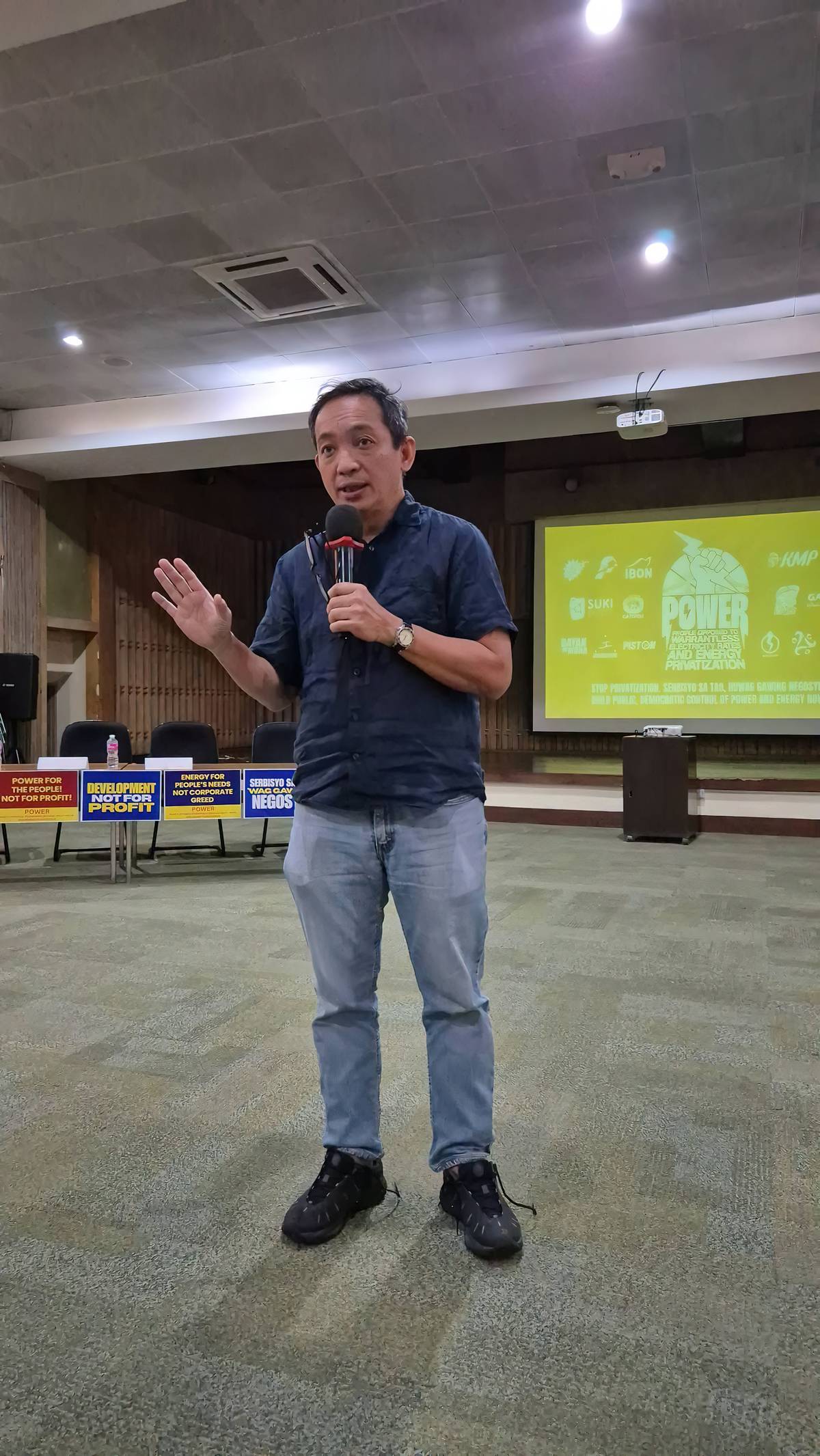
RELIABLE watchdog Alliance of Concerned Teachers Representative Antonio Tinio has gone beyond his sector in his role as a key overseer of excesses in government, including the pilferage of the yearly budget and ‘mis-prioritization’ as early as the transmittal of the 2027 National Expenditure Program to the lower chamber last August.
PHOTOGRAPH COURTESY OF Antonio Tinio/FACEBOOK
When individuals enter government, the electorate and their adversaries who failed to make the cut on election day expect their work to be heavily scrutinized; however, some politicians build lengthy careers on doing just that.
Antonio Tinio, the lone representative of the ACT Teachers Partylist in the 20th Congress and a legislator for 12 years, has been a consistent thorn in the administration’s side since his first stint in the House of Representatives in 2012, regardless of who was at the top.
Serving as a lawmaker in Congress’ Makabayan bloc alongside Kabataan Representative Renee Co and Gabriela Partylist Representative Sarah Elago, Tinio has remained a staunch critic of the highest-ranking government officials since his reelection in last year’s polls.
Just this year, he, along with Co and Elago, endorsed impeachment complaints against President Ferdinand “Bongbong” Marcos Jr. and Vice President Sara Duterte, believing that both of the country’s leaders had committed acts that constitute a betrayal of public trust.
This was not the first time Tinio participated in the constitutional process; he also pushed for the impeachment of the late former President Benigno “Noynoy” Aquino in 2014 and former President Rodrigo Duterte in 2019.
Needless to say, the veteran lawmaker makes his mark by ensuring government officials are held to the highest standard of accountability expected of anyone in public office.
Budget scrutiny
A more recent topic that has caught Tinio’s attention is the budget process, amid public calls for transparency, as the public remains collectively enraged by what transpired with fiscal allocations in previous years.
During committee and plenary deliberations at the House, he voiced concern over how the government intended to spend public funds and argued that sectors like education were getting the short end of the stick.
Tinio described the Marcos administration’s perceived “mis-prioritization” as early as the transmittal of the 2027 National Expenditure Program to the lower chamber last August.
The lawmaker’s dissent stemmed primarily from the government’s decision to gut budgets for social services, education, health and housing while increasing funding for infrastructure projects and programs prone to abuse and corruption.
At that point, he labeled the executive’s proposed fiscal blueprint a “betrayal” to Filipinos, particularly questioning why flood control would once again receive funding despite no resolution on the widespread issue first raised the previous year.
“The funding for flood control projects is massive for the upcoming year despite the reality that there have been no big fish that have been held accountable in the flood control corruption scandal under the Marcos administration,” Tinio said.
Repeat of budget perversion
With the House formally approving its version of the spending bill on 12 October, the lawmaker was once again vocal about his concerns, saying he believed some provisions in the measure ran counter to the Supreme Court’s ruling.
In a ruling dated 21 October, the high court deemed the 2024 and 2025 budgets unconstitutional while also deeming provisions under the 2026 General Appropriations Act unlawful.
Tinio, among the lawmakers who voted against passing the bill, urged the lower chamber leadership to recall the budget to “clean up its own mess” even before the bicameral conference committee.
“Our position is, coming to terms with understanding and learning from the Supreme Court decision should not be left to the Senate alone,” he said during an interview on DAILY TRIBUNE’s Straight Talk program.
“[The House] should learn from its own lessons and the best way to learn is by doing the corrections itself as an institution,” he added.
Why focus on subsidy programs?
Aside from proposed infrastructure spending, the lawmaker also challenged the executive and House’s decision to boost funding for its subsidy programs, which he touted as a “phenomenon” under the current administration.
For example, Tinio said allocations for the Assistance to Individuals in Crisis Situations (AICS) program of the Department of Social Welfare and Development increased by at least 90 times over 10 years.
AICS was earmarked at around P63 billion in the current year, despite receiving only P700 million in 2016, a move he said was made possible through deficit spending.
Tinio pointed out that the supposed phenomenon was not isolated to the Marcos-led government, as it traced back to the Duterte administration.
“This phenomenon started in the Duterte period, right before the pandemic, with the increases in ayuda. But in the Marcos administration, there was a hyper-scaling of ayuda just as there was a hyper-scaling of funding for flood control,” he stated.
“All of this was made possible by increasing borrowings,” he stressed.
Tinio said this trend was largely why the Philippines has seen record-high debt in recent years, despite offering no clear resolution to many issues directly affecting Filipinos.
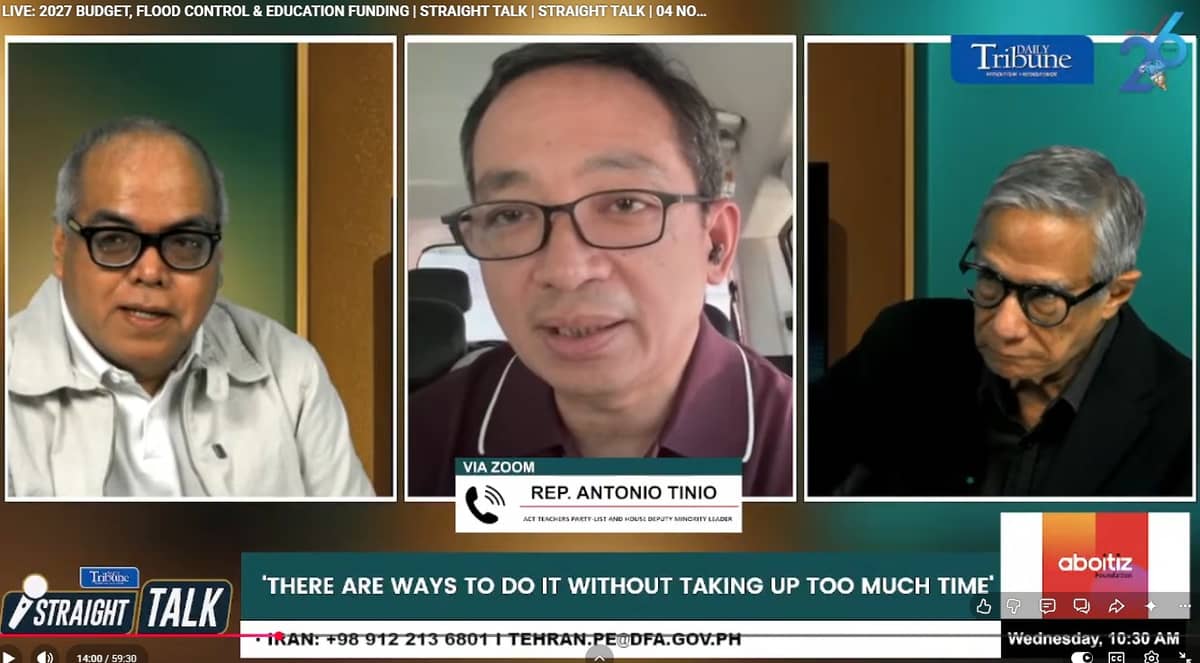
DAILY TRIBUNE
Advocating for teachers, students
While much of his attention has focused on calling out perceived corruption among fellow public officials, Tinio also champions policies to boost support for teachers through wage increases and for students by pushing to build more classrooms nationwide.
On salaries, the lawmaker said teachers were being left behind compared with nurses and uniformed personnel, whose wages had seen massive increases during the previous administration.
Tinio said teachers demanded a salary increase to at least P50,000 per month, up from their current P33,000.
On classroom construction, he said the 2027 budget allocated funding for about 5,000 to 6,000 new classrooms, despite proposals estimating that only 700 could be built.
The development, he said, was “characteristic” of the Marcos administration, which has been “slow” in erecting learning spaces for children as compared to his predecessors.
“Of course, that has the effect of worsening instead of solving the classroom shortage; it’s worsening it because of the slow delivery of classrooms,” he stated.