
DepEd, agencies draw up uniform suspension rules
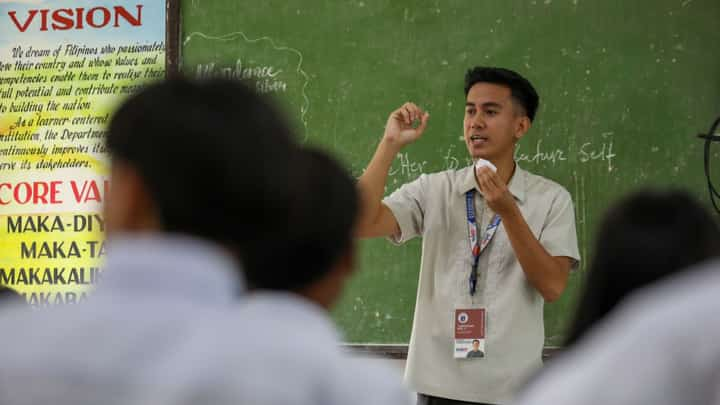
The Department of Education (DepEd) and partner agencies are finalizing a Joint Memorandum Circular (JMC) to operationalize President Ferdinand R. Marcos Jr.'s Executive Order No. 130. Education Secretary Angara highlighted the new national framework replaces blanket cancellations with data-driven, targeted class suspensions and resumptions to keep school communities safe while minimizing learning loss.
DepEd PH
The Department of Education (DepEd) and six other government agencies are finalizing technical guidelines that will determine when classes must be suspended and when schools can resume in-person instruction during disasters and other emergencies.
The proposed joint memorandum circular will establish thresholds for automatic suspensions and procedures for local government officials and school administrators to assess risks in specific areas and school campuses.
"When disasters and environmental hazards strike, our decisions must be swift, clear, and firmly anchored on data from scientific agencies like PAGASA and PHIVOLCS,” said Education Secretary Sonny Angara.
Under the guidelines, automatic suspensions will take effect when official advisories from scientific agencies reach predetermined technical thresholds. Classes may resume once the advisories expire or are lifted and required safety assessments are completed.
Local chief executives will be required to make localized suspensions as specific as possible, identifying affected barangays or school zones instead of ordering blanket cancellations across entire cities or municipalities whenever feasible.
School heads, meanwhile, may suspend classes in response to risks confined to their campuses, including flooding, power failures and security threats, in coordination with local disaster management offices and Schools Division Offices.
The guidelines will also cover school-level resumptions, allowing campuses assessed as safe and structurally sound to reopen for face-to-face classes following documented site inspections and with the concurrence of local chief executives, even if a wider suspension remains in effect.
It will cover hazards including typhoons, heavy rainfall, storm surges, earthquakes, extreme heat, volcanic activity, hazardous air pollution, structural damage and utility outages.
The order also requires schools to activate alternative learning delivery methods during physical closures, including modular instruction, online learning, take-home activity packets and temporary learning spaces.
DepEd is preparing the circular with the Department of the Interior and Local Government, Commission on Higher Education, Technical Education and Skills Development Authority, Department of Science and Technology, Department of Environment and Natural Resources and Department of Public Works and Highways.