
The living funeral: Celebrating life while there's still time
Why some people choose to hear their tributes, receive their flowers, and celebrate their lives while they are still here.
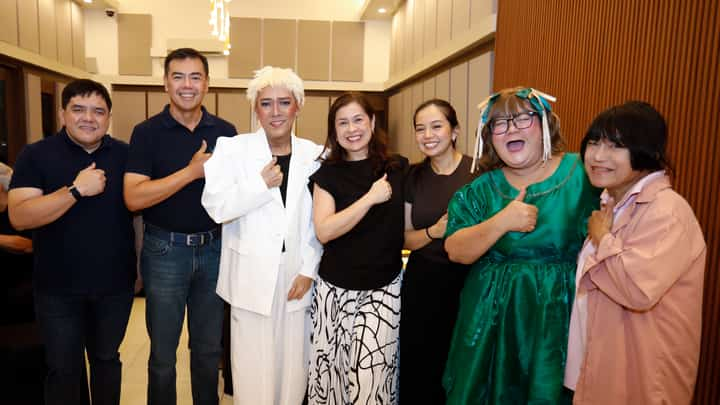
Forest Lake executives join Ate Gay and friends following “Habang Naririto Ka,” a living funeral celebrating life, friendship, and gratitude. Pictured from left are Juan Carlo Xerez-Burgos, Alfred Xerez-Burgos III, Gil Aducal Morales (Ate Gay), Maricar Xerez-Burgos, Cara Xerez-Burgos,Boobsie Wonderland, and Arman Salon.
Forest Lake
Hearing the eulogy while you can still laugh.
Most people wait for a funeral to speak fondly of someone. By then, the person being remembered is no longer around to hear the speeches, accept the hugs, or chuckle at the old stories. A growing number of people are turning that tradition on its head by attending their own send-offs.
Known as a living funeral, the concept is straightforward: a gathering of family and friends to celebrate a life while the main subject is still present. Instead of an atmosphere defined purely by grief, it offers a chance for direct connection, letting honorees hear their own tributes and say their own goodbyes.
A farewell in Laguna
The practice gained poignant attention in the Philippines following the death of comedian Ate Gay, born Gil Aducal Morales, who passed away on 01 November 2026 at the age of 55.
On 15 October 2026, just over two weeks before his death, Ate Gay hosted his own living funeral at Forest Lake Memorial Parks in Biñan, Laguna.
He had been diagnosed in September 2025 with stage 4 mucoepidermoid carcinoma, a rare cancer originating in the salivary glands. Throughout his treatment journey, he kept the public updated on his health.
Although he subsequently suffered a stroke and developed acute respiratory failure secondary to pneumonia shortly before his death, his early decision to host a living wake was driven by a simple wish: he wanted to see the people who cared about him and hear their feelings firsthand.
The gathering in Laguna brought together relatives, friends, and colleagues from the entertainment industry. Comedian Boobsie Wonderland and content creator Arman Salon were among those who delivered tributes in his presence. For Ate Gay, the day offered an experience few get to have, taking in the full measure of his impact on others while he was still around to appreciate it.
Gathering without waiting for the end
Ate Gay’s memorial reflects a broader global movement toward living tributes.
In June 2023, British breast cancer campaigner Kris Hallenga, founder of the charity CoppaFeel!, organized what she dubbed a "fun-eral" at Truro Cathedral. Having lived with stage 4 breast cancer since her diagnosis at age 23, Hallenga decided to hold her celebration while she was strong enough to enjoy it. Actor Dawn French attended in character to deliver a lighthearted eulogy. Hallenga later died in May 2024, aged 38.
Terminal illness is not the only reason people choose to throw these events. In Singapore, comedian Abigail Chay organized an "Afterlife Farewell Ceremony" on 10 July 2026. Chay, who was not facing a life-threatening medical diagnosis, invited friends to deliver eulogies as part of a personal celebration of her relationships.
She noted that sitting through the speeches helped her realize the depth of affection her friends held for her, while also helping to break down traditional taboos surrounding discussions of death and funeral planning.
Rethinking how we say goodbye
The structure of a living funeral can be as formal or informal as the honoree wants. Some opt for music, shared meals, and slideshows, while others set aside dedicated time for open speeches.
Memorial management companies, including Forest Lake Development, Inc., which coordinated Ate Gay’s event, now offer specialized consultation services to help families organize these personalized celebrations. Venues often range from traditional memorial chapels to private homes or public halls.
The idea is not for everyone. For some, attending an event themed around their own mortality feels uncomfortable, and families navigating serious illness must carefully balance the physical energy demands on the honoree.
Yet the rise of these events highlights a simple oversight in how societies handle loss. Hours are spent preparing elaborate arrangements and writing fond speeches for after someone has departed. Gathering while everyone is still in the room ensures those words reach the person who matters most.