
‘Deeply troubled’ by a troubling budget
The President’s line-item veto remains the last institutional firewall. Whether he uses it or not, it will answer a question more consequential than any single line item: whose budget is this?
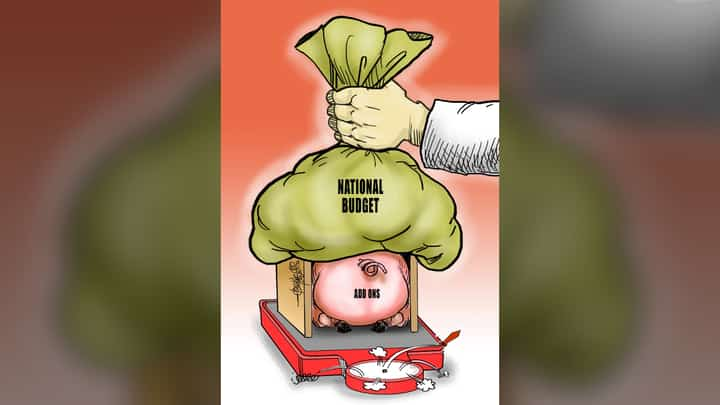
When over 30 groups, including the Management Association of the Philippines, the Makati Business Club, the Philippine Chamber of Commerce and Industry, and the Financial Executives Institute of the Philippines, speak with one voice, the country should listen.
These are not activists by temperament. These are people who sign payrolls, underwrite investments, and measure the risk of doing business. Their joint demand that Congress strip unjustified insertions from the proposed P7.2-trillion 2027 national budget is therefore not a complaint. It is a warning.
What does it say when business groups, joined by civil society and transparency watchdogs, declare themselves “deeply troubled” by the discovery that over P180 billion was added to the Department of Public Works and Highways (DPWH) budget by the Budget Amendments and Review Subcommittee, while P130 billion was reportedly cut from foreign-assisted projects, P9.5 billion from calamity funds, P1.76 billion from the EDSA Busway, and P4.9 billion from health programs?
It says that the budget process has once again been captured by the illogic of patronage over planning.
Foreign-assisted projects are the most rigorously prepared infrastructure we have — backed by feasibility studies, financing commitments, and international procurement standards. Cutting them to fund 6,000 unnamed lump-sum projects is not fiscal prudence — it is a transfer of resources from the future to the campaign trail.
The timing is damning. Ms. Aceron’s warning that a pre-election year breeds desperation to “corner funds” is not cynicism; it is pattern recognition. The 2023 to 2025 budgets were linked to ghost and substandard flood control projects that betrayed the public trust and left communities exposed.
The business and watchdog groups are right: the 2027 budget must not repeat that history. Raiding calamity funds in an archipelago that greets typhoons like old acquaintances is indefensible.
Yet the story does not end at the DPWH. The People’s Budget Coalition’s finding that the 1st District of Ilocos Norte — the bailiwick of House Majority Leader Sandro Marcos, the President’s son — received a P4.38-billion windfall, up from the P369 million in the executive’s proposal, is precisely the kind of data point that erodes public confidence.
Malacañang may defend the allocations, but the math has a way of speaking louder than any utterances by Palace spokespersons. The President’s line-item veto remains the last institutional firewall. Whether he uses it will answer a question more consequential than any single line item: whose budget is this?
The business groups’ proposed test is refreshingly simple. An item should survive only if it is backed by a feasibility study or detailed engineering design, consistent with the implementing agency’s master plan, and validated as ready for implementation in 2027.
Remove everything without a technical basis. Restore the FAPs, calamity funds, the busway, and health programs unless each reduction is publicly justified. Senate President Gatchalian and Finance Chair Ejercito have committed to a line-by-line review; the House leadership must match that commitment in the bicameral deliberations.
The stakes extend beyond one fiscal year. A divided US government — should the GOP lose its narrow House majority — will complicate American appropriations, potentially delaying military financing and trade agreements that Manila depends on. In a less predictable world, the Philippines cannot afford a budget that weakens its own foundations.
The choice is stark. A budget free of politically driven insertions strengthens investor confidence and protects the fiscal space. A budget built on lump sums and raided reserves buys short-term gratitude and long-term distrust.
The business groups have stated plainly what should survive: only the projects that have been studied, validated, and have specific purposes. Congress can prove that it agrees, or the President can prove it with his veto pen, if he has the judiciousness and the courage to do the right thing.