
Marcos’ broken promise
When rice inflation tops 20 percent and the promised price lives behind a subsidy counter, the report card is on the table and it doesn’t look good for the President.
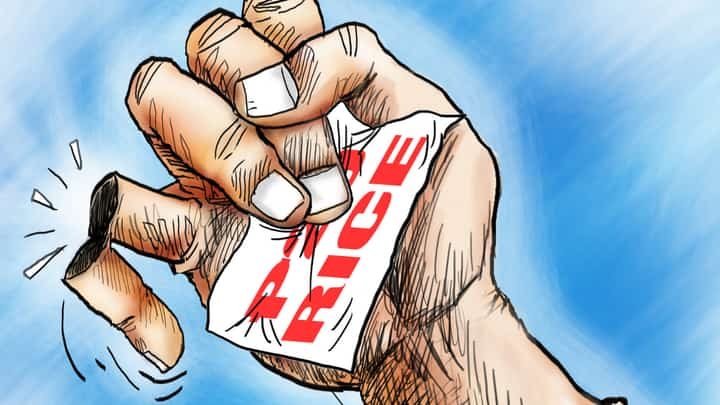
Rice prices soared 20.3 percent in September from a year earlier, up from 19.4 percent in August. For the poorest 30 percent of households, rice inflation hit 23.6 percent. For families living hand to mouth, that surge leaves even less for other essentials.
Overall inflation reached 7.2 percent, matching April as the highest since March 2023. Food inflation jumped to 6.7 percent from 4.6 percent. Lest Palace spokesperson Claire Castro see red anew, let’s provide the context that matters: the Middle East conflict has pushed up oil prices, and weather has disrupted supply.
Fairness requires a distinction.
The market price of rice is not set by the P20 program, which is a small subsidized channel, and no president controls oil, the weather, or the exchange rate. The question is narrower and more damning: what was promised, and what has been delivered?
President Ferdinand Marcos Jr. campaigned on rice at P20 a kilo. The promise was made for a campaign stage, but not the economics. The Department of Agriculture (DA), which Marcos headed early in his administration, echoed a tired refrain — more an admission of abject defeat — that P20 rice was out of reach without subsidies.
The DA’s own figures put regular-milled rice at P44.94 a kilo in late August, well-milled at P47.73, and premium at P52.76. A Philippine Statistics Authority survey found regular-milled near P50 in early September.
In April, the DA reported 932 selling sites and 6.45 million beneficiaries for P20 rice. By July, it reported more than 12 million beneficiaries and about 800 outlets. Beneficiaries nearly doubled as outlets fell, even as the DA promised 900 more and a year-end target of 1,800, later cut to 1,500.
Whether the tally counts unique households is unclear. A monthly supply of 15,000 to 20,000 metric tons must be measured against the goal of reaching 15 million households, and families must qualify, travel to outlets, and find stock.
The government argues that forcing P20 rice on the market would squeeze farmers. That is a legitimate concern, as even efficient growers spend about P12 to produce a kilo of palay, before milling, transport and trading costs.
But it only exposes the gap between sloganeering and machinery: productivity, irrigation, storage, transport, and a supply chain that does not add costs at every handoff. The backdrop makes the shortfall costlier.
Second-quarter household consumption grew just 2.8 percent as inflation, job losses, and weaker remittances bit. Unemployment eased to 5.3 percent in August but remains above last year’s 3.9 percent.
As if our woes are not grave enough, the peso closed at a record low of P63.615 on 23 October, a day after the central bank lifted its policy rate to 5.5 percent, raising further the cost of imported fuel, fertilizer, and food.
Governing means preparing for such risks. The P20 rice promise has shrunk from a market-wide ambition to targeted, subsidized access. That may be defensible, but it is not the same promise.
Families count kilos, prices, and what remains in the wallet. When rice inflation tops 20 percent and the promised price lives behind a subsidy counter, the report card is on the table and it doesn’t look good for the President.
Time is not on Mr. Marcos’ side and he has but months left to turn a slogan into a robust supply chain. Until then, the verdict has a name in the vernacular: “ang pangakong napako” — the broken promise.