
Respicio challenges Castro, Remulla to help resolve tobacco aid dispute

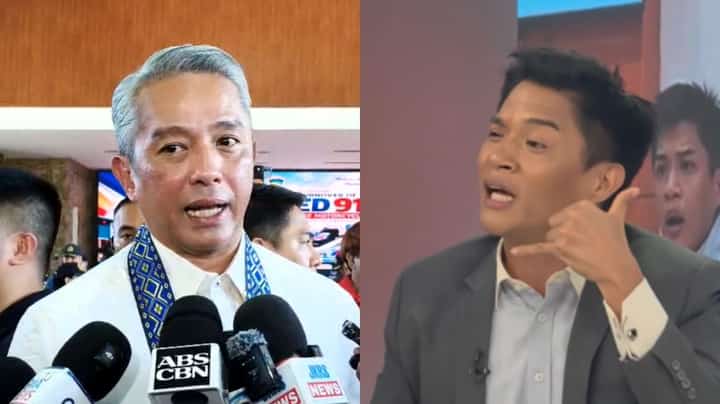
Reina Mercedes Vice Mayor Harold Respicio has challenged Palace press officer and Communications Undersecretary Claire Castro and Interior Secretary Jonvic Remulla to help resolve a dispute over tobacco excise tax allocations, citing alleged ghost and substandard projects in the municipality.
In a Facebook Live broadcast, Respicio held documents he identified as evidence of questionable projects while standing in an area surrounded by open fields and unfinished structures, which he cited as examples of projects funded through tobacco excise tax appropriations.
Respicio said a P30-million allocation was made in 2022 for a lagoon park, but claimed no corresponding infrastructure had been built. He also cited another P30-million allocation that year for a farm-to-market road with a retaining wall, which he said remained unfinished.
He urged Castro to help facilitate an inspection of the projects, saying the municipality has only 20 barangays that could be visited within half a day.
Respicio also questioned the condition and use of other facilities, including a transportation terminal that he said had become overgrown with grass, an unfinished structure, a public market with reportedly limited tenants, and a damaged bridge that he claimed had not been repaired despite funding allocations.
He further questioned a reported P9-million allocation for greenery and a playground in front of the municipal hall, saying the improvements appeared insufficient to justify the amount.
The vice mayor, however, said his immediate priority was not to pursue legal action over the alleged irregularities but to secure higher cash assistance for tobacco farmers.
Respicio said the municipal government was proposing P30,000 in assistance per hectare, but he wanted the amount increased to between P45,000 and P60,000, or even higher, depending on available funds.
He cited the provincial government's reported annual P80-million tobacco excise tax allocation, saying farmers receive around P45,000 per hectare, in addition to rice and other forms of assistance.
Respicio argued that the municipality should be able to provide comparable or higher assistance, particularly if funds were being allocated to projects that he claimed were unfinished, substandard or unusable.
He appealed to Castro and Remulla, as well as the governor and the mayor, to help broker an agreement before the planting season, saying farmers needed money to prepare their seedlings and settle debts from the previous cropping cycle.
Respicio also said he planned to meet with the governor and hoped the mayor, barangay officials, members of the municipal council and tobacco farmers could join the discussions.
As part of the proposed settlement, Respicio said he was willing to agree not to pursue cases and to stop publicly discussing the controversy in exchange for an agreement on increased assistance. He also raised the possibility of keeping the final amount confidential to avoid complications in future disputes.
He repeatedly called for a peaceful resolution, saying he wanted the disagreement among local officials to end and assistance to reach farmers without further delay.
The allegations against the cited projects have not been independently verified. The broadcast did not establish whether the cited allocations had been fully disbursed, nor did it provide findings from an official investigation. Responses from Castro, Remulla and the other officials were not included in the material reviewed.
Respicio said he hoped negotiations could lead to a settlement that would increase cash assistance for tobacco farmers ahead of the planting season.