
Kaliwa Dam delayed to 2030 as China funding ends
Chinese loan termination leaves a major water project stalled, with concessionaires expected to shoulder remaining costs.
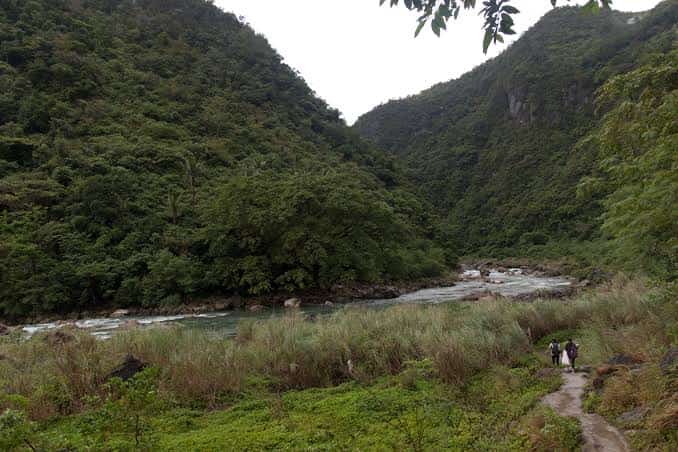
A river winds through the forested Sierra Madre landscape near the proposed Kaliwa Dam project area. The multibillion-peso water infrastructure project faces financing difficulties and construction delays, with its operational target reportedly moved to 2030.
QUEZON — The completion of the Kaliwa Dam project has been pushed to 2030, three years beyond its previous operational target, as the government moves to replace terminated Chinese loan financing and resolve construction delays affecting the multibillion-peso water infrastructure project.
The Metropolitan Waterworks and Sewerage System (MWSS) said water concessionaires Manila Water and Maynilad are expected to finance the remaining construction requirements following the termination of loan availability from the Export-Import Bank of China.
The financing shift comes as the project, which covers portions of Quezon and Rizal provinces, remains less than one-third complete despite years of implementation.
MWSS spokesperson Engineer Patrick Dizon said the project had reached approximately 27 percent completion, while its tunnel boring machine remained underground and was being maintained as construction activities faced funding constraints.
The revised 2030 target represents a significant setback for the New Centennial Water Source–Kaliwa Dam Project, which is designed to provide an additional 600 million liters of water daily to Metro Manila and surrounding areas.
According to findings in the Commission on Audit's (COA) 2025 annual audit report on MWSS, the project had achieved approximately 26 percent physical accomplishment as of December 2025.
The audit also recorded a 26.25-percent physical slippage, reflecting delays against the approved construction schedule.
Only 3,312.06 meters of the planned 17,480-meter water conveyance tunnel had been excavated, while no construction activities were reported at the main dam site during the period covered by the audit.
State auditors identified financing constraints, unresolved site access problems, land acquisition issues and outstanding permit requirements among the obstacles affecting implementation.
The termination of Chinese loan availability prevented further disbursements, prompting MWSS to seek alternative financing arrangements.
Dizon said the two water concessionaires were supportive of a proposal to share the remaining financing requirements equally.
The arrangement places renewed attention on how the project's outstanding costs will be recovered and whether the financing shift could eventually affect water concession arrangements.
No final determination on possible consumer water-rate implications was established in the available reports.
The project's approved cost was increased to approximately ₱15.3 billion in April 2025 from its original ₱12.2-billion estimate, alongside changes in scope and implementation schedule.
COA also flagged ₱837.662 million in preconstruction and development expenditures that were not properly recorded under construction-in-progress accounts.
The amount involved expenditures for land acquisition, resettlement, community consent processes, standby costs and other project requirements.
The finding concerned accounting classification and did not establish that the funds were missing.
Beyond financing, unresolved access restrictions in Quezon remain among the obstacles to completing the project.
The dam has faced opposition from Dumagat-Remontado communities and environmental advocates over concerns involving ancestral lands, displacement and possible environmental damage within the Sierra Madre watershed.
COA recommended that MWSS establish a sustainable financing strategy and coordinate with the Department of the Interior and Local Government and concerned local officials to resolve access issues.
The audit body also raised concerns that prolonged delays could leave government investments stranded or infrastructure assets nonfunctional.
Malacañang has maintained that the project will continue despite the financing setback.
With the operational target now moved to 2030, the government's ability to secure stable funding, settle outstanding construction requirements and complete the remaining infrastructure will determine whether Kaliwa Dam can deliver its promised additional water supply.