




Balconies are becoming a bigger property draw
The key is to work with the space you already have instead of trying to fit too much into it.

Text size
The key is to work with the space you already have instead of trying to fit too much into it.
THE key to a useful balcony is making the most of the space you already have.
A balcony does not have to be large to become one of the most useful corners of your home.
For condo and apartment dwellers, that small outdoor space can easily become an afterthought — a place where laundry is hung, boxes are stored, or plants are left to grow on their own. But with a little planning, your balcony can become a comfortable spot for morning coffee, an evening read, a small garden, or even a place to have dinner.
The key is to work with the space you already have instead of trying to fit too much into it.
Start with what you actually need
Before buying furniture or filling the balcony with plants, think about how you want to use the space.
Do you want somewhere to sit after a long day? A small garden for herbs and houseplants? A breakfast spot? Or simply a corner where you can get some fresh air?
Once you know its purpose, choosing what goes into the space becomes much easier. A narrow balcony might only need a small table and chair, while another could benefit more from shelving and plants.
It also helps to measure the area first. A piece of furniture that looks compact in a showroom can quickly make a small balcony feel cramped.
Look up, not just around
When floor space is limited, your walls, railings and other vertical areas can do some of the work.
Instead of lining the entire floor with pots, consider plant shelves, hanging planters, or a simple vertical arrangement. Different heights can also make a small collection of plants look fuller without taking up more floor area.
A vertical garden can be especially useful for growing herbs and smaller plants. Shelving can also double as storage for gardening tools, watering cans, and other outdoor essentials.
The idea is simple: use the space above you so you can keep the space beneath your feet open.
Choose furniture that can move
Small balconies benefit from furniture that can adapt.
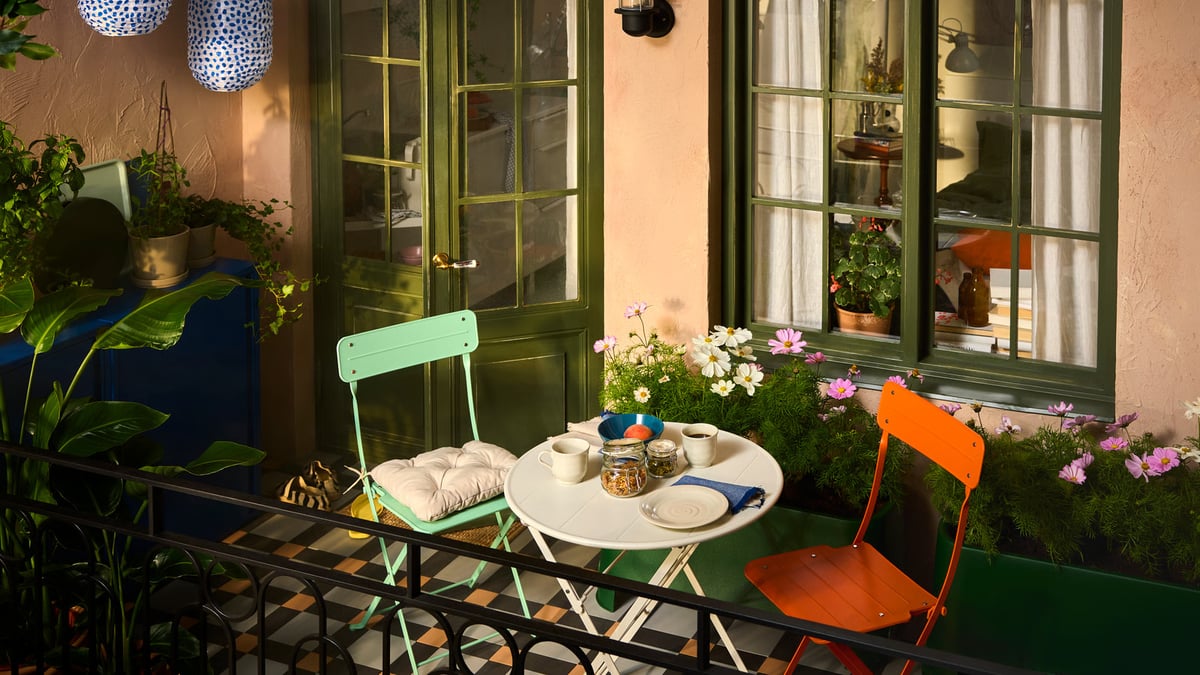
Foldable chairs and tables can be brought out when you want to eat or have coffee, then tucked away when you need more room. This makes the balcony useful for more than one activity without requiring several pieces of furniture.
A small chair can become a reading spot in the afternoon, while a foldable table can turn the same corner into a breakfast nook. When neither is needed, folding them away gives you more space to tend to your plants or simply enjoy the open area.
Give your plants some structure
A balcony garden does not have to mean dozens of different plants.
Start with a few varieties that suit the amount of sunlight your balcony receives. Grouping plants together can make the area look more intentional, while keeping them at different heights adds dimension.
If you are not confident about keeping plants alive, start small. A few hardy plants are easier to care for than an ambitious garden that quickly becomes another chore.
For those who want to grow herbs or vegetables, compact shelving or a small greenhouse can provide additional growing space without taking over the balcony.
Keep the clutter under control
A beautiful balcony can quickly lose its appeal when gardening tools, cushions, and other things are scattered everywhere.
Outdoor cabinets, shelves, or storage boxes can help keep frequently used items within reach while keeping the floor clear. Storage can also serve another purpose — as an extra surface for plants, drinks, or other small items.
The goal is not to hide everything. It is simply to give everything a place.
Make it comfortable
Once the practical pieces are in place, add a few details that make you want to stay.
An outdoor rug can help define the sitting area, while cushions can make a basic chair more comfortable. For evenings, simple outdoor lighting can add enough warmth to make the balcony feel like an extension of your living room. IKEA similarly recommends rugs, outdoor lighting, and greenery as simple ways to make small balconies feel more inviting.
Just remember that anything left outdoors should be suitable for the conditions it will face, especially in a tropical climate where heat, rain, and humidity can quickly take their toll.
Let the balcony breathe
The temptation with a small balcony is to fill every available corner. But leaving some open space can make the area feel bigger and easier to use.
Think of your balcony as another room — just one without walls.
You do not need a full garden, a complete dining set, or expensive décor to make it work. A chair, a few plants, smart storage, and good lighting may already be enough.
What matters is creating a space that fits into your everyday routine. Whether that means drinking coffee before work, watering your plants after a long day, or sitting outside for a few quiet minutes, a well-planned balcony can give you a little more room to enjoy home.
