
Small space, big possibilities

Living in a condo or apartment often means making the most of limited square footage. When family or friends visit and want to stay the night, having only one bedroom and one bed can pose an immediate challenge. Luckily, the solution might already be in your living room: a sofa bed. This versatile piece transforms your living area into a temporary guest room, offering a comfortable place to rest without sacrificing dedicated space.
Good home design goes beyond aesthetics; it supports everyday routines without making a home feel cluttered. In compact spaces, this balance is crucial — every piece of furniture must earn its keep. By opting for multifunctional pieces instead of single-purpose furnishings, you maximize your floor plan’s potential.
A sofa bed is one of the simplest ways to introduce this flexibility. During the day, it functions as a traditional sofa for lounging, entertaining, or reading. At night, it seamlessly unfolds into a sleeping area. Consolidating two foundational pieces of furniture into one makes a significant difference for anyone living in a compact unit.
Beyond functionality, a good sofa bed should fit naturally into your room’s design. Look for models with an easy-to-use mechanism, especially if you anticipate regular use. Options featuring built-in storage are particularly valuable in smaller homes where closet space is a premium. Instead of stuffing extra bedding into an already crowded wardrobe, you can conveniently store pillows and blankets right where they are needed. After all, no one wants to spend 20 minutes hunting for sheets when a guest spontaneously announces they are sleeping over.
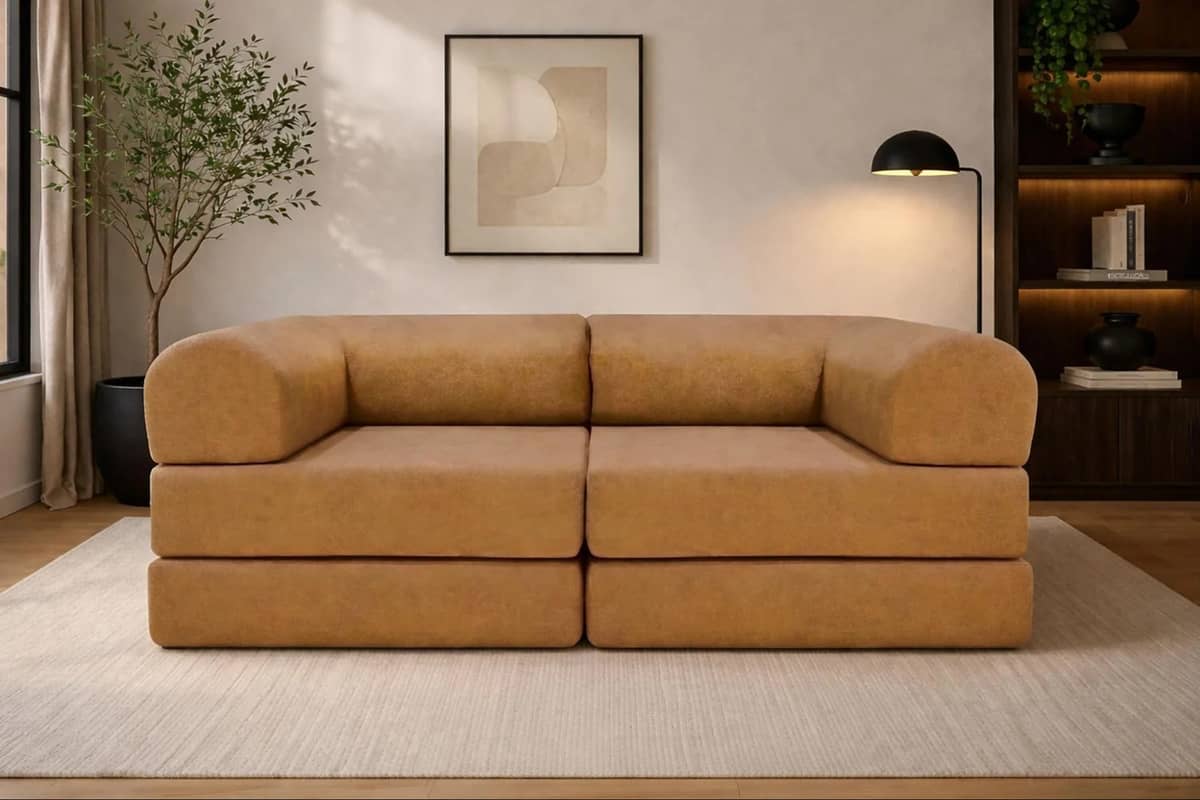
SOFA bed allows a compact living room to serve as both a daytime lounge and an overnight sleeping space.
Photo courtesy of Uratex
A common challenge in compact living is the blurring of boundaries; your living room might simultaneously serve as a dining area, workspace, and guest room. Without a sense of separation, the layout can quickly feel cramped. Flexible furniture helps establish these boundaries. A sofa bed anchors the living area naturally while retaining its dual purpose. You can further define these visual zones using rugs, side tables, or floor lamps — organizing the space without erecting walls.
This versatility extends beyond hosting visitors. If you work from home, the living area remains a professional workspace by day before transforming into a cozy retreat by night. Even if overnight guests are rare, adaptable furniture is invaluable for unexpected situations—a friend staying late, a family member visiting for the weekend, or simply a desire to stretch out during a movie marathon.
A flexible home gives you options. Creating an effortless living environment comes down to selecting pieces that align with your routines rather than restricting them. Whether you reside in a compact city condo or a sprawling provincial home, adaptability makes everyday life more comfortable. You do not necessarily need a bigger home to accommodate more activities or people; sometimes, you simply need furniture that works harder for you.
A sofa bed might look like an ordinary seat by day, but when the need arises, it becomes an extra bed, a makeshift guest room and simple proof of spatial efficiency.