
Envirocycle, Benilde deploy e-waste bins across campuses
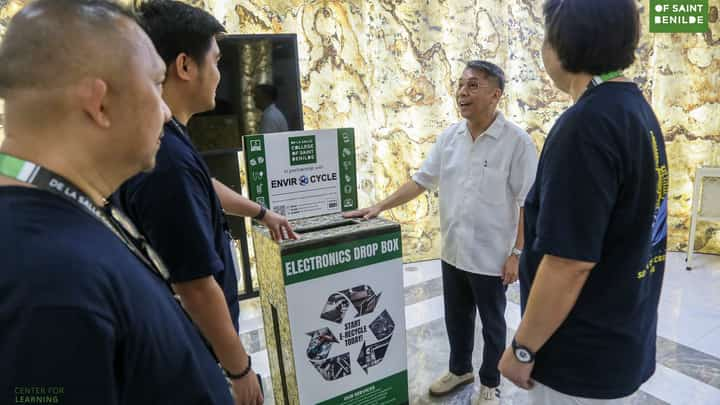
TURNOVER of the Electronic Waste Bins (EW-Bins) at the De La Salle-College of Saint Benilde (DLS-CSB) Angelo King International Center (AKIC)
PHOTOGRAPHS COURTESY OF DLS-CSB
To commemorate International E-Waste Day, De La Salle-College of Saint Benilde (DLS-CSB), through its Center for Built Environment and Logistics (CBEL), has partnered with the leading environmental services company Envirocycle Philippines, Inc. to enhance accessibility on responsible e-waste disposal for the Benildean community.
Envirocycle Philippines Inc. specializes in circular economy, remanufacturing, reverse logistics, sustainable asset disposal, and information technology asset disposition (ITAD).
Through this collaboration, Electronic Waste Bins (EW-Bins) were deployed across the various campuses to encourage students, faculty members and associates to properly dispose of end-of-life and discarded electronics and to prevent hazardous materials from harming the environment.
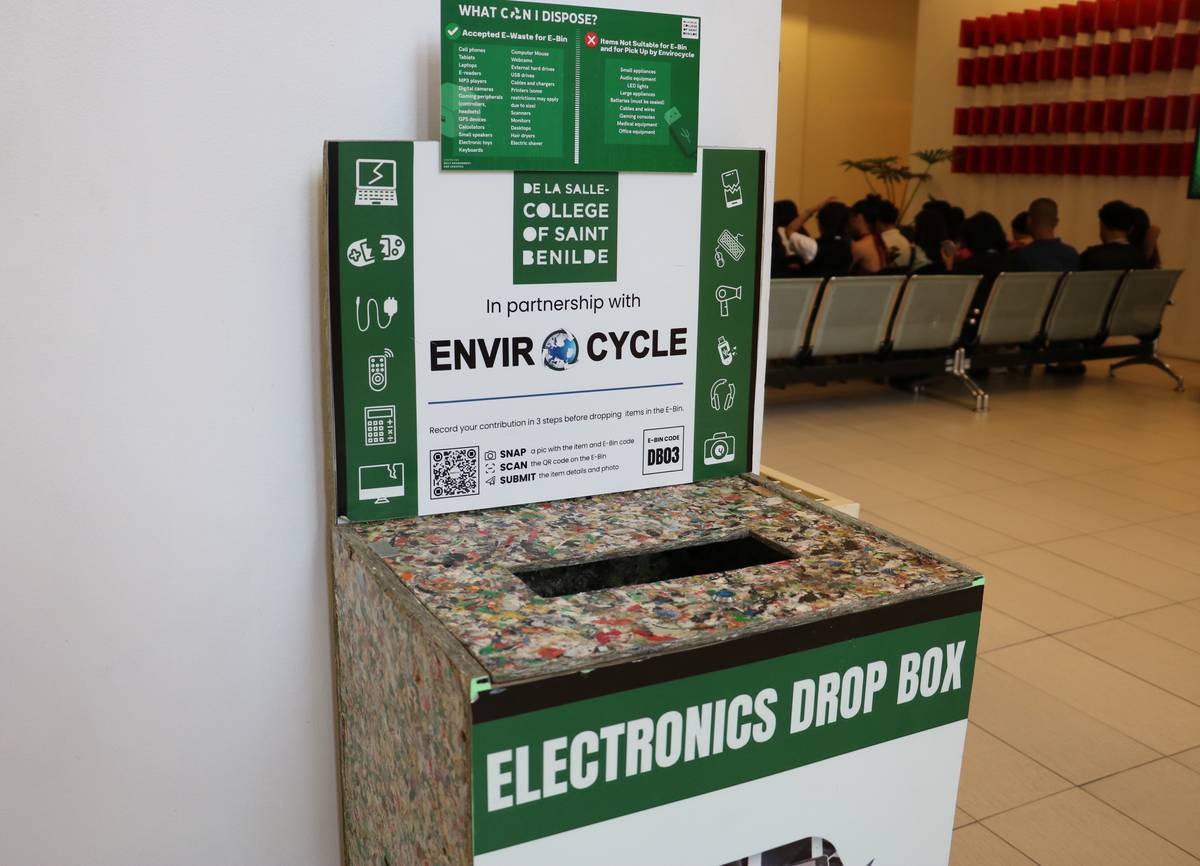
Built Environment Unit head Julius Gopez noted the project, which was inspired by this year’s theme, Fast Tech and the ever-evolving technological landscape, raises awareness of the growing volume of e-waste generated by small, inexpensive gadgets which are often overlooked.
“Educational institutions such as Benilde, which promotes innovation, rely heavily on technology, generating electronic waste from both academic and administrative activities,” Gopez said.
“Small items such as broken earphones, charging cables, and adapters are easily overlooked and often end up in regular waste bins or forgotten in storage,” he added.
Gopez explained with the EW-Bins, the college promotes responsible consumption, proper waste segregation, and resource recovery. It further strengthens its commitment to environmental sustainability and the Sustainable Development Goals.
The EW-Bins were distributed at the designated collection points: the main Taft Campus, the Design + Arts Campus, the Atrium @ Benilde, the Angelo King International Center, and the Sports and Dormitory Complex.
Collected devices will undergo secure data wipes to protect personal information in accordance with applicable data privacy laws. However, users are still encouraged to remove or securely erase personal or confidential data from gadgets prior to disposal.
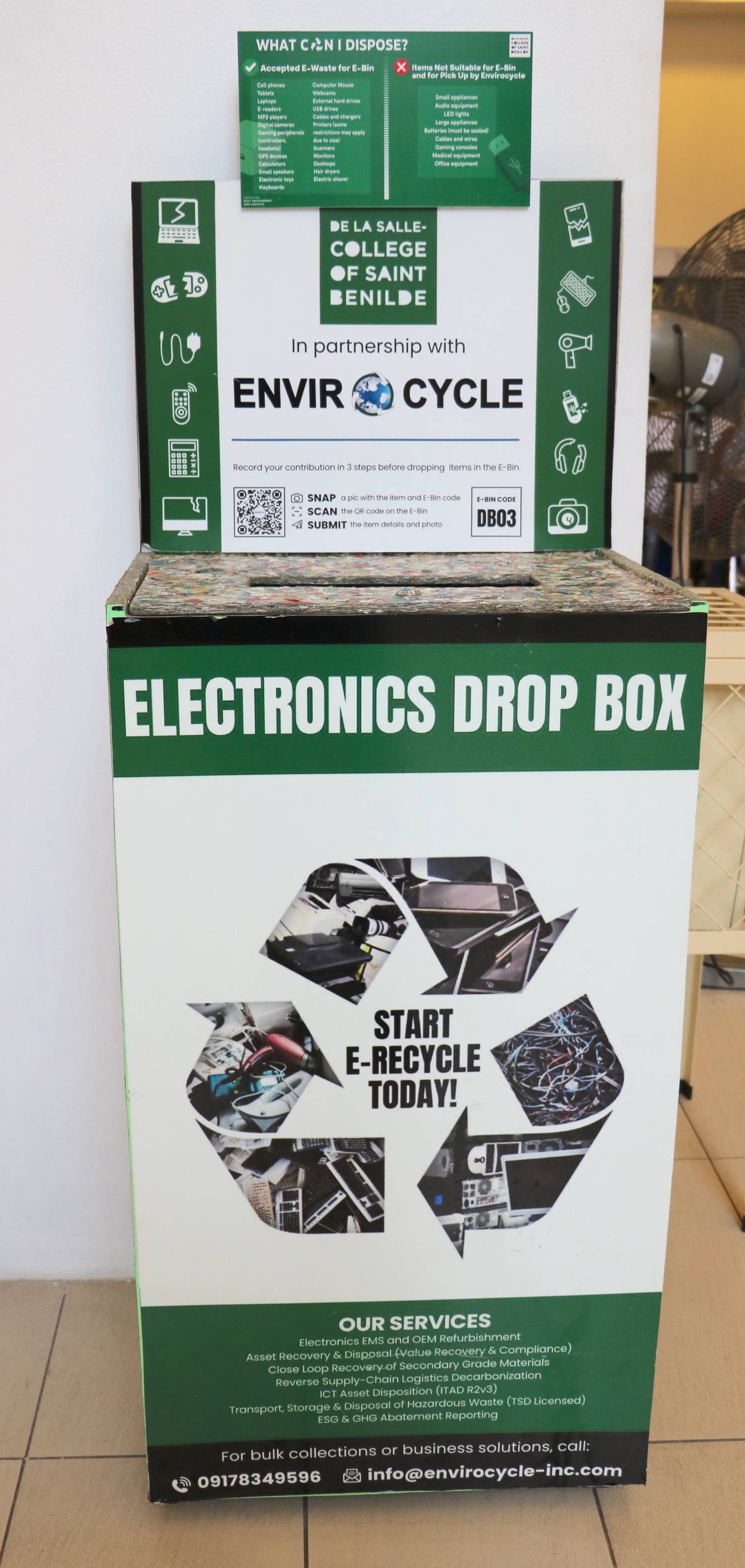
EW-BINS complement the college’s Waste to Worth Recycling Program.
“After collection, Envirocycle assesses the discarded electronics for refurbishment and reuse or material recovery and recycling,” Gopez explained. “Reusable devices may be restored to extend their lifespan, while non-reusable items are processed to recover valuable materials.”
“Components which require special handling are directed to appropriate treatment channels, helping conserve resources, reduce environmental risks, and minimize e-waste sent to landfills,” he added.
Certificates of data destruction and recycling will likewise be issued when applicable.
The EW-Bins complement the college’s Waste to Worth Recycling Program, which primarily focuses on collecting recyclable materials such as PET (polyethylene terephthalate) bottles, paper and aluminum cans.
For more information on this initiative, visit facebook.com/benilde.cbel.