
Metro Manila on the night shift
How well do our cities actually work after dark?


Metro Manila offers several versions of the city after dark. Poblacion is perhaps one of the most recognizable nighttime destinations with its restaurants and bars. In Quezon City, Tomas Morato and Timog form an officially designated “Lifestyle District,” built around entertainment and nightlife. BGC shifts from a daytime business center into a late-evening dining and social district.
Hospitals remain staffed, deliveries continue, airports and hotels keep moving, restaurants serve late customers, security personnel begin or continue their shifts and thousands of workers enter office buildings serving businesses on the other side of the world.
This activity is part of what planners increasingly call the nighttime economy. Institutions and companies in healthcare, transport, logistics, cleaning, hospitality and the like regularly operate between 6 p.m. and 6 a.m. They perform an essential function but their difference in time can present challenges that are not encountered during the day. Looking at Metro Manila this way raises an interesting question: how well do our cities actually work after dark?
A nighttime safety study conducted by SAFETIPIN and ADB Youth for Asia studied 5,839 locations in Manila and Quezon City. They found that the locations had either no illumination or poor illumination, no “eyes on the street,” and in general offered low visibility. Half had no police or private security presence, and 39 percent had no public transport within 400 meters.
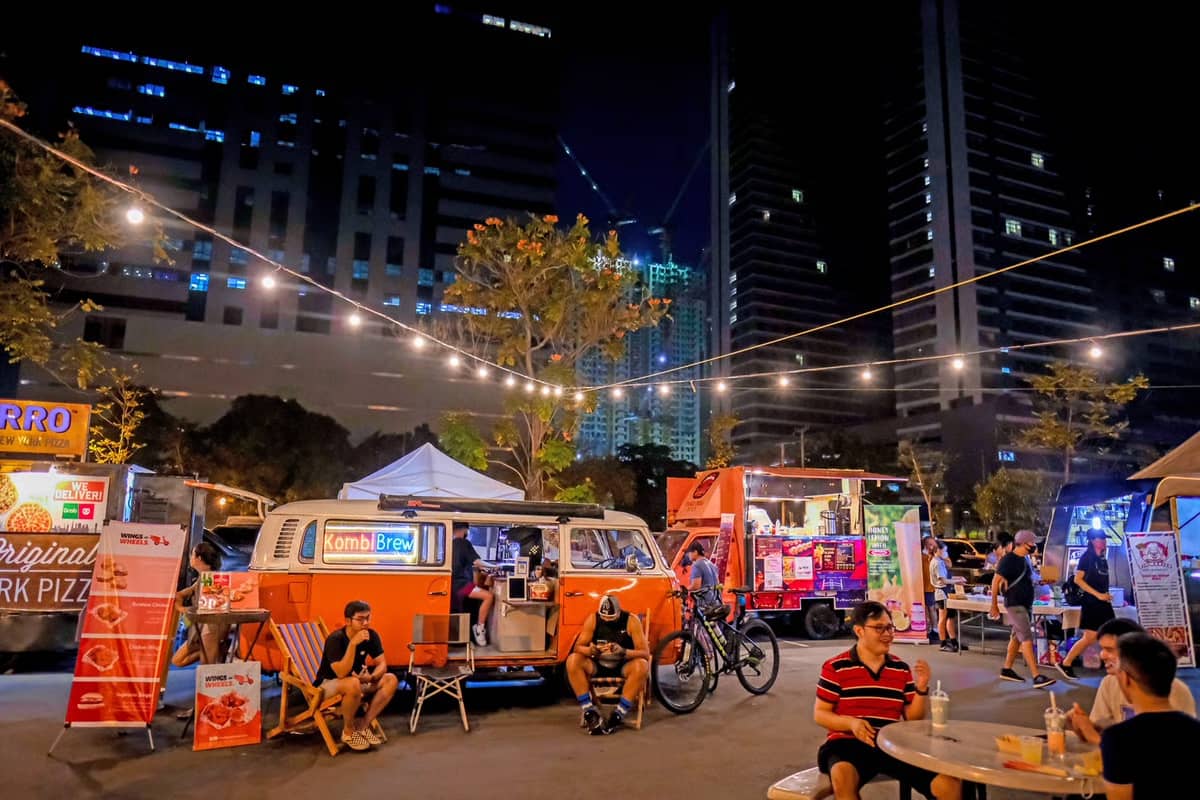
A nighttime food market gives people more access to dining options.
According to the same study, lighting has the maximum impact on the perception of safety. Security, crowd and gender usage are also major factors. Mobility concerns such as visibility, openness, walk path and public transport are also less present during the evening.
There is evidence that these fairly ordinary interventions matter. A Campbell Collaboration review of 13 street-lighting studies found crime fell by an average of 21 percent in areas where lighting was improved compared with similar areas where it was not.
Road safety is also another concern. MMDA figures for 2024 showed that crashes involving pedestrians were the most fatal type of road incident in Metro Manila, with most occurring between 6 p.m. and 6 a.m. Another MMDA presentation noted that while most non-fatal crashes occur during daytime peak hours, the majority of fatal incidents happen at night.
MRT-3 provides a useful example of the demand for later operating hours. During a two-week trial in 2025, more than 61,000 passengers used an additional hour of weekday train service. The response was strong enough for MRT-3 to retain the longer schedule indefinitely, specifically noting the needs of people working evening shifts.
Better nighttime transport expands access to jobs. Active streets support restaurants and small businesses. Hospitals, hotels, logistics and other round-the-clock industries become easier to serve.
Making the city better at night is about making it more livable for everyone who still has reason to be outside after dark. It matters especially for night shift workers whose working hours begin when most of us are heading home. They should still have access to conveniences like places to eat, transportation, basic services and public spaces.