
Why is parking always so hard to find?
Part of the answer lies in the number of vehicles entering the system.

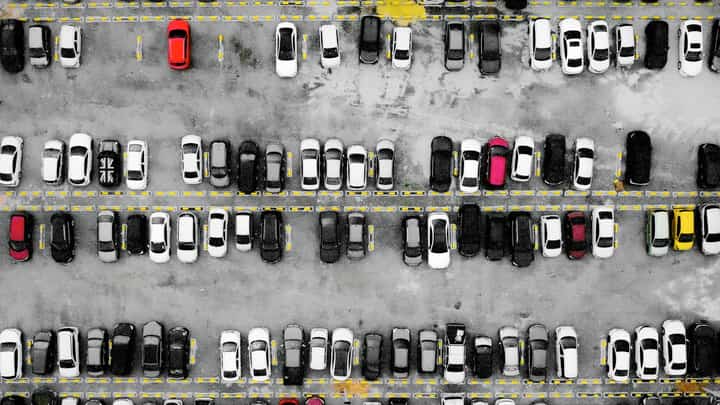
THE National Building Code already mandates parking requirements for residential buildings, offices, schools, hospitals, hotels and commercial developments.
Photograph courtesy of Unsplash/Ink Spaces
The drive is supposed to end when you arrive.
Instead, many motorists begin a second journey. They enter a parking lot or structure, find it full and start circling. What should have been a quick stop turns into a hunt. It becomes a game of surveying roads and corners for a space just large enough and out of the way to leave a vehicle.
Most drivers know the feeling. It happens at shopping malls on weekends and restaurants during the dinner rush. It happens in business districts on ordinary weekdays when people need to attend meetings or report for work. The common assumption is that Metro Manila lacks parking spaces. The reality, however, is more complicated.
The National Building Code already requires parking for residential buildings, offices, schools, hospitals, hotels and commercial developments. In addition, our cities have dedicated basement garages, podium parking levels and stand-alone parking structures. Parking is already a standard part of urban development, yet shortages remain. Illegal parking frequently emerges where parking demand exceeds available supply that ends up occupying public roads and other unintended spaces.
Part of the answer lies in the number of vehicles entering the system. Metro Manila handled about 2.5 million daily vehicle trips in 2013. By 2023, that number had reached 3.6 million. The metropolis absorbed another 1.1 million daily vehicle movements in just 10 years. The automotive market continues to grow as well. More than 467,000 new vehicles were sold nationwide in 2025.
A standard parking slot measures about 2.5 meters by 5 meters, or 12.5 square meters. One hundred thousand vehicles therefore require roughly 125 hectares of parking area. One million vehicles require approximately 1,250 hectares.
This is a conservative estimate. It accounts only for the parking slots themselves and excludes ramps, aisles, circulation space, landscaping, setbacks and other supporting infrastructure needed to make parking facilities functional. The actual land and cost requirement would be considerably larger.
The problem is not simply building more parking. The problem is also finding land for it. It also follows the same rules as any other real estate market. When demand rises faster than supply, prices increase. Monthly parking rentals in major business districts continue to rise. Condominium parking slots are now commonly sold and leased separately from residential units. This explains why parking is rarely free. Someone ultimately pays for the land, construction, maintenance, lighting, security and operation of that space.
Other highly urbanized cities have already confronted this challenge. Rather than relying solely on additional parking supply, cities such as Tokyo, Singapore and Hong Kong invest heavily in alternatives. Reliable rail networks, walkable districts, mixed-use neighborhoods and efficient public transportation reduce the need to drive in the first place.
Locally, there are some approaches to managing vehicles currently implemented by business districts and commercial centers. Parking rates increase with longer stays, while certain curbside spaces are restricted during peak hours. Such measures may not eliminate shortages, but they help manage demand and maximize the use of space.
Parking shortages are a reflection of how cities allocate their limited space among competing demands from residents, businesses and vehicles. Until cities provide more mobility options, that imbalance is likely to persist.