
Hold questioned 2026 GAA projects, SolGen tells DBM

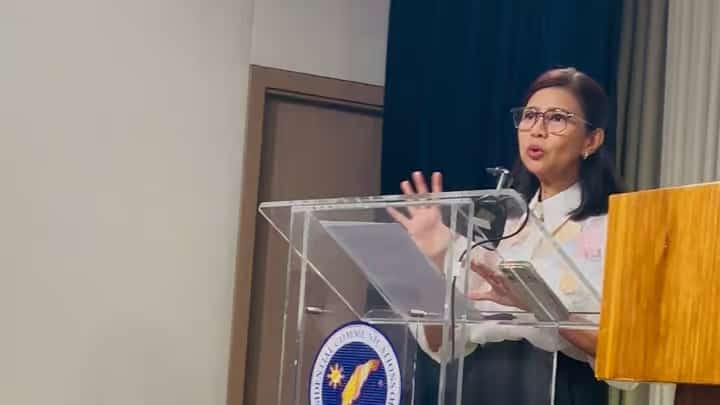
Solicitor General (SolGen) Darlene Marie Berberabe said her office would advise the Department of Budget and Management (DBM) to prepare to suspend some projects under the 2026 General Appropriations Act following a Supreme Court (SC) ruling on unprogrammed appropriations.
The SC declared unconstitutional Congress’ P449.5-billion increase in unprogrammed appropriations under the 2024 national budget and its P17.99-billion increase in the Department of Public Works and Highways’ Special Road Fund for 2025.
For the 2026 GAA, the decision, penned by Senior Associate Justice Marvin Leonen, nullified Special Provisions 1(a) and 1(b) under Chapter XLIII, which authorized the use of unprogrammed funds based on excess collections from individual non-tax revenue sources or new revenue streams.
“Our advice to the DBM and the Executive is to prepare to hold off on these projects for now. The Court is expected to decide on the matter soon. The Supreme Court will surely prioritize it because it also does not want the execution of the remaining 2026 budget to be affected,” Berberabe said in a Palace press briefing on Thursday.
She said projects that had yet to start should be put on hold, while those already underway or being implemented in phases should continue.
“Those clearly covered by the decision on the 2026 GAA should be put on hold for now. But if a project is already being implemented in phases, in my view, it should continue,” she said.
She could not yet identify which projects should be suspended, saying she had scheduled a meeting with Budget Secretary Kim Robert de Leon to seek guidance.
Judicial overreach
The SC also reaffirmed its doctrine that “unprogrammed funds can only be triggered when aggregate revenue collections exceed the total revenue targets assumed in the Budget of Expenditures and Sources of Financing.”
Berberabe said the Office of the Solicitor General (OSG) will ask the SC to review whether parts of its decision amounted to a judicial overreach, arguing that Congress and the President have constitutionally assigned roles in preparing and approving the national budget.
Berberabe said the motion for reconsideration must be filed with the SC by 4 November.
“Our main point is to ask the Court to review whether some guardrails should be left to the two political branches — Congress and the President, who are elected by the people and entrusted with these responsibilities under the Constitution,” she said.
She said the request would be made with respect for the Court and its authority. Asked whether funds already disbursed under the 2024 and 2025 budgets should be returned to the government coffers, Berberabe said no, citing the doctrine of operative fact.
The doctrine preserves the effects of an act before it is declared unconstitutional to avoid unfairness and disruption. Berberabe said the ruling did not require the return of funds already spent on projects.
Instead, she said, the Court’s prescribed safeguards should guide Congress and the Executive in preparing future budgets to avoid repeating the constitutional violations identified in the decision.
Not the first time
Berberabe said the SC had previously questioned unprogrammed appropriations, citing the 2013 Belgica v Ochoa ruling that struck down the Priority Development Assistance Fund and the Araullo v Aquino case on the Disbursement Acceleration Program.
She also said previous presidents had signed national budgets in which Congress increased proposed appropriations beyond those in the National Expenditure Program.
She cited the budgets enacted in 2000, 2004, 2008, 2010 and 2022, saying the practice was not unique to the current administration.
Berberabe said the OSG had received the Supreme Court en banc decision in the consolidated cases of Lagman v. The Congress of the Philippines and respected its principal ruling that unprogrammed appropriations, as a budgetary mechanism, were not unconstitutional.