
A chance to build better schools
The demand for classrooms presents an opportunity to rethink the spaces where future generations will learn, grow and discover their potential.


SOLAR-POWERED learning spaces offer one example of how architecture and infrastructure can support education in practical ways.
Education has always been one of the greatest equalizers available to society. It gives us the opportunity to acquire knowledge, develop critical thinking and ultimately improve lives. We often celebrate excellent teachers and meaningful curricula, and rightly so. Yet, we rarely stop to consider the architecture that supports both.
The Department of Education estimates that the country still faces a classroom shortage exceeding 143,000 rooms, while EDCOM II places the national requirement even higher. At the same time, more than 51,000 classrooms are expected to reach fifty years of age within the next few years, creating a second challenge of replacing aging facilities alongside constructing new ones.
This rebuilding effort presents an opportunity to also reconsider what a Philippine public school should be. Unlike a curriculum, which may change every few years, a school building can remain for half a century or longer. Its walls quietly influence generations of students long after textbooks have been replaced and administrations have changed.
Educational research increasingly suggests that buildings have a major influence on learning outcomes. Daylight, thermal comfort, air quality, flexibility and a sense of ownership over a classroom can influence educational performance.
The educational challenges facing schools today are also different. Reading comprehension, student well-being, campus safety, digital learning and climate resilience all place new demands on the physical learning environment. A school’s architecture can help create conditions that better support students and educators alike.
Spatial design can make reading a more natural part of everyday school life. Peaceful reading corners, shaded outdoor classrooms, smaller discussion rooms and comfortable informal learning spaces encourage students to read beyond the classroom.
In terms of mental health, counselling programs and educators remain at the center of any response. The physical environment also matters, as access to daylight, greenery, comfortable temperatures and quieter spaces has been associated with reduced stress and improved concentration.
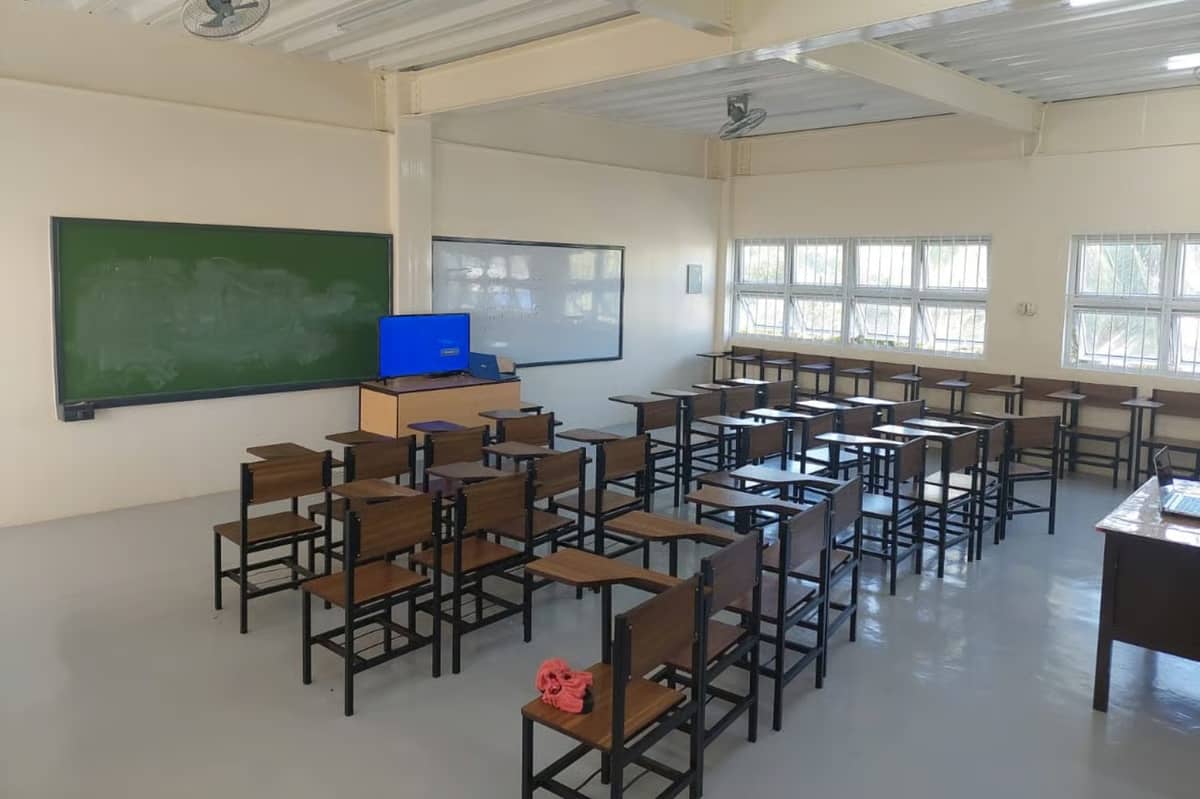
NATURAL lighting, ventilation, adaptable layouts and well-planned learning spaces can support both teachers and students, creating environments that are better suited to the evolving demands of education.
Photo courtesy of DepEd
School safety has also become an increasingly important design consideration. Clear sightlines, well-supervised common areas, intuitive circulation, controlled entrances and reliable emergency exits create environments that are both safer and more pleasant to occupy.
Digital learning, collaborative projects and flexible teaching methods require classrooms that can adapt and support these activities. Movable furniture, shared learning spaces and appropriate digital infrastructure allow schools to evolve alongside changing educational methods. Designing these systems efficiently also creates opportunities to reduce long-term operating costs through energy-efficient buildings and renewable technologies.
Throughout the year, typhoons, flooding and extreme heat interrupt schooling across the country. Lost classroom days are lost opportunities to learn. Designing schools with better ventilation, natural lighting, flood protection and durable materials reduces operating costs while allowing campuses to recover more quickly after disasters.
Aside from these considerations, the Philippines has a diverse demographic that will require a different architectural response based on the region’s particular character. A dense urban school in Metro Manila faces very different challenges from a coastal campus in Eastern Visayas or a flood-prone school in Central Luzon.
The demand for classrooms presents an opportunity to rethink the spaces where future generations will learn, grow and discover their potential. It is a chance to create learning environments that respond not only to today’s educational needs, but also to the changing demands of future generations.