
Movies we don’t make anymore

The Philippine Film Industry Month (PFIM) is an annual celebration that happens every September. This year’s kick-off ceremony happens at the EDSA Shangri-La Mall’s Red Cinema on 4 September, with the screening of a digitally restored Lino Brocka classic, Tinimbang Ka Ngunit Kulang. Two of its original cast members, Christopher de Leon (Junior was his character’s name, and it was De Leon’s first starring role) and Laurice Guillen (Milagros), will attend it.
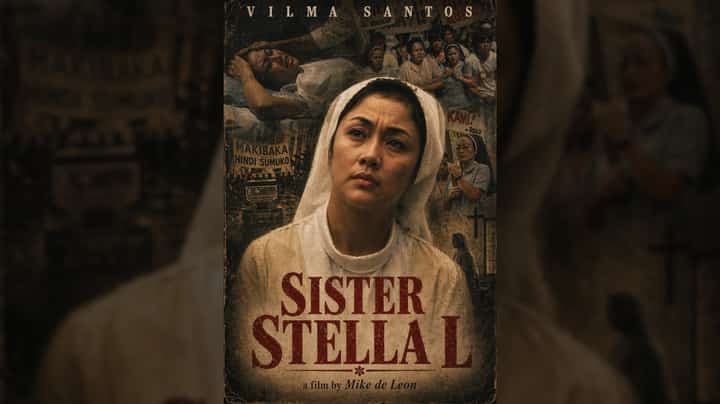
Mike de Leon’s Sister Stella L will serve as the final screening feature of the celebration, with its 4K digitally restored version slated for a special screening on 20 September at the Metropolitan Theater. Confirmed to grace the event is Vilma Santos.
The month-long celebration concludes on 30 September with a tribute gala night at Seda Vertis North.
'Weighed But Found Wanting'
Produced by Cine Manila, with Raul Roco and Mario O’Hara credited as its producers, O’Hara and Lino Brocka sharing screenplay credits, and Brocka as its director, Tinimbang Ka Ngunit Kulang, first shown in cinemas on 30 May 1974, presented the life of Junior and his dysfunctional family, headed by a womanizer of a father (Eddie Garcia +), a shallow and materialistic mother (Lilia Dizon +), and how the young man forged a friendship with the town’s outcasts, the lunatic Kuala (Lolita Rodriguez +) and leper Berto (O’Hara). The movie exposed the deep-seated cruelty, hypocrisy and moral decay of a small town.
“Before its release, local movies were widely looked down upon by the middle and upper classes as bakya or low-class. His independently produced movie shifted public perception, drawing affluent, educated and moneyed audiences into the cinemas to watch Filipino movies,” said FDCP chair Jose Javier Reyes during the PFIM press conference held at the Philippine Film Heritage Building in Intramuros, Manila. “It also ushered in and paved the way for the Second Golden Age of Philippine Cinema, which is the main reason for the PFIM celebration and festivities.”
The Brocka masterpiece received much acclaim and love for its depiction of a raw, eye-opening coming-of-age journey that Junior experienced, the tragic backstory that destroyed Kuala’s sanity, Lolita Rodriguez’s masterclass performance, the misfortune that consumed Berto, and the brutal exposure of small-town guardians and the tearing of their veils and clothes of hypocrisy.
Sister Stella Legaspi
The Pete Lacaba-written and Mike de Leon-directed movie was about an apolitical nun, Sister Stella Legaspi (Vilma Santos), how her life changed because of Nick Fajardo (Jay Ilagan +), an ex-boyfriend-turned-journalist who urged her to look at the systemic corruption afflicting the country; Sister Stella Bautista (played by Laurice Guillen), a politically active older nun who openly questioned the passive stance of the Catholic Church on capitalist oppression and urged her tukayo to live out Christian teachings through direct action; and Ka Dencio (Tony Santos Sr. +), the charismatic union leader whose life and what he was fighting for made the nun choose the right path as she faced her personal crossroads.
The concluding monologue, the political awakening of a cloistered nun, the great acting of Santos, Ilagan, Santos Sr., Guillen, Anita Linda (+), the “Sangandaan” theme song, and it being one of the most defiant anti-Ferdinand and Imelda Marcos regime masterpieces in Philippine political cinema, are some of the reasons why Sister Stella L is an unforgettable watch and a movie classic.
The Why
Masterpieces like the ones made by Brocka and De Leon [came about] because of the radical changes that affected the economic, political and industrial landscape of Philippine entertainment.
Economically, with the exorbitant costs of film production plus the taxes imposed on it, a movie with narratives and themes like Tinimbang and Stella, when pitched to corporate boards, will likely be liked for its idea and promise, but gambling on them will not be deemed as good for the business.
The viewing preferences of the public have changed since the Second Golden Age of Philippine Cinema. There is also the reality of online entertainment platforms, which are considered relatively inexpensive and enjoyable if compared and computed against traditional cinematic viewing.
Also, there are no sure-fire formulas and genres that guarantee a box-office hit. Some movies, despite great traditional and digital publicity, trending status, with big-name stars and award-winning writers and directors who made them, still failed to lure audiences to watch them in the cinemas.
Everything now depends on timing, luck, word of mouth and the viewers feeling the itch and need that they have to be part of a bigger community who are dead-set on watching it.
Audiences now with purchasing power want their movies “maganda” and worth their time and hard-earned pesos.
Realistically speaking, let us enjoy this second golden set of movies during the PFIM and hope that producers will once again bankroll and gamble on them and that, as they create and produce such movies, the audiences will come to watch them.