
‘Different islands, same heart’: Finding a shared Southeast Asian identity at Best of ASEAN Performing Arts 2026
Despite the distances between their homelands, young artists find kinship in the traditions, rhythms, and stories they share.

Geography may separate the island nations of Southeast Asia, but their arts and rhythms reveal cultures bound by common threads. This sense of kinship came to the fore at the Best of ASEAN Performing Arts (BoAPA) 2026.
Reflecting ASEAN’s vision of a peaceful, inclusive region founded on mutual understanding, the Philippines hosted BoAPA 2026: Navigating Cultural Currents from 5 to 9 August in Manila and Los Baños, Laguna.
Organized by the Philippines’ ASEAN National Committee on Culture and Information–Sub-Committee on Culture through the Cultural Center of the Philippines, in cooperation with the National Commission for Culture and the Arts, BoAPA is one of ASEAN’s flagship cultural initiatives. The annual program brings together emerging young artists from across Southeast Asia to celebrate the region’s shared heritage while highlighting the distinct culture of each ASEAN member state.
Cultural immersion
Conceived as an immersive three-day series of workshops and exchange sessions, BoAPA introduced a camp-style setting at the National Arts Center (NAC) in Los Baños. The arrangement gave the young delegates a rare opportunity to live and rehearse together and to connect with student artists from the Philippine High School for the Arts (PHSA).
During an exchange on the participating countries’ traditional dances, a student in the audience described how the unfamiliar traditions also felt surprisingly close, bridging the physical distance among neighboring nations.
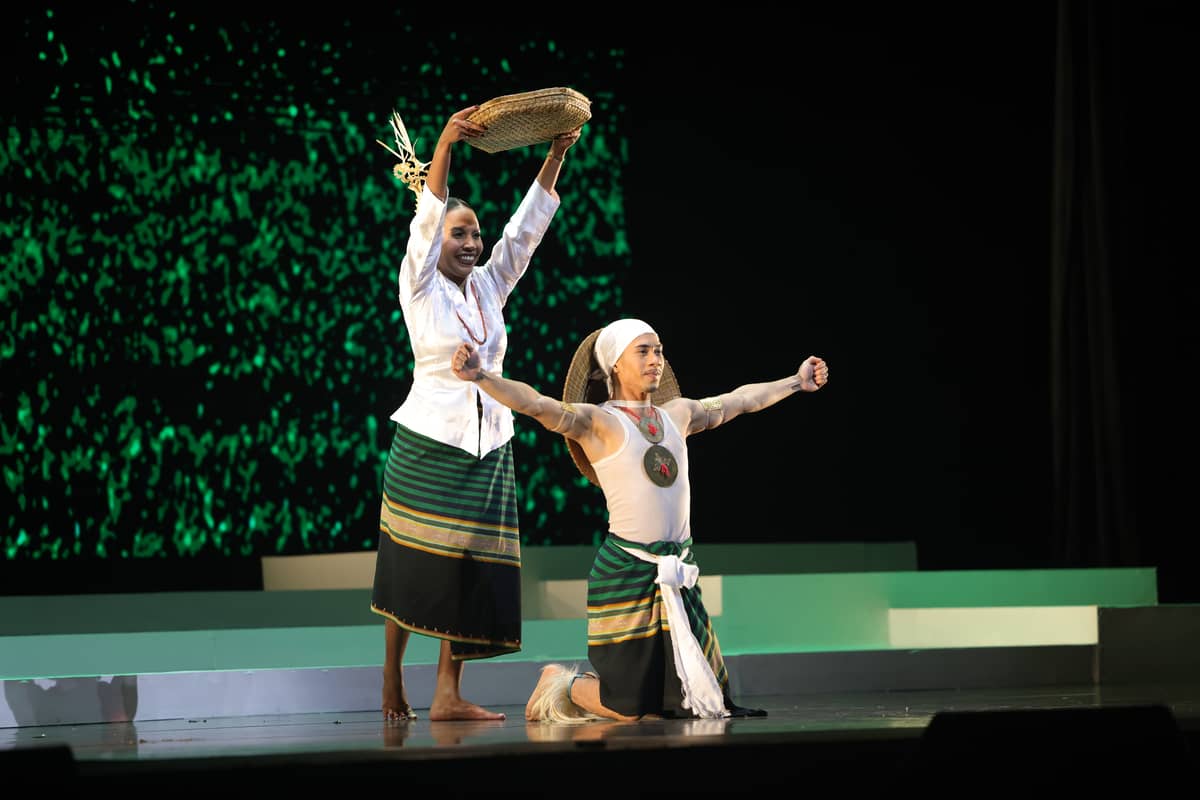
Nadia Godinho Soares and Expedito Coelho Caldeira Barbosa perform Timor-Leste’s ‘Hare Fos Dance,’ choreographed by Mitu Freitas and Anna Whayu Prasetyowati.
“Seeing parts of my culture in your culture and dances is amazing. Even though our countries are far apart — some of us separated as islands — we see that we share the same character. As an audience, it was incredible to witness how passionate everyone is,” they said.
A delegate from Indonesia echoed the sentiment, observing that traditional forms such as the Zapin dance naturally connect Indonesia, Singapore, and Malaysia: “When we see our culture in other countries, we feel proud. We realize, ‘Oh yeah, we have the same culture.’ Across Southeast Asia, we share the same character.”
“The advantage of holding this at the NAC is giving PHSA students the immediate opportunity to interact with regional delegates. Hearing students realize how similar we are in many ways goes right back to our objective: introducing ASEAN culture to the younger generation,” CCP vice president and artistic director Dennis N. Marasigan said.
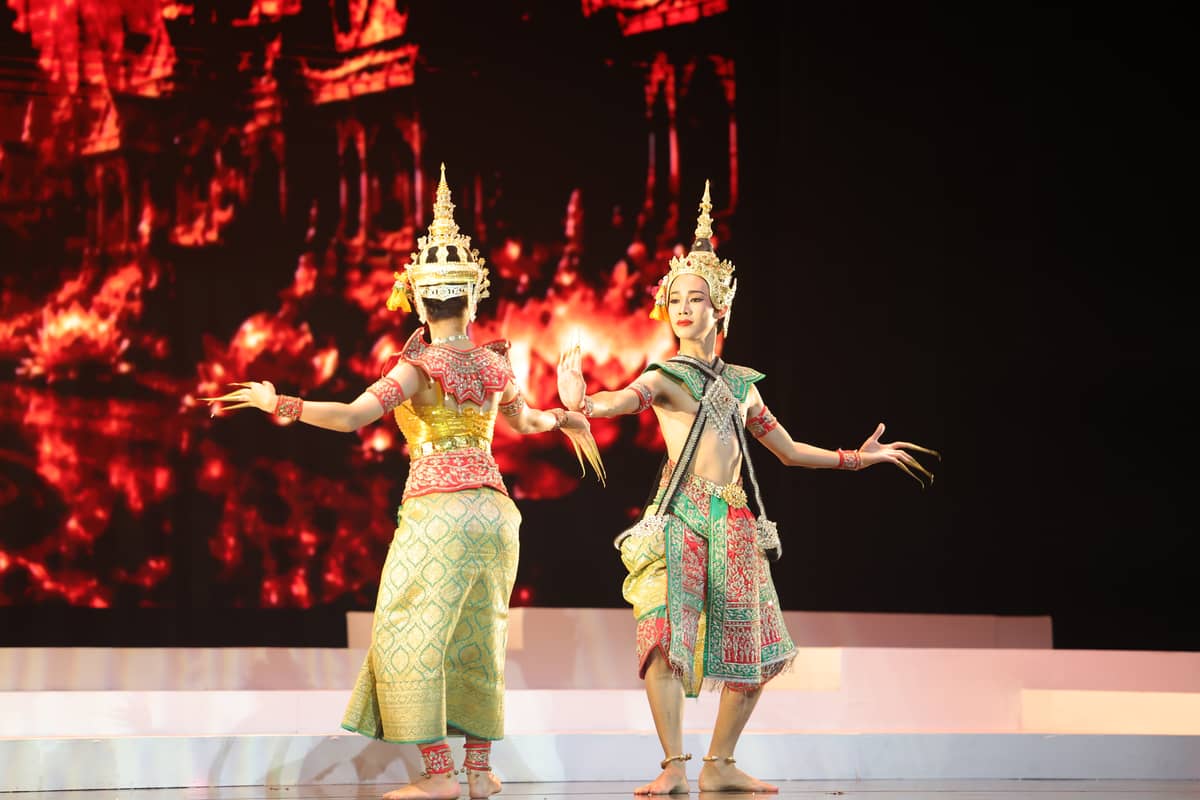
The ‘Sat Chatri Dance (Ram Sat Chatri)’ from Thailand.
National cultural showcases
Highlighting Southeast Asia’s vibrant diversity and shared artistic spirit, delegates from each participating nation took the stage to present traditional dances from their countries. Abdul Wafiy bin Haji Muslim and Izzul Irfan bin Yahya of Brunei Darussalam performed “Jipin.” Mak Kaneka and Oeun Sokunthea of Cambodia presented “Kingdom of Sentiment Dance,” while Sendanatasa Kunthi Febiyani and Galuh Widyaningtyas of Indonesia performed “Rupa.” Thilaphat Tailattana and Chantaphon Chantavong of Laos presented “The Sound of Lao Khene.” Malaysia’s Dhilip bin Abdullah and Shaqeef Ishak bin Abdullah performed “Tingkah 2 Diraja,” while Sai Tun Oo and Si Thu Lynn of Myanmar presented “Nan Bon Thi Har Bwe.” Periyachi Roshini and Yong Fong Sin of Singapore performed “Dance of the Seas,” and Piyaporn Sriwangkhet and Phuripat Teangpook of Thailand presented “ram sat chatri.” Nadia Godinho Soares and Expedito Coelho Caldeira Barbosa of Timor-Leste performed the Hare “FOS” Dance and Dansa Tebedai, while Le Thi Phuong Thao and Vu Anh Vu of Vietnam presented “Spirit of Viet Nam.” Representing the Philippines, John Abadon and Krislynne Alyanna R. Buri performed “Para kay Gabriela.”
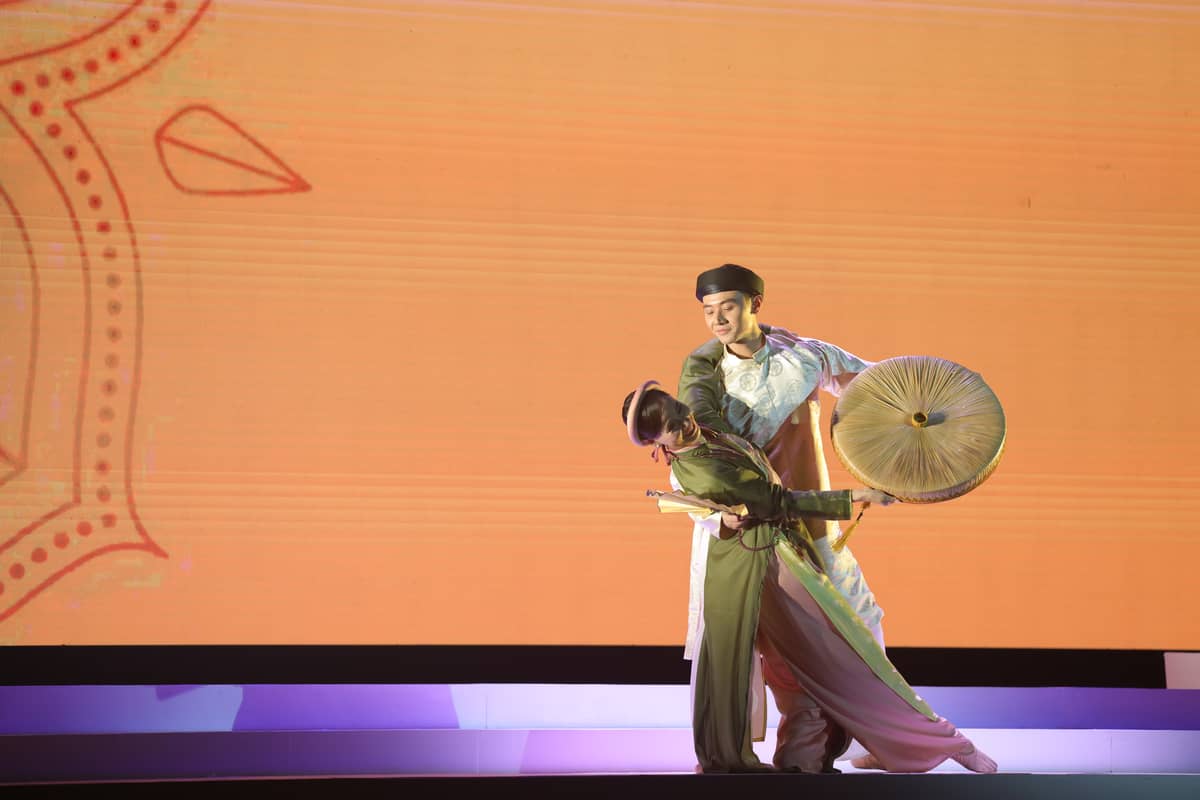
Vietnam presents ‘The Spirit of Vietnam.’
ASEAN on one stage
The theme of unity in diversity took center stage as the ASEAN delegates joined Alice Reyes Dance Philippines for Rama, Hari Redux, a condensed version of the acclaimed pop-ballet musical featuring the work of five National Artists. National Artist Ryan Cayabyab composed the music; National Artist Salvador Bernal created the production design; National Artist Bienvenido Lumbera wrote the libretto; and National Artist Rolando Tinio provided the English translation of the lyrics.
Directed by National Artist for Dance Alice Reyes, the production wove traditional performers from across the region into a cohesive retelling rooted in the Ramayana, the Indian epic shared by many Southeast Asian cultures.
“It is wonderful to work with dancers bringing in their traditional expertise,” Marasigan said.
“They are all game and natural performers. Mixing everybody together in this opera-ballet is a wonderful opportunity,” Reyes added.
Despite the limited rehearsal time, their shared artistic heritage enabled the performers to forge a seamless connection onstage.
BoAPA 2026 culminated in a grand performance at the historic Manila Metropolitan Theater, bringing together the national cultural showcases and Rama, Hari Redux. The event coincided with the official launch of the ASEAN Cultural Center, spearheaded by the NCCA.
As the Philippines holds the ASEAN chairship in 2026, its hosting of BoAPA reflects the country’s longstanding commitment to strengthening regional cooperation through culture.
By bringing together the region’s next generation of cultural bearers, BoAPA 2026 affirmed that the peoples of ASEAN remain connected by stories and artistic expressions — currents that continue to shape a shared cultural community.