
Duterte camp: Let impeachment run before criminal case

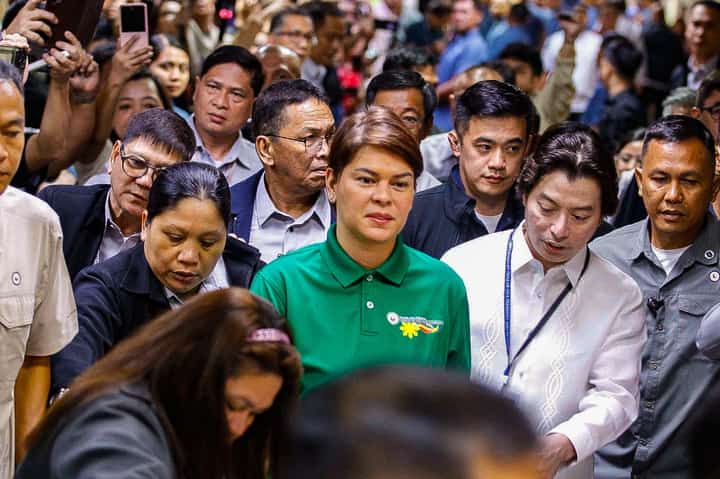
VICE President Sara Duterte arrived at the Senate on Tuesday, 7 July, along with one of her lawyers Atty. Michael Poa prior to the second day of the impeachment trial against her.
Aram Lascano
A criminal case against Vice President Sara Duterte has opened a broader constitutional question over whether officials who can be removed only through impeachment may also be prosecuted while still in office, her lawyer said on Friday.
Duterte’s counsel for grave threats, Atty. Paul Lawrence Lim, said the defense asked a Quezon City court to hear oral arguments on the motion to quash the grave threats case, saying its resolution could have implications beyond the vice president.
“If a sitting Vice President may be indicted and prosecuted, then other incumbent impeachable officers such as the Ombudsman, members of the Constitutional Commissions, Supreme Court justices, and even the President, may also be indicted and prosecuted,” the statement read.
The motion to quash, filed a day earlier, argued that the Quezon City Regional Trial Court lacks jurisdiction to prosecute Duterte while she remains vice president.
He said the defense wanted the court to hold oral arguments because the case could have implications for other officials who may be removed only through impeachment.
“We are not saying that an impeachable officer can never be charged. Our belief is that you can charge them, but not while they are sitting in office,” Lim told reporters in an online press briefing.
The Constitution lists the President, Vice President, Supreme Court members, members of the Constitutional Commissions and Ombudsman among officials removable through impeachment.
The defense cited a 1988 Supreme Court ruling, In re: Raul M. Gonzalez, which held that an impeachable public officer could not be subjected while in office to criminal proceedings for an offense carrying removal from office or a penalty whose service would amount to removal.
The ruling, however, concerned the prosecution of a Supreme Court justice and the consequences of an offense carrying removal from office. Its application to Duterte’s present grave threats case is a question now before the trial court.
The Department of Justice (DOJ) has taken the opposing view, saying criminal proceedings are separate from impeachment and that nothing prevents it from prosecuting the Vice President.
Lim said the defense was also asking the court to defer issuance of an arrest warrant while it resolves the jurisdictional issue. He said a warrant would itself constitute an exercise of jurisdiction.
“We asked the court not to issue (a warrant) while this issue of jurisdiction is being heard,” he said.
The case stems from Duterte’s 2024 remarks threatening President Ferdinand Marcos Jr., his wife and then-House Speaker Martin Romualdez — the same allegations cited in Article IV of the articles of impeachment. The complaint was recommended by the National Bureau of Investigation before the Department of Justice pursued the criminal case.