
US backs stronger Phl role in regional deterrence
“This is not a one-sided partnership — the Philippines is stepping up, taking the lead to defend itself, and investing more to modernize its military and coast guard,” Colby said.

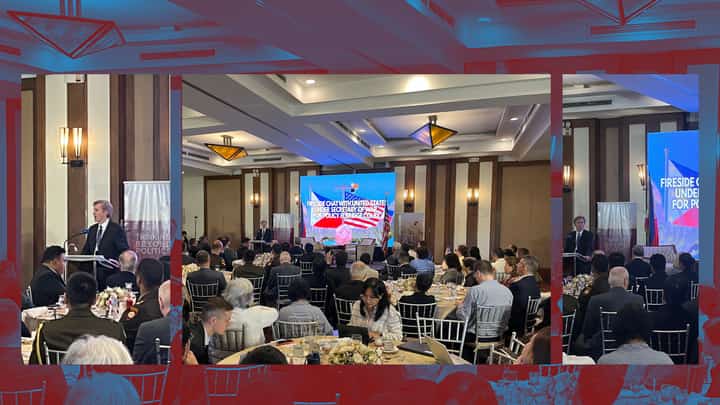
MAKATI CITY — The United States is seeking to strengthen its defense alliance with the Philippines, with a senior Pentagon official describing Manila as a “model ally” as Washington pushes for greater military cooperation in the Indo-Pacific.
Under Secretary of War for Policy Elbridge Colby cited the countries’ longstanding defense ties, shared strategic interests and Manila’s efforts to strengthen its own military capabilities.
“A model ally. I commend the Philippines for its outstanding leadership of ASEAN during its chairmanship this year, guiding the region with a clear-headed pragmatism that matches the strategic demands of our time,” Colby said during a Stratbase Institute-organized fireside chat.
Stronger deterrence
Colby said Washington is expanding its forward military posture, accelerating the delivery of combat capabilities and improving interoperability with allies and partners.
“We are systematically strengthening our forward posture, hardening our footprint, and driving deep interoperability with key countries that are willing to shoulder their share of the burden,” he said.
The focus, he added, is on developing combat-capable forces rather than conducting exercises for appearances.
“This is not merely about performing in symbolic exercises for the cameras; it is about fielding combat-credible forces capable of defeating real military aggression,” Colby said.
Washington is also seeking greater burden-sharing from allies and partners, including increased investments in their own defense capabilities.
“We are looking for partners, not protectorates. When our partners are strong, deterrence is strong. And that is exactly what we have here in Manila,” Colby said.
‘Historic modernization’
Colby described the US-Philippines alliance as undergoing “historic modernization,” citing Manila’s increased investments in its defense capabilities.
The Philippines is co-investing in infrastructure, expanding military training and operationalizing sites under the Enhanced Defense Cooperation Agreement, he said.
“This is not a one-sided partnership — the Philippines is stepping up, taking the lead to defend itself, and investing more to modernize its military and coast guard,” Colby said.
The United States is also rotating four Fast Response Cutters to work with the Philippine Coast Guard in patrolling and securing the country's exclusive economic zone.
Stronger, resilient alliance
Stratbase Institute President Victor Andres Manhit said the alliance is becoming increasingly important as security and economic challenges in the region intensify.
Manhit said the United States consistently ranks among the countries Filipinos want the government to work with on maritime defense and economic security.
“That is precisely what we hope to explore, how this trust can be translated into a stronger, more capable, and more resilient alliance that responds to present challenges and contributes to a free and open rules-based Indo-Pacific,” Manhit said.
Colby’s Manila visit is part of a regional trip that also includes Indonesia, Thailand and Cambodia.