
EV power consumers seek rate relief
TACLOBAN CITY — As President Ferdinand Marcos Jr. prepares to deliver his fifth State of the Nation Address (SoNA) on Monday, electric consumers and distribution utilities in Eastern Visayas are urging him to prioritize measures that will reduce the region’s soaring electricity rates.
Under the normal computation of power charges, July electricity rates would have reached as high as P24.35 per kilowatt-hour (kWh) in Biliran and as low as P13.26 per kWh in Tacloban City and the neighboring towns of Palo and Babatngon, which are served by the Leyte II Electric Cooperative (LEYECO 2).
To cushion the impact on consumers, electric cooperatives temporarily suspended or staggered payment of pass-on generation costs to the Wholesale Electricity Spot Market.
In Biliran, the arrangement reduced the July rate to P16.69 per kWh from P24.35. However, distribution utilities warned that the payment scheme may not be sustainable in the coming months.
Electric cooperatives blamed the sharp increase on the Line Loss and Congestion Cost (LLCC), formerly known as “line rental,” which is passed on to consumers.
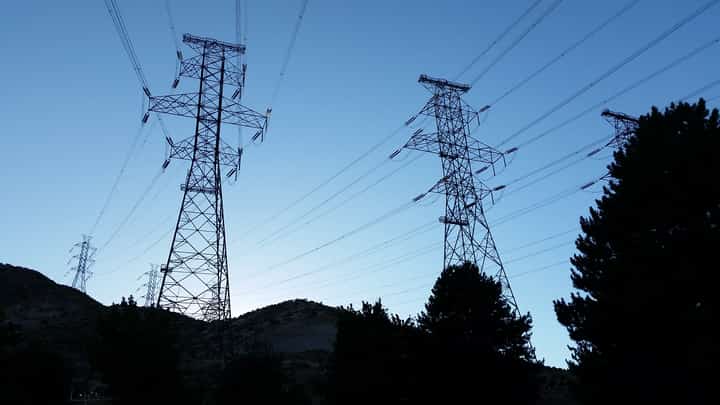
Line loss refers to the natural loss of electricity as power travels through transmission lines and equipment, while congestion cost is incurred when transmission lines become overloaded, forcing the grid to source more expensive electricity.
For July alone, the Independent Electricity Market Operator of the Philippines (IEMOP), which administers the country’s wholesale electricity market, billed the region’s 11 electric cooperatives a total of P572.9 million in LLCC charges.
The surcharge ranges from P0.46 per kWh for LEYECO 2 to as much as P5.99 per kWh for LEYECO 4, on top of the actual cost of electricity.
Lawyer Fernan Paul Tan, general manager of LEYECO 2 and president of the Federation of Rural Electric Cooperatives in Region 8 (FRECOR 8), said the July LLCC bill is more than double June’s P276.5 million.
From January to July alone, IEMOP billed the region’s electric cooperatives a total of P1.55 billion in LLCC charges, all of which are eventually passed on to consumers.
“This is money taken from food, school and medicine budgets — for losses and congestion on a grid our consumers do not own and cannot fix,” Tan said.
Ahead of the President’s SONA, FRECOR 8 adopted a resolution and launched an online signature campaign urging Marcos to intervene and reform the pricing mechanism governing the LLCC.
The group argued that consumers are being charged even for electricity that was never delivered because of line losses. It said customers should pay only for electricity actually delivered, not for contracted power that fails to reach them.
FRECOR 8 also urged the President to direct the Energy Regulatory Commission to review the LLCC pricing mechanism and audit previous charges to determine whether consumers had been overbilled.
The federation is likewise calling for the upgrade of the Luzon-Visayas transmission interconnection of the National Grid Corporation of the Philippines, saying transmission constraints continue to limit power supply and drive up electricity prices.
“We support fair and lasting solutions that address transmission constraints and bring down the LLCC burden on our member-consumer-owners,” Tan said