
Power crunch lifts Phl to ASEAN’s highest June rates

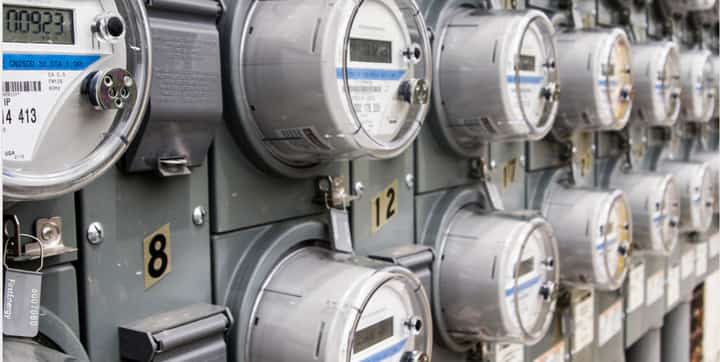
Filipino households paid the highest electricity prices in Southeast Asia in June, with consumers served by the Southern Leyte Electric Cooperative (SOLECO) bearing the country’s steepest power bills as supply shortages and widespread power plant outages drove up electricity costs.
Energy Undersecretary Rowena Cristina Guevara said the Philippines’ average residential electricity rate reached P12.43 per kilowatt-hour (kWh) in June, narrowly overtaking Singapore by 0.093 centavos per kWh to become the highest in the region for the month.
“To be accurate, we were the highest in Asean only for June. We monitor this every month,” Guevara said.
Among the country’s on-grid distribution utilities, Southern Leyte Electric Cooperative, Inc. posted the highest residential electricity rate at P16.57 per kWh in June, up 32 percent from P12.53 per kWh in May after generation charges rose by P4.04 per kWh.
Northern Samar Electric Cooperative, Inc. ranked second with P15.72 per kWh, posting the largest increase among the top five at 41 percent from the previous month. Kalinga-Apayao Electric Cooperative, Inc. followed at P14.53 per kWh, while the Manila Electric Company and Leyte IV Electric Cooperative, Inc. charged P14.48 per kWh and P14.46 per kWh, respectively.
The rest of the country’s 10 most expensive on-grid distribution utilities in June were Cebu II Electric Cooperative, Inc. at P14.12 per kWh, Cebu I Electric Cooperative, Inc. at P13.96 per kWh, MORE Electric and Power Corp. at P13.91 per kWh, Central Negros Electric Cooperative/Negros Electric and Power Corp. at P13.84 per kWh, and Nueva Ecija II Electric Cooperative, Area II at P13.79 per kWh.
Among the country’s off-grid distribution utilities, the Busuanga Island Electric Cooperative, Inc. posted the highest residential electricity rate at P24.92 per kWh in June, inching up one percent from P24.76 per kWh in May. It was followed by the First Catanduanes Electric Cooperative, Inc. at P19.44 per kWh, up 21 percent from P16.07 per kWh, and the Oriental Mindoro Electric Cooperative, Inc. at P18.29 per kWh, up 23 percent from P14.92 per kWh.
The Palawan Electric Cooperative, Inc. ranked fourth at P12.93 per kWh, followed by Province of Siquijor Electric Cooperative, Inc. at P12.86 per kWh, Occidental Mindoro Electric Cooperative, Inc. at P12.62 per kWh, Tablas Island Electric Cooperative, Inc. at P11.95 per kWh, Marinduque Electric Cooperative, Inc. at P11.24 per kWh, Batanes Electric Cooperative at P11.23 per kWh, Bantayan Electric Cooperative at P11.11 per kWh, and Masbate Electric Cooperative, Inc. at P10.65 per kWh.
The increase reflected higher generation charges caused by elevated Wholesale Electricity Spot Market (WESM) prices, stronger demand, red alerts, and transmission constraints, although lower transmission charges and the utility’s ongoing refund mechanism partly offset the increase.
Guevara said the country’s distinction as most expensive electricity market was largely driven by supply shortages in the Visayas, where 21 power plants were on forced outage, leaving the region dependent on imported power from Luzon and Mindanao while remaining under yellow alert since May.
“The main reason, particularly in the Visayas, is that electricity there is the most expensive because of a supply shortage. We had 21 power plants on forced outage, making the region dependent on imported power from Luzon and Mindanao. The Visayas has also been under yellow alert since May 13, and that has driven prices higher,” she said.
She added that elevated demand during the summer months forced grid operators to dispatch more expensive generating units to prevent widespread power interruptions.
“For the rest of the country, as the Secretary mentioned, demand was also high during the summer months. As a result, we had to dispatch more expensive power plants to avoid blackouts,” Guevara said.
There may be relief ahead, however.
Guevara said WESM prices have eased across Luzon, the Visayas, and Mindanao so far in July, although it remains too early to determine whether the Philippines will retain its position as Asia’s most expensive electricity market.
“We don’t know yet. We will know at the end of July, July 26, to be exact. We will let you know,” she said.
She said increasing power supply remains the long-term solution to reducing electricity costs.
“Of course, we always say electricity is expensive because we still lack supply. But Task Force can help because many renewable energy projects have already entered the grid,” Guevara said.