
Bicam’s porky days numbered
We will no longer allow last-minute insertions, particularly those made during the Bicameral Conference Committee.

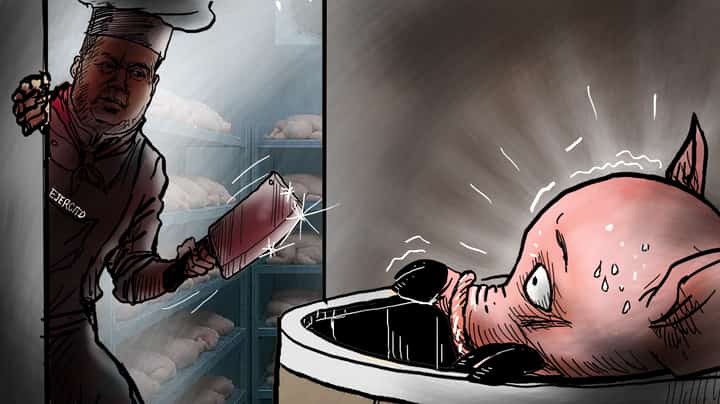
Ending the dreaded practice of budget insertions does not require a new law. It requires political will.
Senator JV Ejercito is drawing that line. As the new chair of the Senate Committee on Finance, he said the chamber will no longer tolerate last-minute pork barrel insertions into the national budget during the Bicameral Conference Committee (Bicam), where budget changes are traditionally finalized behind closed doors.
“We will no longer allow last-minute insertions, particularly those made during the Bicameral Conference Committee,” Ejercito said.
Under the proposed approach, all amendments should be introduced transparently during plenary deliberations or incorporated into the National Expenditure Program (NEP) from the outset, rather than be inserted in the final stage of the budget process.
The Bicam has long been the budget’s most dangerous room. It is where the House and Senate versions of the spending bill supposedly are reconciled, usually behind closed doors, but it has become the vehicle for huge multibillion-peso insertions, usually in the final rushed days before the budget bill is transmitted to the Palace.
It became the third chamber of Congress, unelected in function, but powerful enough to add or delete billions of pesos with almost no public record.
The Bicam decided to increase the Unprogrammed Appropriations (UA) in the 2024 national budget from P281.9 billion, as originally submitted by the executive branch, to P731.4 billion, an increase of 159 percent or P449.5 billion.
In the 2025 budget, the NEP proposal for the UA was P158.665 billion, which spiked to P531.7 billion after the Bicam report.
That is exactly the practice, Ejercito said, in his radio program Executive Committee, that he wants to terminate.
“We will not allow what happened before,” he said, referring to past insertions blamed for fueling the flood control corruption scandal that has consumed the Department of Public Works and Highways.
“We will not tolerate that, especially with foreign-assisted projects. Official Development Assistance projects should not simply be diverted and relegated to the unprogrammed appropriations (UA) at the last minute,” he stressed.
Ejercito’s proposed fix will start earlier than most reforms do, before the National Expenditure Program even reaches Congress. He said his committee began meeting with economic managers last month, right after his designation as chair, well ahead of the usual schedule.
“We already started last month, right after I was designated chair of the Committee on Finance,” he said.
The finance panel conducted briefings with the administration’s economic team — the Department of Budget and Management, the Department of Finance and other agencies — to assess the fiscal and economic situation.
“We wanted to understand our fiscal space before beginning deliberations on the budget,” Ejercito said.
The submission of the NEP follows the President’s State of the Nation Address (SoNA).
By tradition, the Executive transmits it to the House about a week after the SoNA. From there, House members may file amendments, which move through committee hearings and then the plenary before the bill crosses over to the Senate.
The argument is simple: whatever changes lawmakers want should happen in the open, on record, before the bill ever reaches the Bicam.
“By the time the Bicameral Conference Committee convenes, everyone should already know which amendments have been proposed and approved,” Ejercito said.
“There is nothing wrong with amendments,” he said. “In fact, good amendments are an essential part of legislation — as long as they are genuinely needed and not simply inserted on a whim.”
What caused the perversion of the budget was the anonymity that had surrounded Bicam insertions in past budgets. Thus, the way forward is for every sponsor to be named, on the record, every time.
“The name of the sponsor of every amendment should always be reflected in the official minutes,” Ejercito said. “In the past, there was often no record of who sponsored a specific insertion. You could see that a project had been added or altered, but you had no idea who was responsible. So when controversies erupted, everyone denied responsibility.”
Small committees, the informal groups that have historically ironed out the House and Senate differences, will still exist, Ejercito said, but only to reconcile language, not to smuggle in new projects.
The 2025 budget went down as the most corrupt in Philippine history. The legislators will have a chance to redeem themselves with the 2027 budget.