
PNP five-point agenda NCRPO’s soul

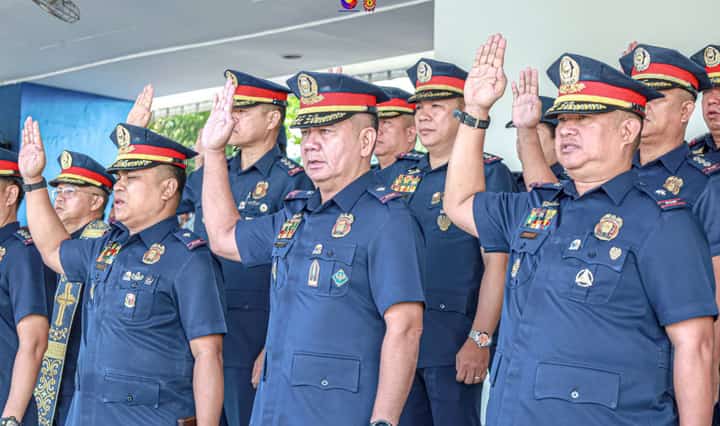
NCRPO Officer-in-Charge PBGEN Arnold Thomas C. Ibay spearheads the weekly flag raising and personnel awarding ceremonies at the Camp Bagong Diwa Grandstand in Taguig City.
In a sprawling megacity of millions, securing peace and order demands far more than traditional reactive policing. It requires a deliberate, multi-dimensional strategy designed to adapt to the fluid landscape of modern crime.
Today, the National Capital Region Police Office (NCRPO) is aggressively meeting this challenge by operationalizing the Philippine National Police's (PNP) landmark Five-Focused Agenda.
Under the astute guidance of PNP chief Police General Jose Melencio C. Nartatez Jr. and NCRPO regional director PMGEN Anthony A. Aberin, the region's police force is executing a masterclass in law enforcement — proving that systemic excellence, aggressive operations, and tight community synergy are the ultimate pillars of a safer metropolis.
At the absolute forefront of the Five-Focused Agenda is the relentless, uncompromising clampdown on illegal drugs, as the NCRPO's approach relies heavily on precise intelligence-driven operations designed to sever supply lines and eliminate high-level distributors.
This aggressive posture was on full display in two high-impact operations executed across the capital.
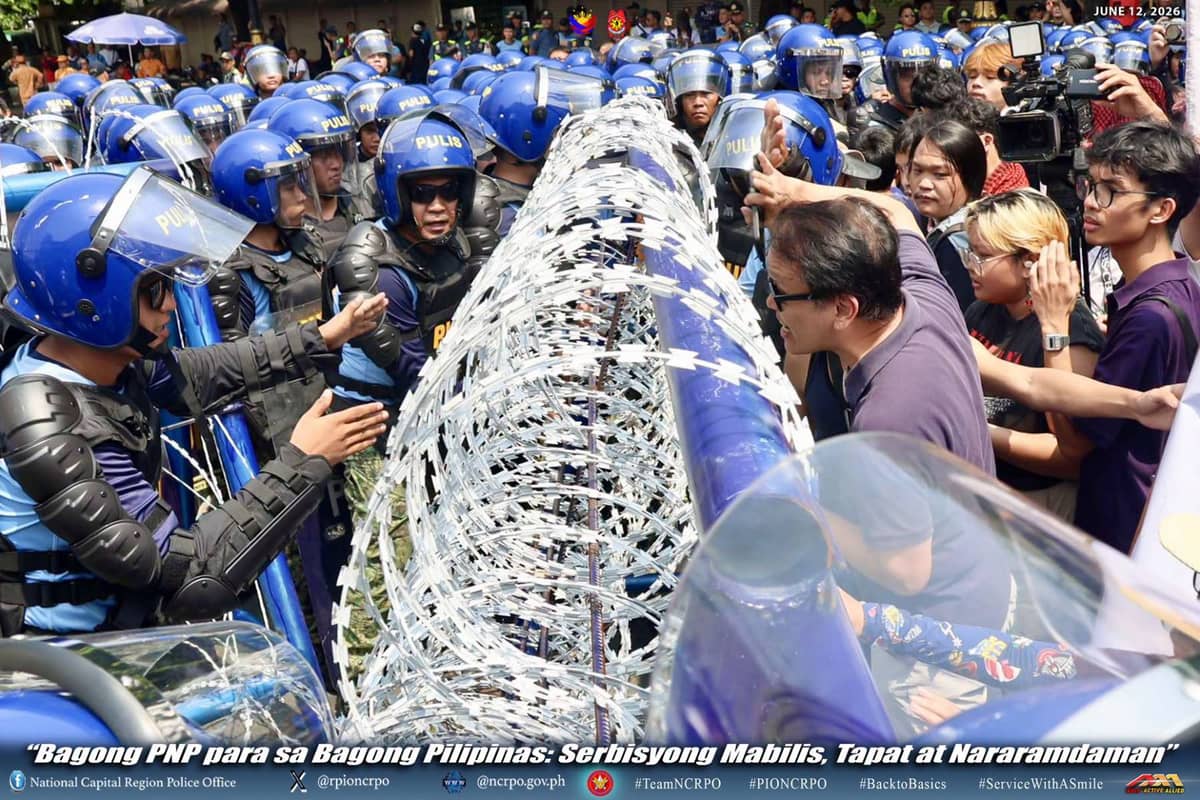
POLICE officers from the NCRPO stand their ground against protesters at Mendiola, Kalaw Avenue, and the Senate vicinity, to ensure peaceful and secure commemorative operations.
In Quezon City, tactical operatives from the Batasan Police conducted a swift midnight strike along Villongco Street in Barangay Commonwealth, arresting two suspects and pulling 25 grams of high-grade shabu off the streets.
Hours later, the Valenzuela City Police built on that precise momentum, launching a high-stakes buy-bust operation at the Karuhatan Public Cemetery. Operatives successfully intercepted a designated High-Value Individual (HVI), confiscating 60 grams of shabu worth over P400,000.
Combined, these early morning operations neutralized nearly P578,000 worth of narcotics in a matter of hours, signaling to syndicates that the NCRPO will leave no stone unturned in cleansing Metro Manila's neighborhoods.
A safe metropolis must also be an economically stable one, which is why the NCRPO has targeted white-collar fraud and property-related crimes with equal fervor. This strategy protects local commerce from predatory internal actors who exploit professional trust for illicit personal gain.
A prime example of this economic shield occurred when the NCRPO swiftly apprehended an independent transport contractor in Quezon City.
The suspect had allegedly committed estafa by using falsified warehouse inventory adjustment forms to embezzle over P27,000 from a local distributor.
By rapidly securing the forensic invoice slips and moving the case to formal inquest proceedings, the NCRPO demonstrated its unwavering commitment to protecting local businesses from financial sabotage.
Simultaneously, the police force is fostering a culture of hyper-vigilance within the private security sector to deter property theft.
When an alert security guard at a private school in Mandaluyong City caught a trespasser attempting to flee with a sack of stolen steel bars, the seamless, rapid coordination between the campus security and the responding police officers ensured the immediate apprehension of the suspect.
This active collaboration between private safety networks and the police force serves as a cornerstone for deterring property crime across public and private institutions alike.
True public safety is built on visibility and deterrence. Under the agenda's push for heightened community safety, the NCRPO maintains a comforting, highly visible police presence across educational institutions in Metro Manila.
By embedding foot patrols directly outside school gates and within campus vicinities, the police force acts as an active shield for students, educators and parents. This visible deterrent strategy not only preempts potential criminal incidents before they manifest but also bridges the gap of trust between the police and the youth.
Through daily, localized patrolling, the NCRPO transforms schools into genuine sanctuaries of learning, ensuring that the next generation can pursue their dreams entirely free from fear.
The NCRPO acutely understands that a police force cannot effectively enforce the law externally if it does not maintain absolute righteousness internally. Therefore, a massive pillar of the Five-Focused Agenda centers on strict internal discipline, organizational cleanliness, and the promotion of institutional integrity.
To keep the ranks pristine, the NCRPO regularly conducts rigorous Monthly Rank Inspections at the Camp Bagong Diwa Grandstand in Taguig City.
These strict audits scrutinize everything from the proper wearing of uniforms and official insignia to personal accoutrements, reinforcing a culture of absolute order, military neatness, and constant operational readiness.
This pursuit of internal excellence is beautifully balanced with institutional inspiration. During traditional Monday Flag Raising Ceremonies led by Officer-in-Charge PBGEN Arnold Thomas C. Ibay, the NCRPO publicly recognizes and awards its most exemplary personnel.
In celebrating those whose performance embodies dedication, professionalism, and faithfulness, the leadership inspires the entire rank-and-file to uphold the highest ethical standards of public service.
Ultimately, the NCRPO's sweeping victories against illegal drugs, corporate fraud, and property crimes are not isolated incidents; they are the direct fruits of a unified, systemic blueprint.
By seamlessly weaving aggressive field operations with rigid internal discipline and proactive community defense, the NCRPO is doing far more than simply policing the streets — it is successfully engineering a secure, resilient, and future-ready National Capital Region.