
Polestar hits U.S. wall

Polestar has become the latest automaker caught in the middle of Washington’s tightening rules on vehicles linked to China.
The US Department of Commerce’s Bureau of Industry and Security has denied Polestar the authorization it needs to sell new vehicles in the United States starting with the 2027 model year.
The decision falls under the Connected Vehicle Rule, which restricts the import and sale of vehicles and related technology tied to China or Russia.
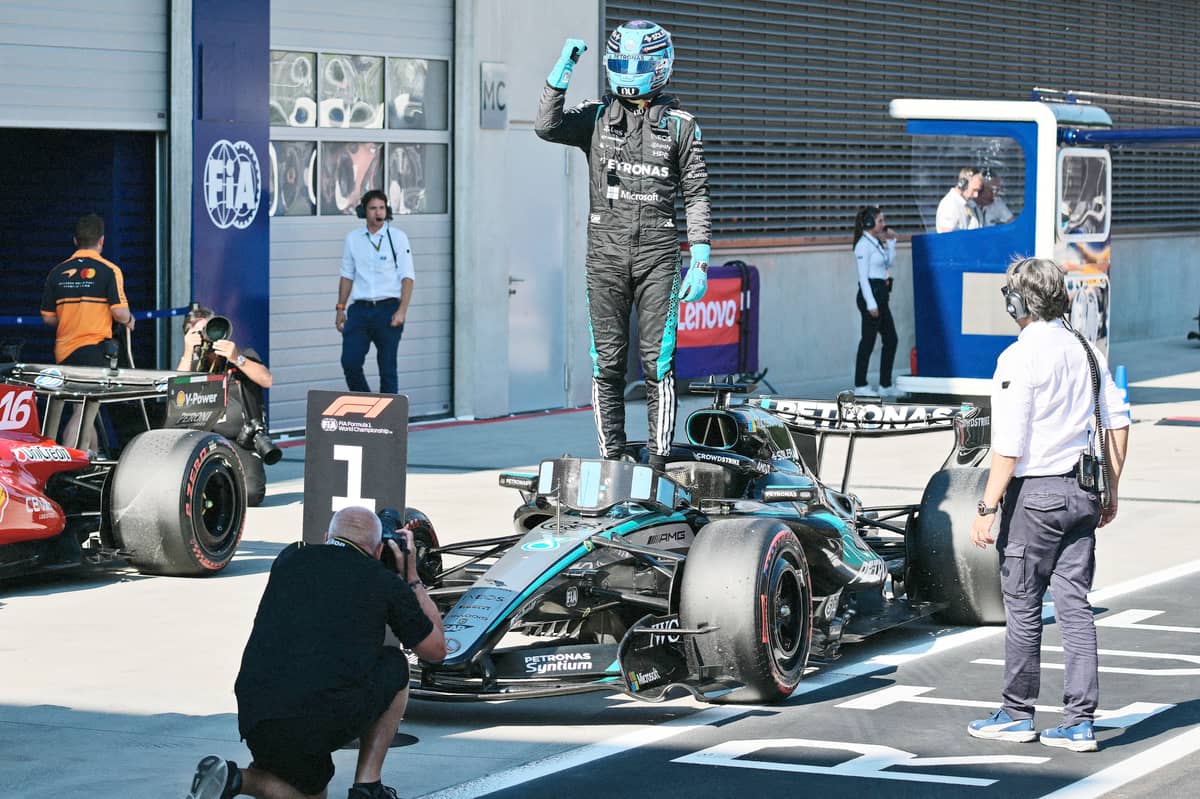
GEORGE Russell celebrates after securing pole position for the Austrian Grand Prix in Spielberg on 27 June 2026.
The rule targets connected vehicle software and hardware that US officials believe may pose national security risks. Washington’s concern is that companies under Chinese or Russian control could be forced to share data or allow remote access to vehicles used in the US.
Polestar is headquartered in Sweden, but its ownership has placed it under scrutiny. Chinese automotive group Geely holds a majority stake in the electric vehicle brand. Geely also owns Volvo Cars, which has so far avoided the same outcome after receiving a waiver in May.
The ruling is a setback for Polestar because the issue does not rest only on where the cars are built. The Polestar 3 sold in the US is assembled at Volvo’s plant in Charleston, South Carolina. The Polestar 4 comes from South Korea.
That was not enough to satisfy US regulators. The concern centers on ownership, vehicle connectivity, software systems and the possible flow of data.
The Connected Vehicle Rule was finalized under the Biden administration and has become part of a wider US effort to limit Chinese-linked technology in the auto market. The software restrictions take effect first for the 2027 model year. Hardware restrictions follow in 2030.
Automakers must secure authorization to keep selling affected vehicles in the US. Polestar did not receive that clearance.
The decision leaves Polestar with a short runway in the American market. Existing inventory of pre-2027 Polestar 3 and Polestar 4 units may still be sold while stocks last. The company also said it will continue to support current owners through its service network.
The bigger question is what happens after that inventory runs out. Without approval to sell 2027 model year vehicles, Polestar is effectively shut out of the US new-car market.