
DA pushes hog rebuilding to secure pork supply
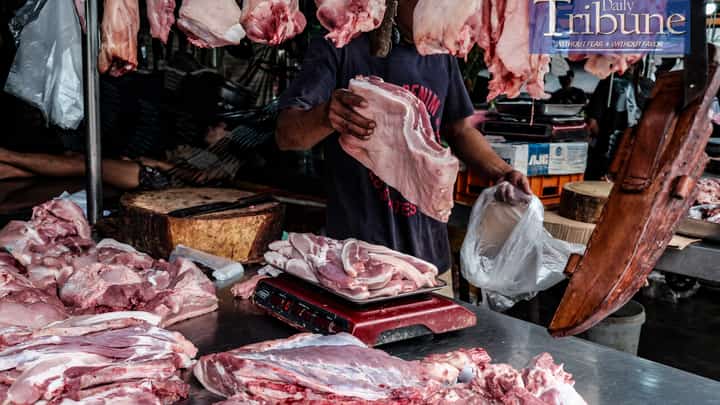
The Department of Agriculture (DA) is racing to rebuild the country’s hog population as it seeks to boost domestic pork supply, support farmers and keep prices stable amid the lingering impact of African Swine Fever (ASF).
Agriculture Secretary Francisco P. Tiu Laurel Jr. said Monday the government is accelerating repopulation in ASF-free areas through stronger biosecurity measures and science-based recovery programs.
“Through stronger biosecurity measures, science-based repopulation programs, and close collaboration with industry stakeholders, we are rebuilding a more resilient and sustainable swine sector,” Tiu Laurel said.
The Philippines has yet to recover from ASF, which began affecting the swine industry in 2019.
The country’s hog population, estimated at around 13 million heads before the outbreak, stood at 8.75 million in 2025, according to the Philippine Statistics Authority (PSA), down from 9.57 million a year earlier.
PSA data also showed hog slaughter fell to 20.74 million heads in 2025 from 21.61 million in 2024 and 25.36 million in 2020.
“Our goal is to help Filipino hog raisers recover from the impact of African Swine Fever while ensuring that every Filipino family continues to have access to safe, sufficient, and reasonably priced pork. A stronger hog industry means a stronger rural economy and greater food security for the nation,” he added.
The DA said it is working with local governments, industry groups and private-sector partners to strengthen biosecurity protocols and accelerate repopulation efforts while reducing the industry’s vulnerability to future outbreaks.
Pork remains one of the country’s most widely consumed protein sources.