
Divining Cubao through Tony Perez’s works
A literary walking tour retraces the Cubao immortalized by Tony Perez, revealing how the celebrated writer transformed its coliseum, market, motels and neighborhoods into a vivid landscape of memory, desire, mystery, and the supernatural.

I have been to Cubao countless times since childhood. One of Metro Manila’s major commercial and transport hubs, the district in the southern part of Quezon City is a relentless whirl of activity that has witnessed glittering development, urban decay, and repeated reinvention. Yet my encounters with it had always been fleeting and largely confined to the commercial expanse of the former Araneta Center. I remembered Cubao as exhausting and somewhat seedy.
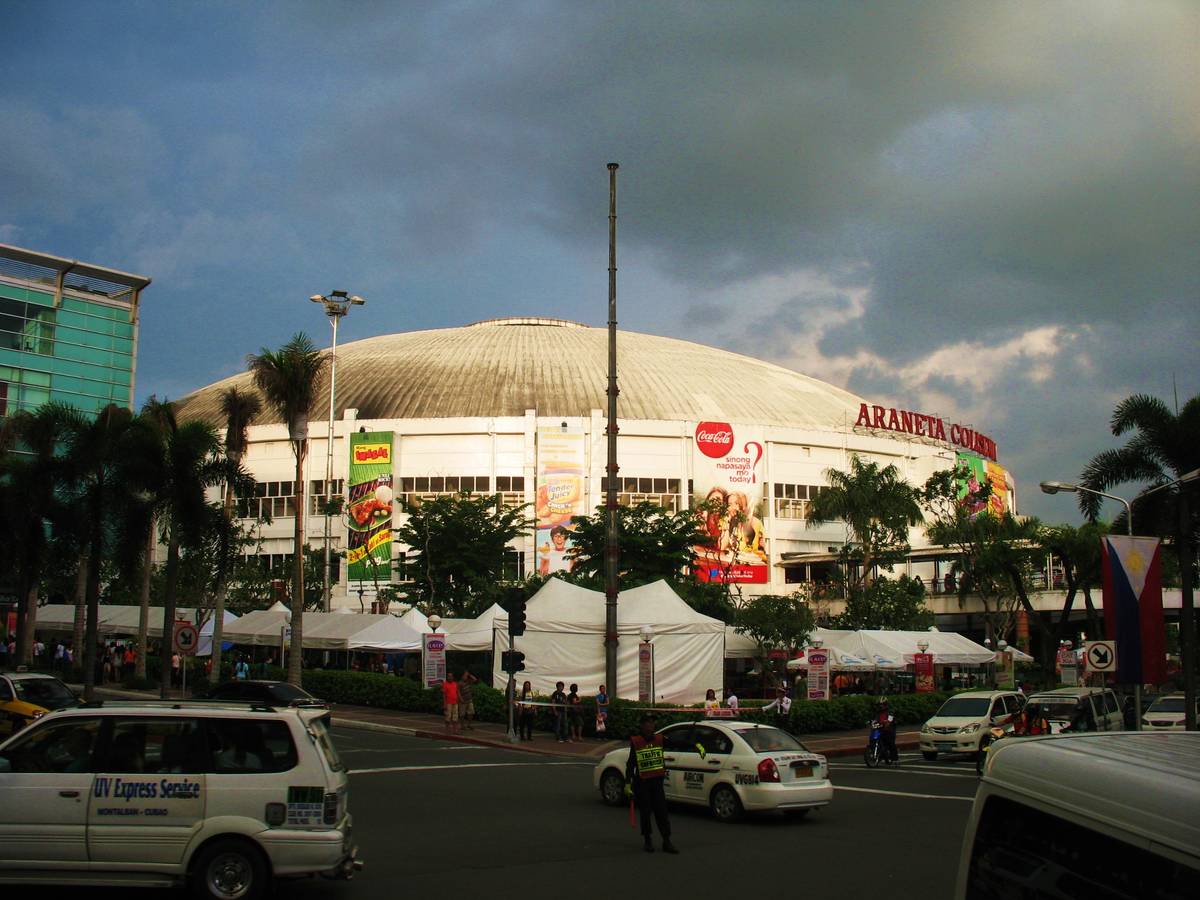
THE Smart Araneta Coliseum is featured in the book 'Cubao Ilalim.'
PHOTOGRAPHS by Roel Hoang Manipon for DAILY TRIBUNE
One sweltering afternoon, I found myself in Cubao once again, this time hoping to see it in another light — a literary one, through the eyes of Tony Perez.
Perez was a remarkably versatile artist: a playwright, fictionist, poet, screenwriter, and visual artist. He was also an educator, psychologist and spiritualist who founded the paranormal group Spirit Questors. Across his extensive body of work, Cubao emerged not merely as a setting but as a world unto itself — a place where the familiar and the uncanny continually intersected.
Pinoy Reads Pinoy Books (PRPB), in partnership with the National Commission for Culture and the Arts (NCCA), recently organized Literatour: Ang Cubao ni Tony Perez in celebration of National Literature Month, just before the first anniversary of the writer’s death on 20 May.
It was the second literary walking tour organized by the readers’ and bookworms’ group and the cultural agency, following Nick Joaquin: Intramuros and Memory, held on 3 May 2025, which explored the works of National Artist for literature Nick Joaquin and the Spanish fortified city by the mouth of the Pasig River. Both tours were led by PRPB co-founder Jayson Vega, who also designed the itineraries.
The Tony Perez tour brought participants to sites in the mixed-use complex of Araneta City and the nearby barangay of Kaunlaran — places that appear, directly or imaginatively transformed, throughout Perez’s works set in Cubao. Stops were enlivened with history, local lore and readings from Perez’s books.
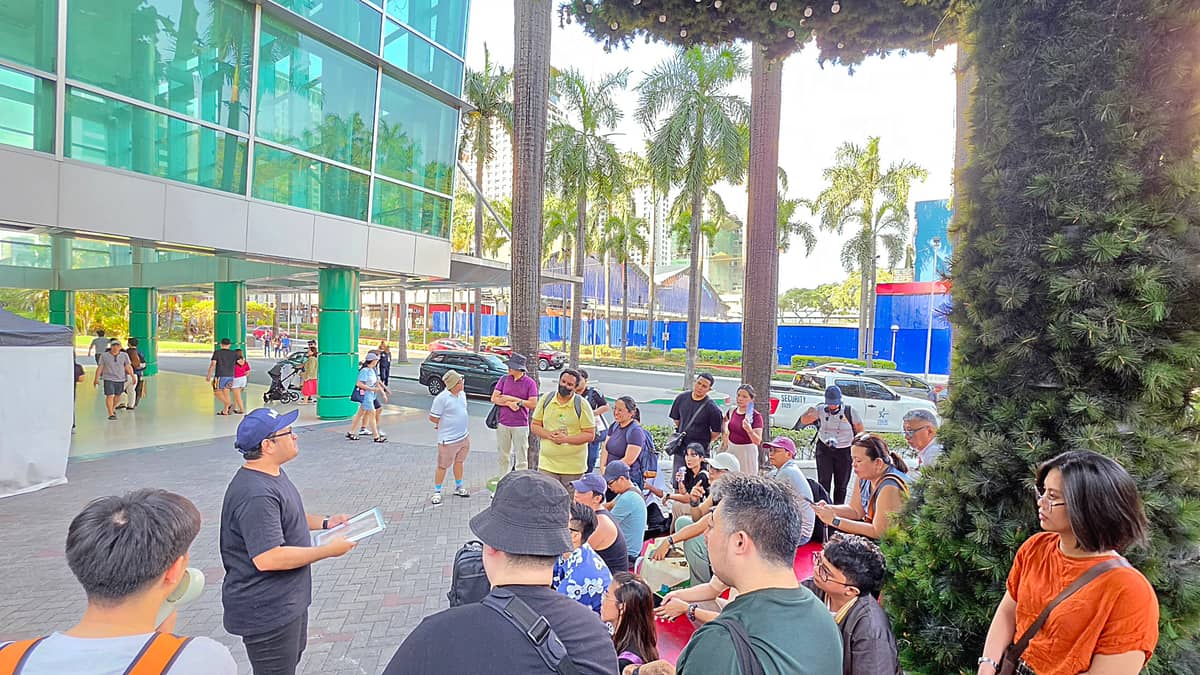
PARTICIPANTS of Literatour: Ang Cubao ni Tony Perez, organized by Pinoy Reads Pinoy Books and NCCA.
PHOTOGRAPHS by Roel Hoang Manipon for DAILY TRIBUNE
“Through this, the text gains another dimension, fostering a deeper understanding of the changes brought about by urbanization in the thoughts, behavior, and psychology of the people who inhabit these spaces,” Vega said.
“At the same time, the participants developed a greater appreciation of how Tony Perez gave shape and expression to the identity of Quezon City, and why it is distinctive from its neighboring cities,” he added.
Places profoundly shape many writers. They supply not only settings but also the atmosphere, memories, conflicts, and human encounters from which literature emerges. For Perez, that place was Cubao — a restless urban crossroads of commerce, transit, entertainment, desire, loneliness, and mystery. Although he was born in San Fernando City, Pampanga, on 31 March 1951, Perez spent much of his life in Cubao. He transformed the district into a vivid literary landscape where ordinary urban life intersected with sexuality, violence, folklore, mystery and the supernatural.
Perez was among the Philippines’ most prolific writers of horror and paranormal fiction, genres to which many works in his Cubao series belong. These include Cubao 1980 at Iba Pang mga Katha: Unang Sigaw ng Gay Liberation Movement sa Pilipinas (1992), a collection of poems, letters, a play, and the novella Cubao 1980; Cubao Pagkagat ng Dilim: Mga Kuwentong Kababalaghan (1993), an anthology of supernatural and mystery stories; Eros, Thanatos, Cubao: Mga Piling Katha; Cubao Midnight Express: Mga Pusong Nadiskaril sa Mahabang Riles ng Pag-ibig (1994); Cubao-Kalaw, Kalaw-Cubao (1995); Maligayang Pagdating sa Sitio Catacutan; Malagim ang Gabi sa Sitio Catacutan (2006); and the two-volume Cubao Ilalim (2021).
The Literatour began at the Smart Araneta Coliseum, the centerpiece of Araneta City and the district’s most prominent landmark. Here, Vega gave a brief history of Quezon City before introducing the coliseum’s transformation in Cubao Ilalim: Unang Aklat. In Perez’s imagined underground world, the familiar domed coliseum becomes a castle in the Kingdom of Berbanya, the realm of the iconic Filipino korido, or metrical romance, Ibong Adarna. In a passage read, the structure was no longer dome-shaped but a towering castle with a drawbridge, portcullis and lofty towers. Lights shone from its windows. Inside, behind the king’s throne, the Adarna was bound to a golden pedestal, its wings changing through seven colors as the bird gleamed like a brilliant flame.
Another known landmark in the complex is Farmers Market, perhaps the Philippines’ first farm-to-table market. It is the setting of “Ang Mga Manananggal,” a story about the Manayon sisters included in Cubao Pagkagat ng Dilim. In a passage read, the market assumes another character at night. Once the surroundings have fallen silent and the only illumination comes from mercury lamps mounted on tall steel posts, each stall becomes a little dwelling in a makeshift village occupied by errand boys, porters, janitors and guards. At night, the market becomes a world of men, while any woman who remains shuts herself inside a shop and sleeps in darkness.
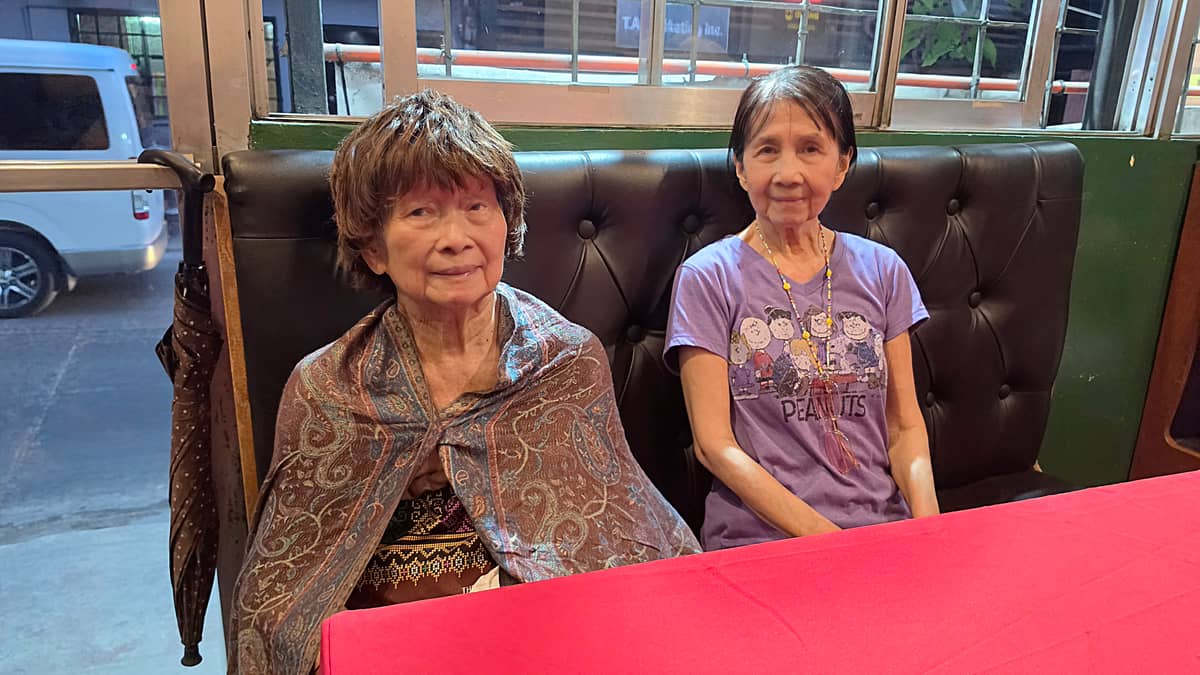
TONY Perez's sisters Remedios Foote and Alice Perez dela Cruz.
PHOTOGRAPHS by Roel Hoang Manipon for DAILY TRIBUNE
Crossing EDSA from Farmers Plaza, one arrives at a cluster of motels around the Arayat area. Their emergence was partly encouraged by the presence of bus terminals and the constant movement of travelers through Cubao. The motels also became spaces for clandestine meetings and brief encounters. In Perez’s fiction, they provide the setting for “Ang Tikbalang,” another story from Cubao Pagkagat ng Dilim. Here, Perez draws from the contradictions that define Cubao. The district is a place of arrivals and departures, public movement and private desire. The motel, designed for concealment and transience, becomes an ideal stage for creatures and impulses that exist at the edges of respectable urban life.
About a kilometer from Arayat lies the residential area in the barangay of Kaunlaran, which inspired the fictional Sitio Catacutan, the setting of stories collected in Maligayang Pagdating sa Sitio Catacutan and Malagim ang Gabi sa Sitio Catacutan. Among them is “Traysikel,” about a phantom tricycle driver who terrorizes the neighborhood. “Damit ng Bakla,” meanwhile, revolves around a cursed gown. The area also figures in “Ang Diwata,” from Cubao Pagkagat ng Dilim, which tells of a gay beauty-pageant aspirant who pawns personal belongings to finance participation in contests.
Residents still tell stories of bodies found in areas overgrown with weeds and sightings of or encounters with enchanted beings.
The Literatour concluded at Perez’s home at 105 P. Tuazon Boulevard. There, the participants were welcomed by his elder sisters, Remedios Foote and Alice Perez dela Cruz, who disclosed that Tony had psychic abilities since he was young. Their eldest sister, Lourdes, and the youngest, Sylvia, now live abroad.
Ending the tour at the writer’s home brought the journey from the imagined back to the intimate. The coliseum, market, motels, streets, and neighborhoods were not merely locations that Perez observed from a distance. They formed the environment in which he lived, remembered, dreamed, and wrote.
Each of us carries different memories and perceptions of Cubao. Tony Perez provides another layer. Through his books, Cubao becomes a place where the everyday brushes against the otherworldly, where spaces acquire narrative life, and where the city’s shadows become as meaningful as its lights. The literary tour allowed us to read those stories not only on the page but also through streets, buildings, markets, and neighborhoods. In doing so, we discovered how writing preserves the stories of communities — and how imagination can immortalize places that the changing city might otherwise leave behind.